Kubernetes Cost Anomaly Detection: Catch Spikes Early
How to detect Kubernetes cost anomalies early, investigate spend spikes, and stop budget surprises before they hit the bill.

Field notes on running Kubernetes with less toil — AI SRE and incident response, CI/CD and golden paths, continuous security, cost, and the internal developer platform that ties them together.
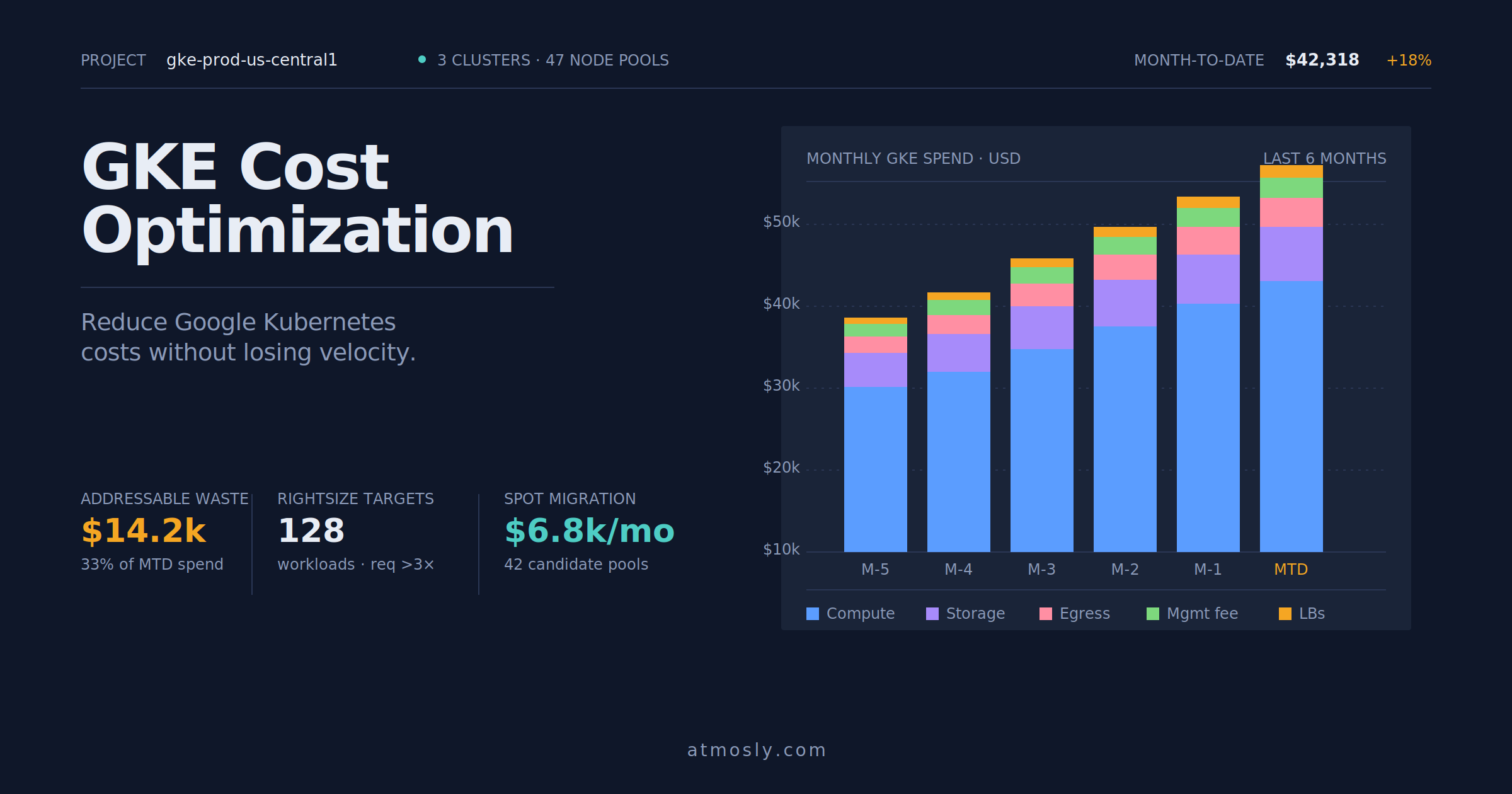 Featured
Practical GKE cost optimization guide — rightsizing, Spot VMs, storage tiering, and network egress control for engineers.
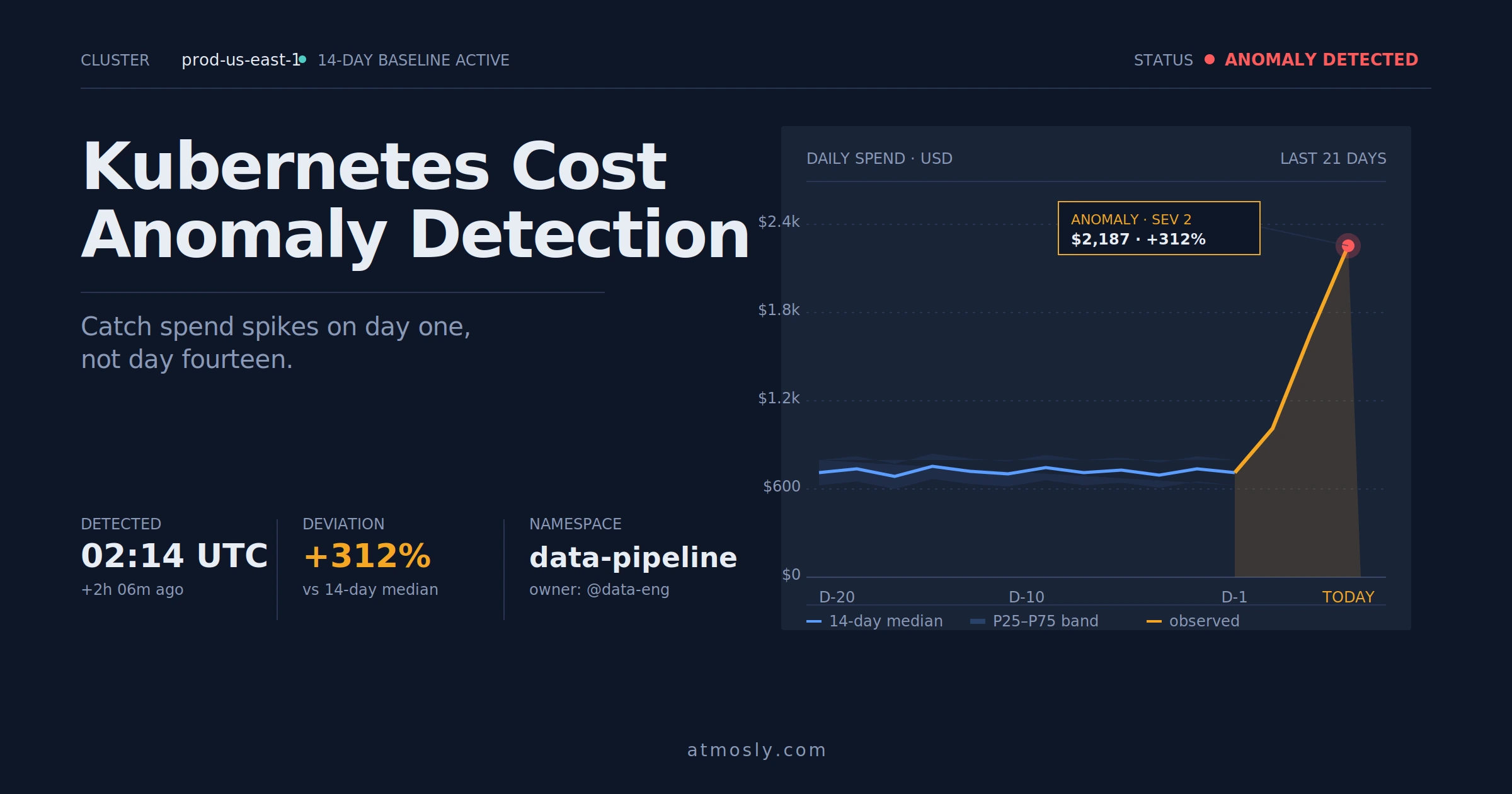 Kubernetes
How to detect Kubernetes cost anomalies early, investigate spend spikes, and stop budget surprises before they hit the bill.
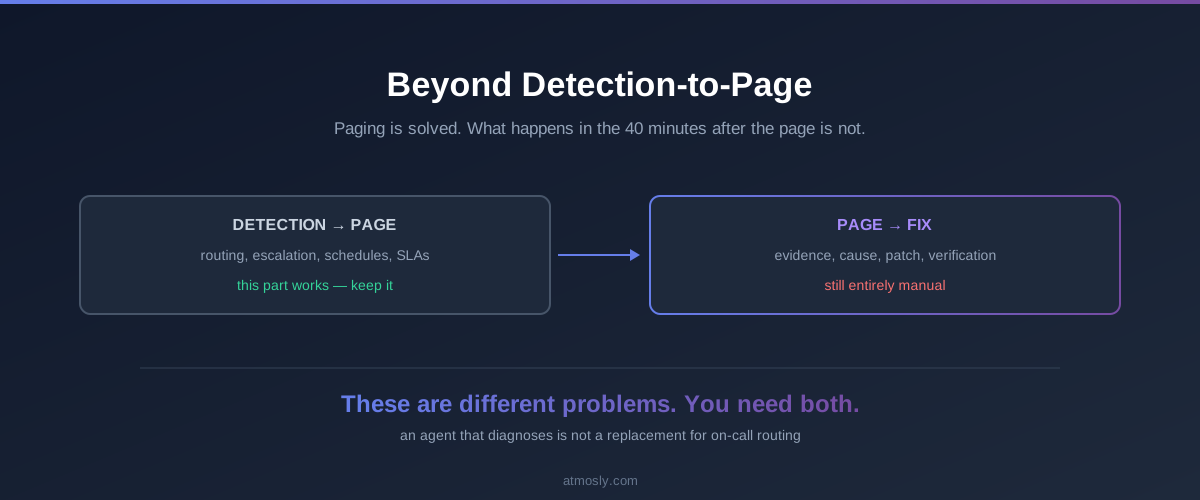 AI SRE
PagerDuty solves getting the right human awake. It does not solve what that human does next, which is where nearly all incident time goes. This covers the split between routing and diagnosis, what actually belongs in each layer, and why replacing your pager is the wrong move.
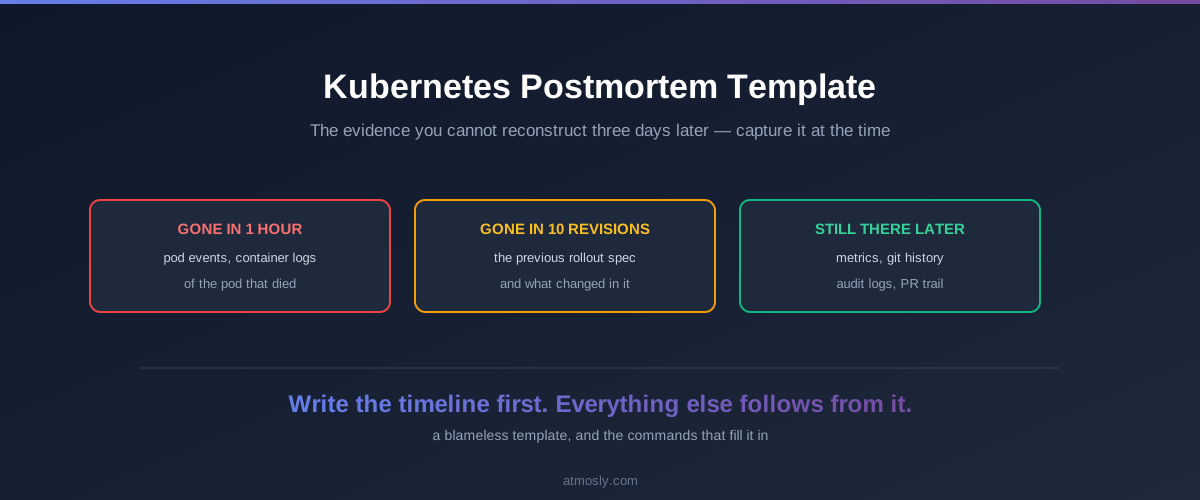 AI SRE
Half the evidence a Kubernetes postmortem needs is gone within an hour of the incident. Here is a template you can copy, the commands that capture the perishable data while it still exists, and the rewrite rule that keeps causes blameless.
 AI SRE
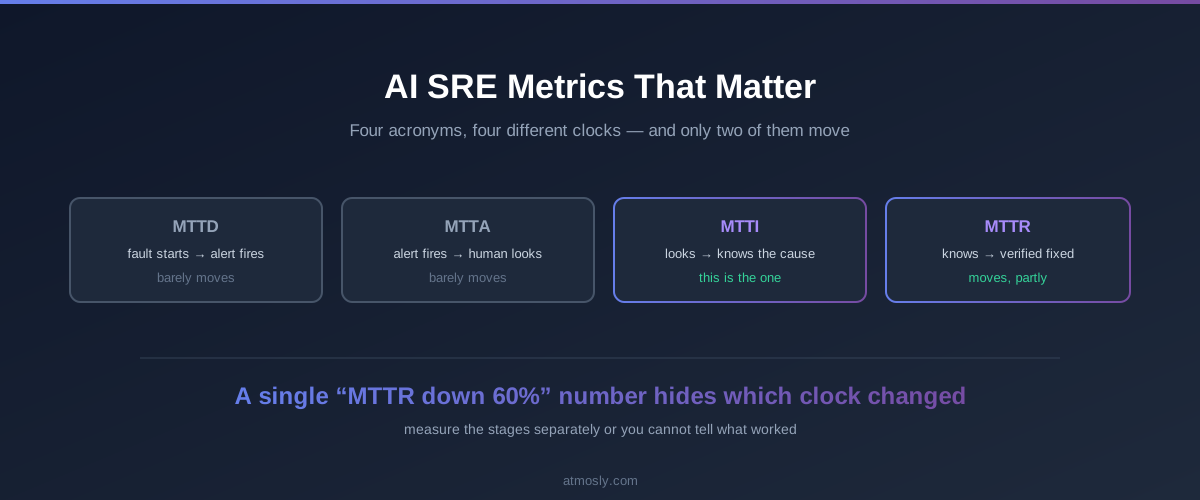
Adding an AI agent to incident response moves two of the four standard clocks and barely touches the other two. This defines each incident metric with its formula, shows which ones genuinely change, and gives the questions that deflate an impressive-looking dashboard.
 AI SRE
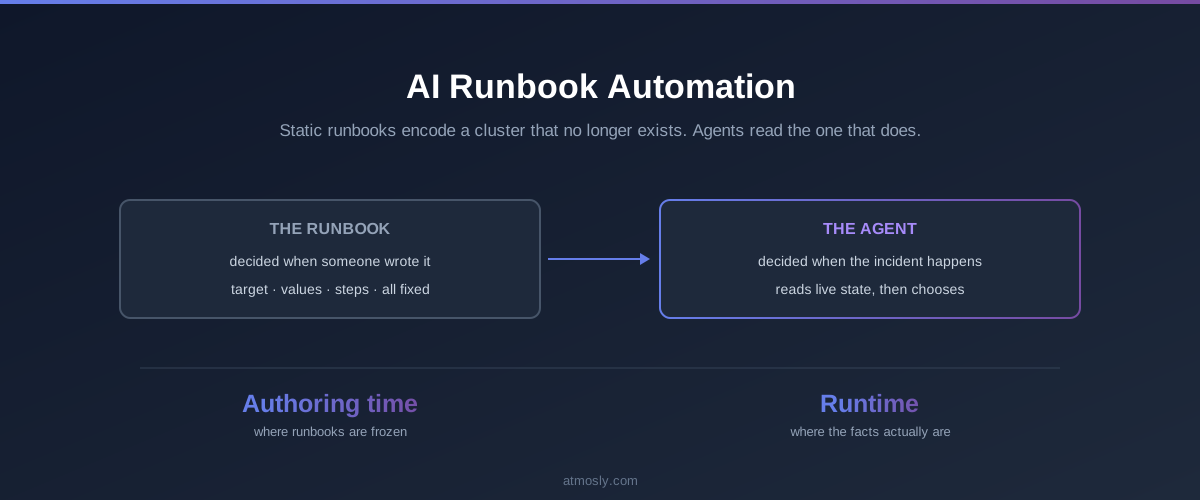
A runbook is a snapshot of a cluster taken on the day someone wrote it. Clusters change weekly and snapshots do not. This is what actually rots, what AI runbook automation replaces it with, and the cases where a written runbook is still the right answer.
 Cost Intelligence
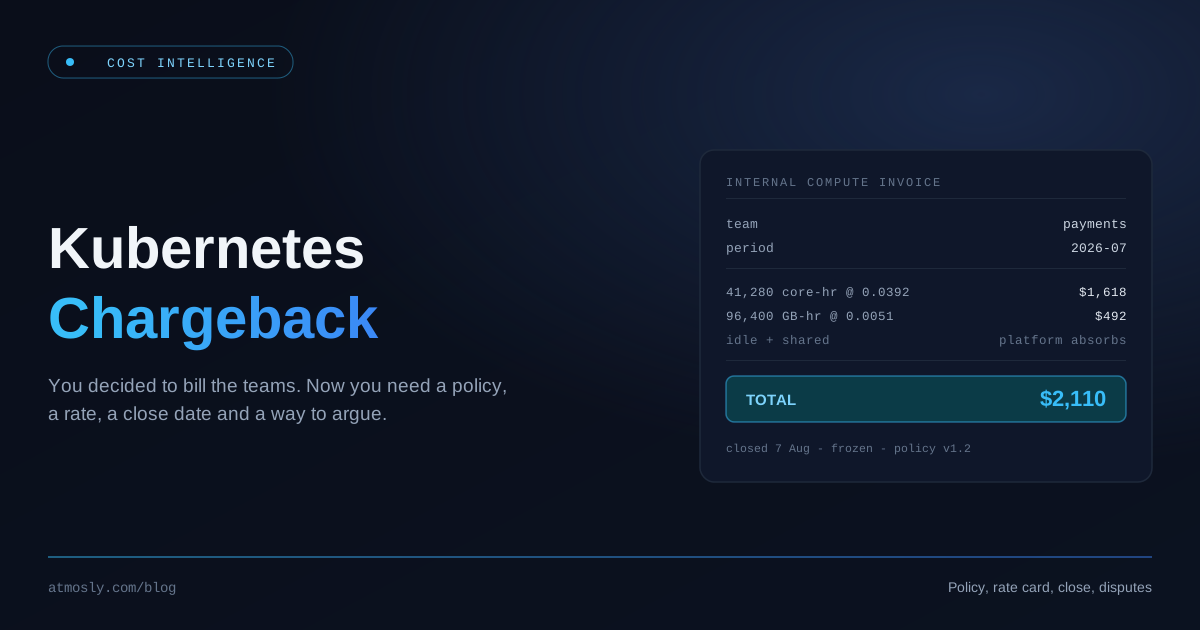
Allocation data is the easy half of chargeback. This is the operating model around it: the one-page policy, a rate teams can budget against, the monthly close, the dispute path, and the shadow-bill period that stops the launch going wrong.
 AI SRE
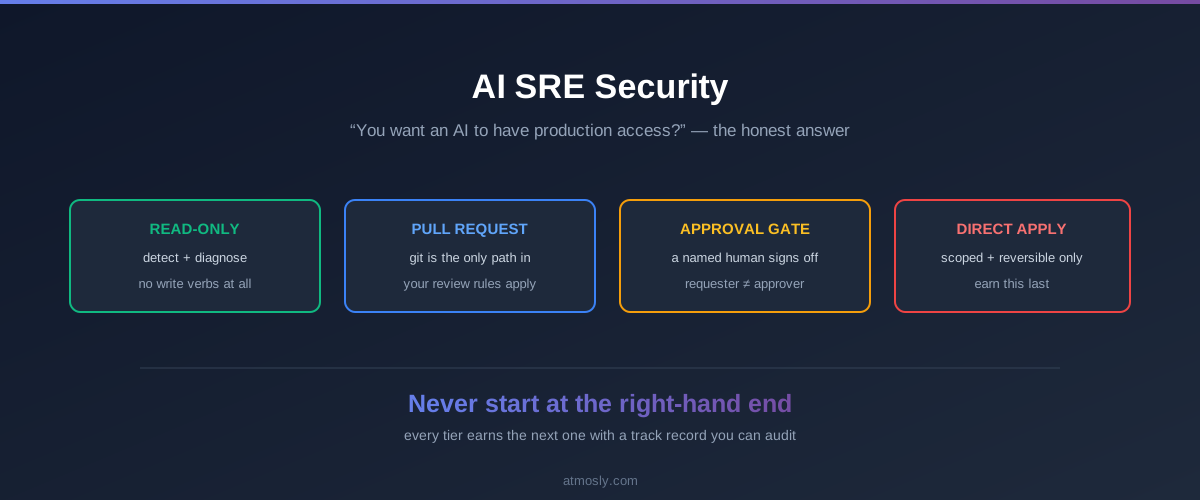
Every AI SRE evaluation reaches the same objection: you want an AI to have production access? This is the honest answer — what to grant, what to refuse, the RBAC to demand instead of cluster-admin, and the audit record that gets it past a security review.
 AI SRE
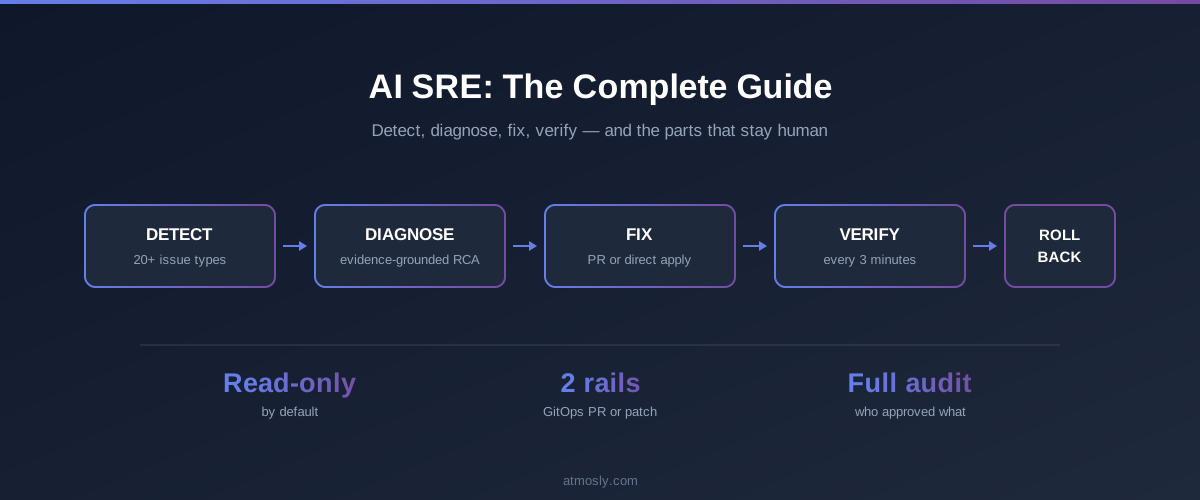
AI SRE means an agent that carries a Kubernetes incident from detection through diagnosis to a proposed fix, then checks whether the fix worked. This guide covers the full loop, the permission model, what to evaluate in any tool, and where the category still falls short.
 AI SRE
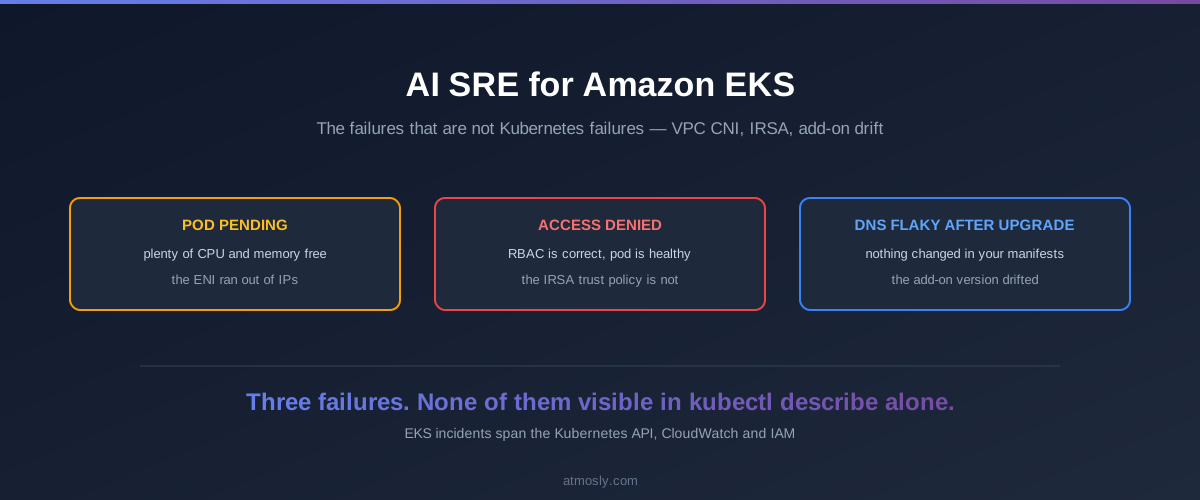
The EKS failures that cost the most time are not Kubernetes failures. VPC CNI IP exhaustion, IRSA trust policy mismatches and add-on version drift all present as ordinary pod problems while their causes sit outside the cluster. Here is what an agent handles and what it does not.
 AI SRE
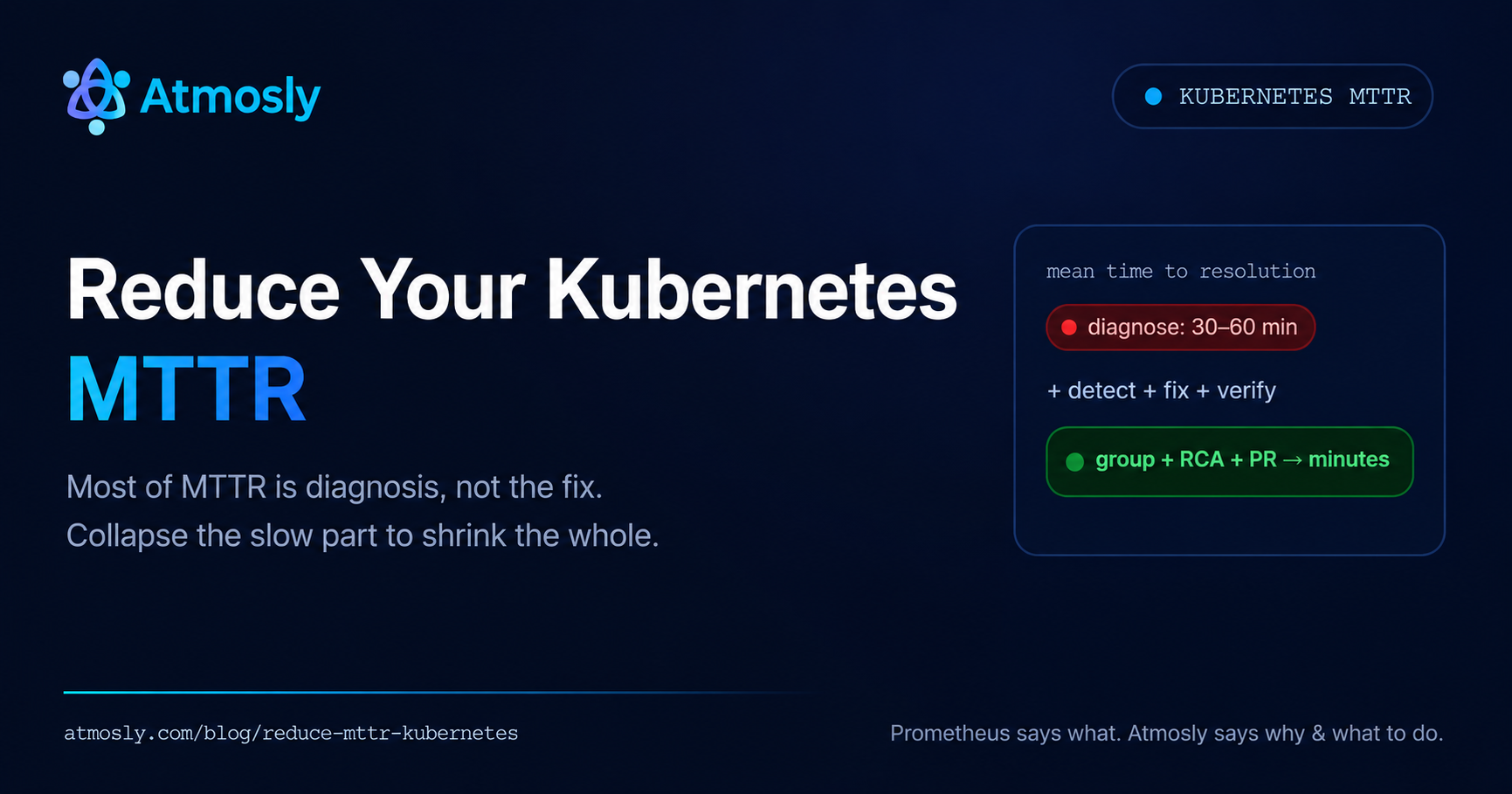
On Kubernetes, MTTR is dominated by diagnosis, not the fix. Six proven strategies to reduce Kubernetes MTTR — unified telemetry, incident grouping, AI root-cause analysis, and automated GitOps remediation.
 Platform Engineering
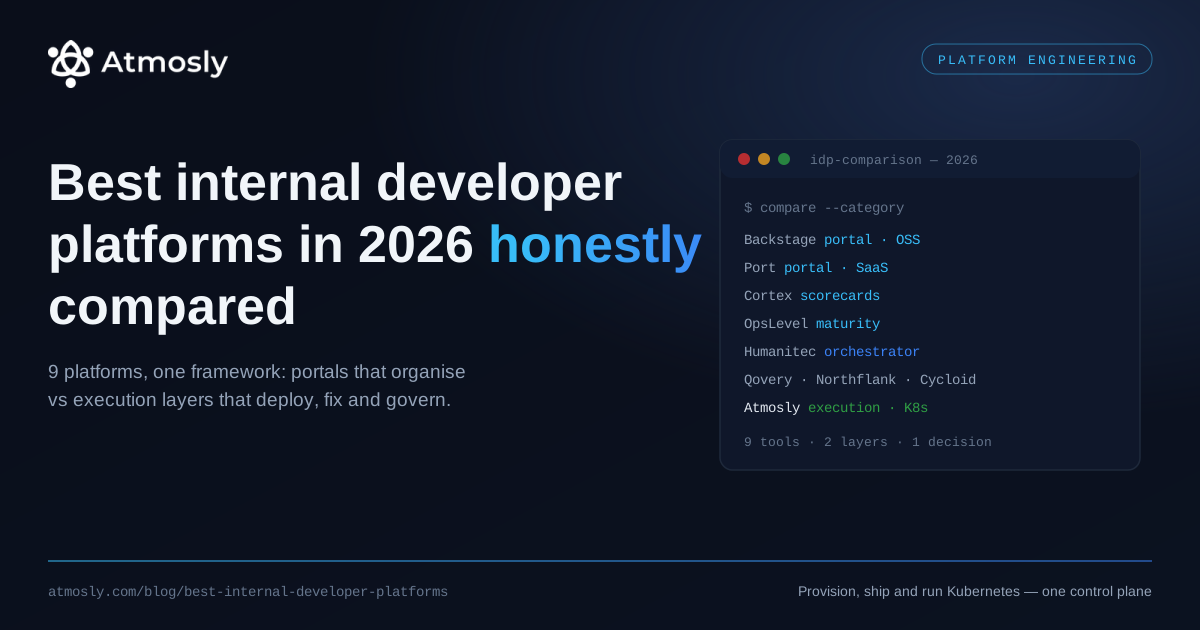
Nine internal developer platforms compared honestly — Backstage, Port, Cortex, OpsLevel, Humanitec, Qovery, Northflank, Cycloid and Atmosly — organised by the one distinction that matters: portals that organise vs execution layers that ship.
Connect a cluster read-only and see your incidents, spend, and deploys in one place — in minutes. Free, no sales call.