Kubernetes Cost Forecasting: Predict Your Next Cloud Bill
How to forecast Kubernetes cloud costs, avoid budget surprises, and give finance a number you can actually defend.

Enterprises need control — SSO, scoped RBAC, audit, continuous compliance — across many teams and clusters, including private and air-gapped. Atmosly delivers governed self-service: every team ships fast inside guardrails, every action is logged, and posture stays current.
Tighten governance and teams slow to a crawl and route around you. Loosen it and audit, compliance, and cost spiral. Most platforms force the trade — the goal is to not have to.
Central control protects the org but becomes a ticket queue; full autonomy is fast but ungoverned. Neither extreme is acceptable at scale.
Proving who did what, and that every cluster meets CIS, PCI, or SOC 2, across a sprawling estate is a perpetual, manual scramble.
The most sensitive clusters have no public endpoint — and most tooling can't reach them without bastions, VPNs, or exceptions.
Set the policy centrally; let teams operate freely inside it. Every action is scoped, logged, and reversible, and the hardest-to-reach clusters are in scope too.
Policy and scheduled automation scoped by team, cluster, or environment — teams move freely inside the lines, and nothing runs outside them.
CIS, PCI DSS, and SOC 2 posture scored continuously across every cluster, with drift caught as it happens — audit evidence that's always current.
An outbound-only agent brings private and on-prem clusters under management with no inbound ports, bastion, or VPN — managed exactly like the rest.
Astra, our AI SRE agent, runs read-only by default; any fix it applies is scoped, attributed, and reversible — automation your auditors can live with.
Spend broken down by team and namespace, reconciled to the cloud bill — the chargeback and accountability finance has been asking for.
Single sign-on, role-based access scoped to the resources each team owns, and a complete trail of who did what — the controls security signs off on.
Policy is encoded once and enforced everywhere. Teams self-serve on a paved road; the platform org keeps posture, evidence, and reach across every cluster — public, private, or air-gapped.
SSO maps your identity provider's groups to Atmosly roles, and RBAC is scoped to the exact clusters, environments, and actions a team owns. Deploy, scale, and delete are permissioned separately — so you grant precisely what a role needs and nothing more.
CIS, PCI DSS, and SOC 2 posture is scored continuously across every connected cluster, and drift is caught the moment it appears — not in a quarterly scramble. When an auditor asks, the evidence is already gathered and exportable.
A lightweight in-cluster agent dials out over TLS on 443. Clusters with no public API endpoint come under management with no bastion, VPN, or firewall exception — and every remediation, deploy, and scaling action routes back over that same outbound connection.
Governance stops being a queue when it's encoded once and enforced automatically. Teams get a paved road; the org gets evidence, posture, and reach over every cluster — a governed internal developer platform, not a portal bolted on top.
Policy, compliance posture, and reach over every cluster come first.
The same goal — control across many teams and clusters — reached two very different ways.
 Kubernetes
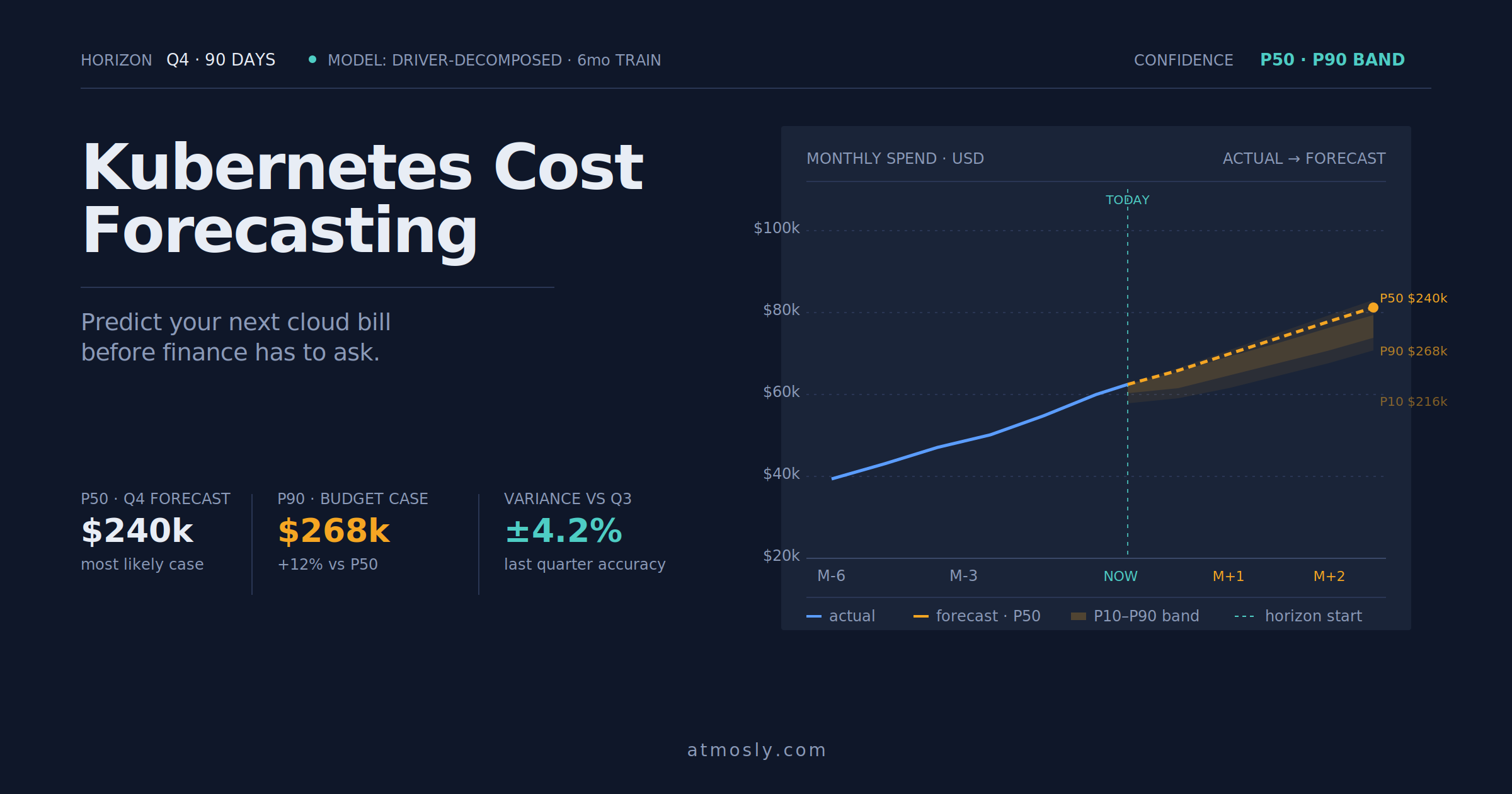
How to forecast Kubernetes cloud costs, avoid budget surprises, and give finance a number you can actually defend.
 Kubernetes
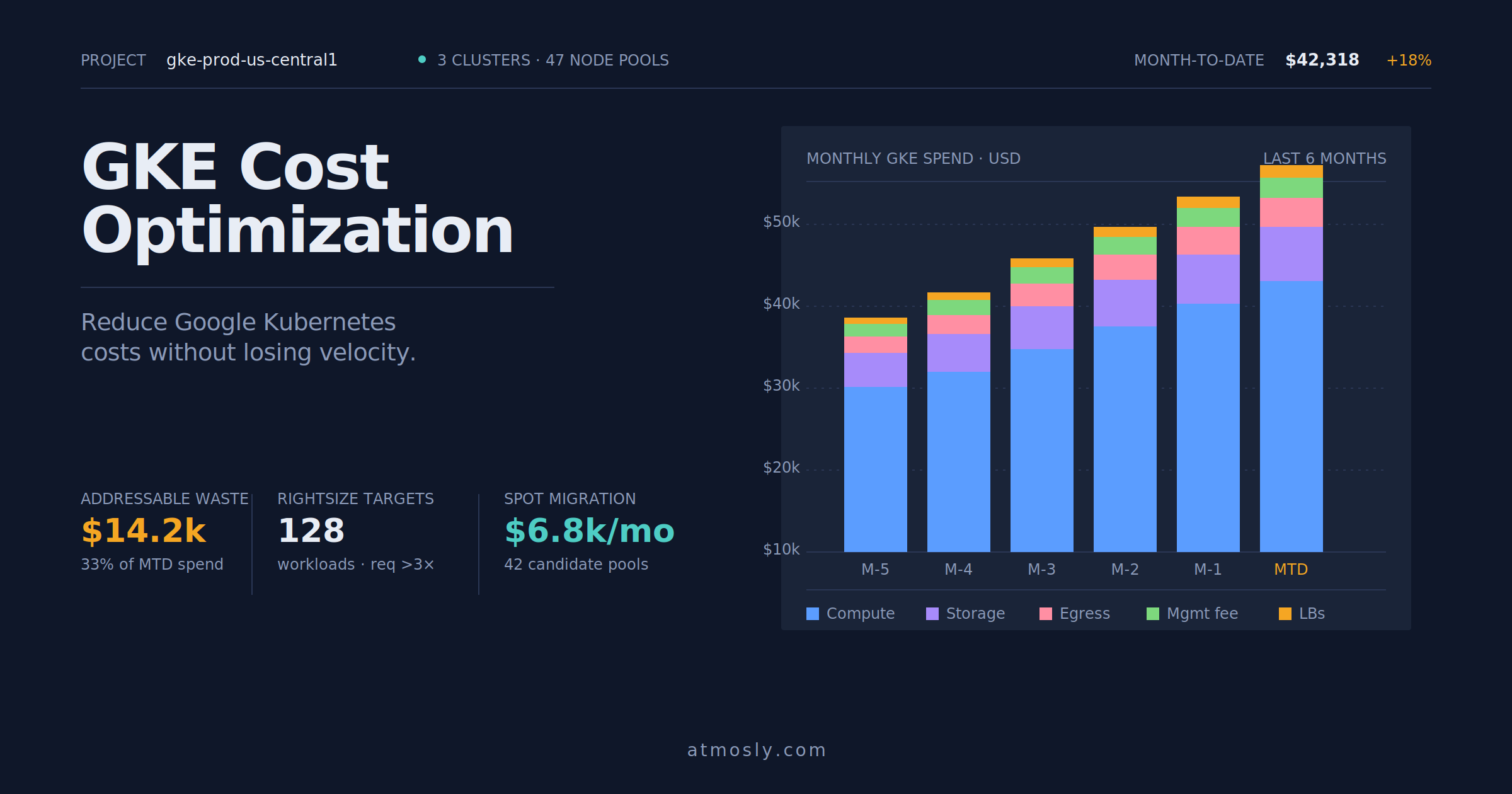
Practical GKE cost optimization guide — rightsizing, Spot VMs, storage tiering, and network egress control for engineers.
 Kubernetes
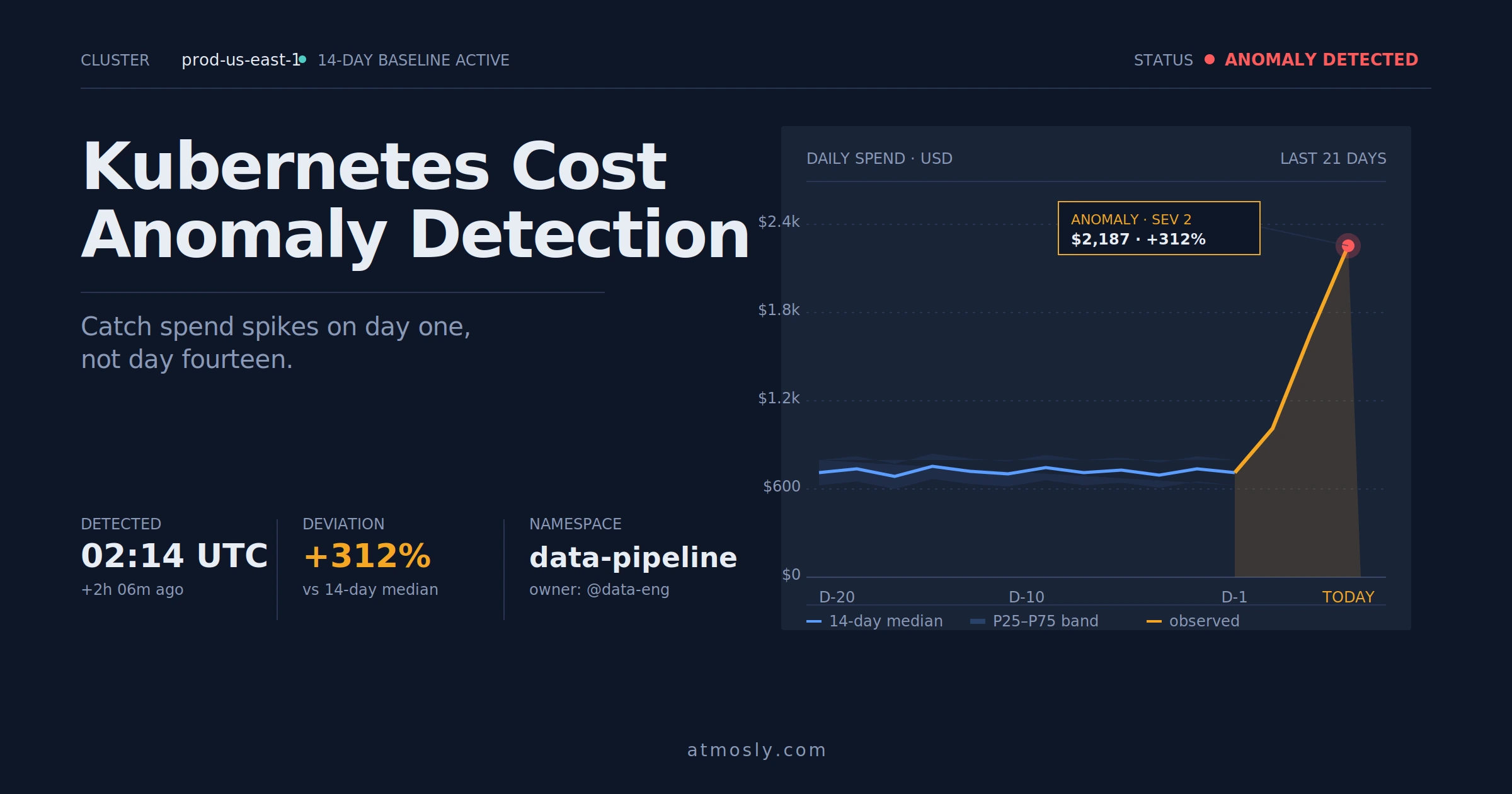
How to detect Kubernetes cost anomalies early, investigate spend spikes, and stop budget surprises before they hit the bill.
See governed self-service on your own estate — SSO, scoped RBAC, continuous compliance, and private clusters in scope. Let's scope a pilot.