The first chargeback invoice is the one that goes wrong. You spend three months getting allocation right, the numbers reconcile against the cloud bill, the dashboards look clean — and then finance debits three team budgets. By lunchtime you have four tickets, two of which say the same thing: we never agreed to this.
That is almost never a data problem. The maths was usually fine. What was missing is everything around the maths: a written policy, a rate teams could plan against, a close date, and somewhere to take a complaint that is not a direct message to the platform lead.
This post is about that layer. It assumes two things are already true — you have decided to charge back rather than just show costs, and your allocation numbers are trustworthy. If you are still choosing between the two models, start with showback and chargeback compared side by side, which covers the decision itself, the allocation maths, and the options for splitting idle and shared cost.
The short version
- Chargeback is a billing product, not a report. The moment money moves, you owe teams a price, terms, a close date and a support path.
- Write the policy before the first bill. Six things have to be on paper. Most disputes are really disputes about one of them being unwritten.
- Freeze the rate for a quarter. A price that changes every time the spot market moves is not something a team can budget against.
- The close matters more than the calculation. Pick a date, freeze the numbers, and never quietly restate a bill that has already been sent.
- Expect the incentives to bite. Teams under-request, hoard reserved capacity, and start shadow clusters. Plan the guards in advance.
- Run a shadow bill for two to three months before any money actually moves. This is the single highest-return step in the whole programme.
Chargeback turns you into an internal service provider
This is the mental shift that makes the rest of it obvious. Under showback you publish a number and people look at it. Under chargeback you send an invoice and it hits someone's budget, which means you are now selling compute to your own colleagues.
Every real service provider has four things you probably do not have yet:
- A published price. Not "whatever the cloud charged us this month" — an actual rate a customer can multiply by their planned usage.
- Terms. What is included, what is billed separately, and what happens when usage spikes.
- A billing cycle. A date the month closes and the numbers stop moving.
- Support. A named path for "this bill looks wrong" that resolves in days, not in a quarterly steering meeting.
None of that is technical work. All of it is the work that decides whether the programme survives its first quarter. Teams do not revolt because the number is high. They revolt because the number arrived without warning, cannot be predicted, and cannot be argued with.
Write the policy down before you send a single bill
One page is enough. It has to answer six questions, and every one of them will be asked by someone senior within the first two months:
- What is being charged? Compute and memory almost always. Storage, load balancers, egress, the control plane and platform tooling are all separate decisions — name each one as in or out.
- Which allocation model? Requests, usage, or
max(request, usage). One sentence. Teams need to know whether padding a request costs them money. - Who owns idle and shared cost? Either the platform team absorbs it or it is spread across teams. Both are defensible. Silence is not.
- What is the rate, and when can it change? A number and a change window, published together.
- When does the month close? A date after which the figures are final.
- How does a team dispute a line? Where the ticket goes, who decides, and how long it takes.
Circulate it, get an explicit yes from every team lead and from finance, and store it somewhere versioned. When the policy changes later — and it will — the version history is what stops the argument about whether the rules moved.
See what each namespace actually costs before you bill anyone for it.
Free, read-only. Takes 10 minutes. Nothing changes in your cluster.
The policy document is also the thing you hand to a new team joining the cluster six months from now. If it does not exist, every onboarding becomes a fresh negotiation.
Set a rate teams can plan against
Why raw cloud cost makes a bad invoice
The intuitive approach is to bill exactly what the cloud charged, divided by consumption. It is accurate and it is almost unusable. Your effective per-core cost moves with the spot market, with which reserved instances happened to be covering which nodes that week, and with how well the scheduler packed the cluster. A team that ran the identical workload two months running gets two different bills and no explanation you can put in one sentence.
Worse, it charges teams for your bin-packing. Nobody outside the platform team can improve node utilisation, so a bill that swings on it is billing people for something they cannot control.
Freeze the rate, then publish the change window
The workable pattern is a fixed internal rate — say a set price per core-hour and per GB-hour — held for a quarter and calculated from the previous quarter's actual blended cost, with a modest buffer.
- Teams can forecast. Planned replicas multiplied by a known rate gives a number they can put in a budget.
- The platform team absorbs the variance. If you improve utilisation mid-quarter you keep the upside, which is exactly the right incentive.
- Re-pricing is an event, not a surprise. Announce the new rate before the quarter starts, with the reason.
Add one rule and most rate arguments disappear: a rate change never applies retroactively. If you got the buffer wrong, you eat the difference this quarter and correct it next.
When to actually re-price
Re-price when the gap between what you collected and what the cloud charged you exceeds roughly 10% for two consecutive months, or when something structural changes — a large reserved-instance commitment landing, a migration to a different instance family, a new cluster with a very different node mix. Do not re-price because one month was noisy.
The monthly close is a process, not a cron job
Pick a close date and freeze
Cloud billing data is not final on the first of the month. Cost and usage reports get amended, credits post late, and reserved-instance coverage gets reallocated after the fact. Teams that generate invoices on day one spend the rest of the month restating them.
Pick a date far enough out that the upstream data has settled — the fifth or the seventh working day is typical — publish it, and treat everything before it as provisional. After the close date the numbers are final, even if better data arrives afterwards.
Late data and corrections
Something will always land after the close. The rule that keeps trust intact is simple: corrections go on the next invoice as a visible adjustment line, never as a silent edit to a bill already sent. A team that discovers last month's number changed after they reported it upward will stop believing any of your numbers, and they will be right to.
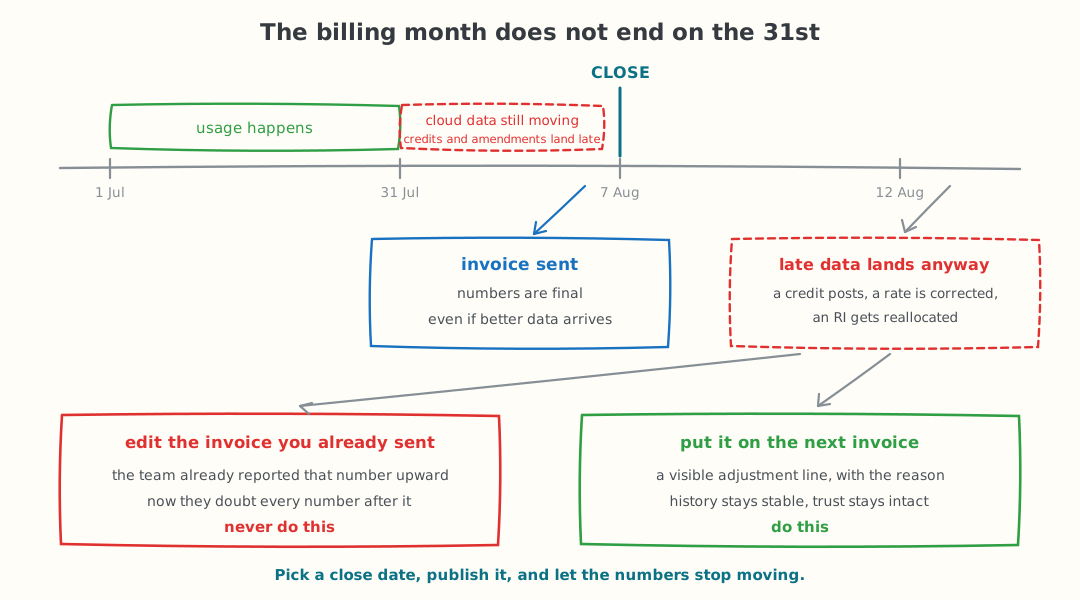
The close date is what turns a moving number into a bill someone can be held to.
What the invoice should actually show
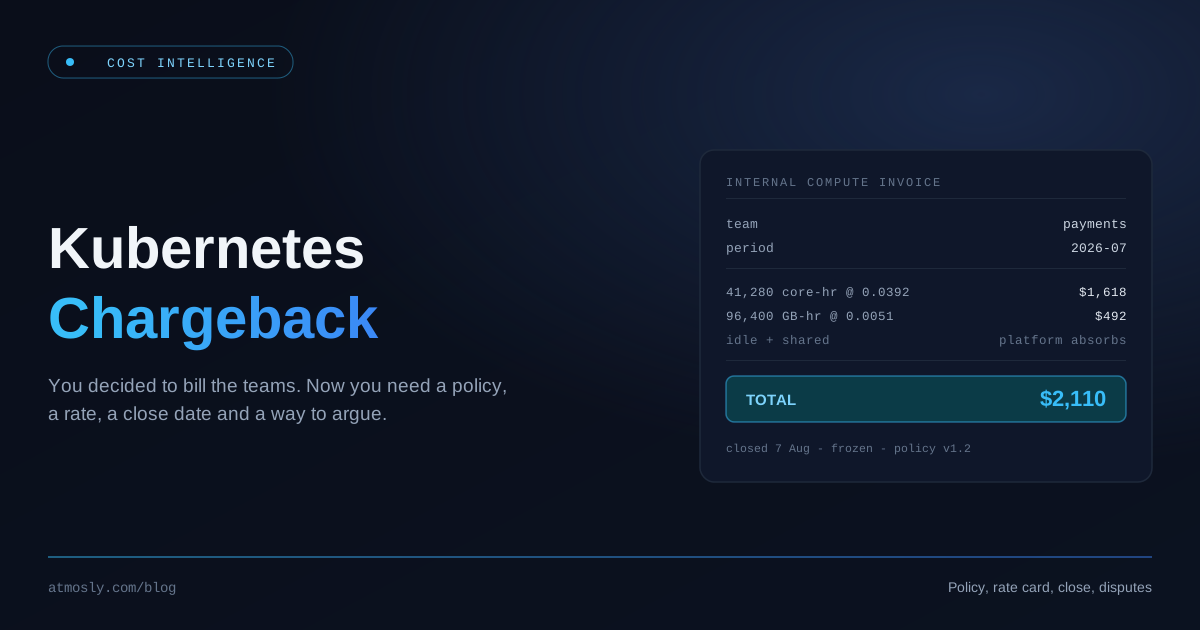
An invoice that is a single total is an invitation to dispute. Each team's bill should carry, at minimum:
- The line items — cost by namespace or workload, not one lump.
- The units and the rate — core-hours and GB-hours consumed, times the published rate, so the team can check the arithmetic.
- The month-on-month delta, with the largest movers called out. "Payments is up 18%, driven by the new indexing job" prevents most tickets before they are opened.
- Idle and shared cost shown separately, whether or not the team is being charged for it. Hiding it is what makes people assume it is being hidden.
- The policy version the bill was calculated under.
Give teams a way to dispute a bill
Disputes are healthy. They mean people are reading the invoice. What turns them toxic is having no process, so every complaint escalates straight to whoever is most senior and available.
A workable path has four steps:
- The team raises a ticket against a named queue, quoting the invoice line and what they think is wrong.
- The platform team reproduces the number from the same telemetry, and either explains it or confirms the error. Most disputes end here, and most end with the bill being right and the cause being a job nobody remembered scheduling.
- If it is a genuine error, it is corrected on the next invoice as an adjustment line.
- If the disagreement is about the policy rather than the number, it goes to whoever owns the policy — not to whoever calculated the bill. This separation matters more than it sounds.
Publish a target turnaround, five working days is reasonable, and track how many disputes you get. A rising dispute rate is the earliest signal that something in the model has drifted.
Decide who actually holds the budget
Chargeback only changes behaviour if the money lands somewhere that someone is accountable for. Three arrangements are common, and they behave very differently:
| Model | How it works | What it does in practice |
|---|---|---|
| Central platform budget | Platform holds the cloud budget; team costs are reported and reviewed but not debited | This is showback wearing a chargeback label. Low friction, weak signal. |
| Per-team budget | Each team's budget is debited monthly; overspend is the team's problem | Strongest incentive. Only works when teams genuinely control their own resource requests and replica counts. |
| Hybrid | Teams own their direct workload cost; platform absorbs idle, shared and control-plane cost | The most common landing spot. Keeps each cost with whoever can actually reduce it. |
The question that decides it: can this team change its own infrastructure? If a team cannot alter its own resource requests without a platform ticket, billing them for those requests creates resentment rather than savings. Fix the self-service gap first, then charge.
The incentives chargeback creates, including the bad ones
Any billing system gets optimised against. Some of that is the point — teams right-size workloads they were previously ignoring. The rest needs planning for.
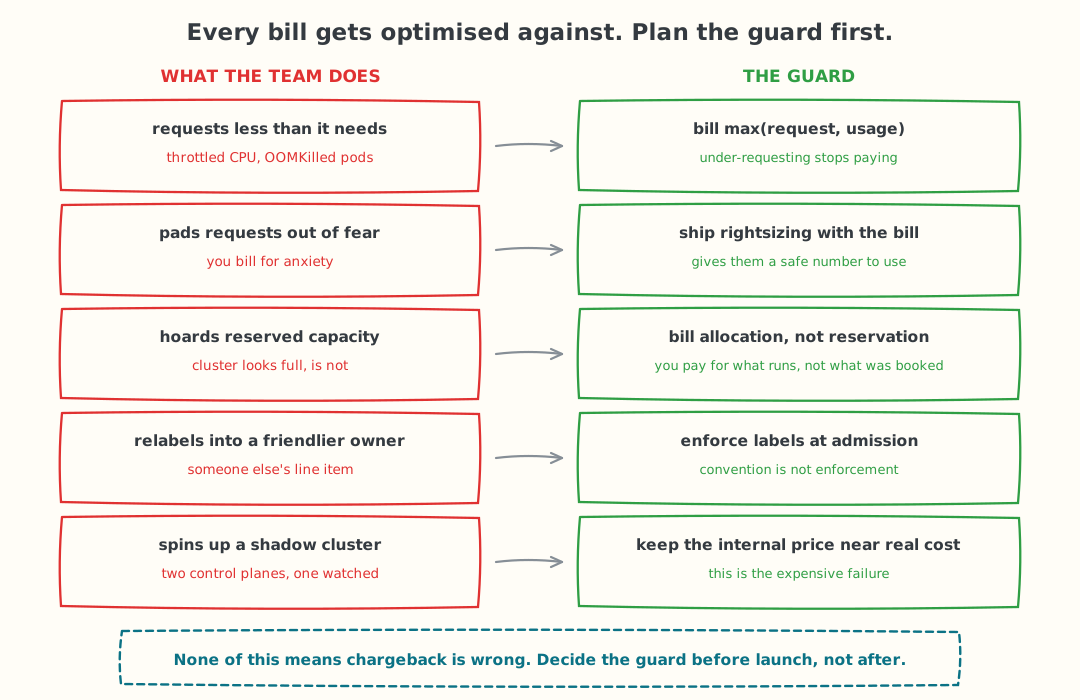
Five predictable reactions, and the guard for each. Decide these before launch.
- Under-requesting. If you bill on requests, the cheapest strategy is to request less than the workload needs. The result is CPU throttling and
OOMKilledpods, and the outage costs more than the saving. Billing onmax(request, usage)removes the reward. - Padding by fear. The opposite failure. Teams inflate requests because they are afraid of hitting a limit — remember that requests are what you pay for, while limits are only the ceiling. Publishing right-sizing recommendations alongside the bill is what fixes this, not a stern email.
- Capacity hoarding. Teams that are billed for reserved capacity hold on to it whether or not they need it, so the cluster looks full and is not. Bill on actual allocation, not on reservations, unless you deliberately want a reservation model.
- Shadow clusters. The most expensive reaction. A team decides the internal price is unfair, spins up its own cluster on a separate account, and now you are paying for two control planes and nobody is watching the second one. Internal pricing that is wildly above the real cost is what causes this.
- Label gaming. Workloads quietly relabelled into a namespace with a friendlier owner. Enforce labels at admission with a policy engine rather than by convention, and reconcile allocated cost against the cloud bill every month.
None of these mean chargeback is a bad idea. They mean the model needs a guard for each one, decided before launch rather than after the first quarter's numbers look strange.
Run a shadow bill before real money moves
If you take one thing from this post, take this. For two to three months, generate the invoice exactly as you will send it — same rate, same close date, same line items, same delivery — and mark it clearly as not being charged.
The shadow period is what turns a launch into a non-event:
- Month one. Teams see a bill for the first time. Expect a lot of questions and at least one number that turns out to be genuinely wrong. This is the cheapest possible time to find it.
- Month two. Teams start reacting — right-sizing, deleting things they had forgotten, asking why a staging namespace costs more than production. Most of the easy savings in the whole programme happen here, before anyone has been charged anything.
- Month three. The numbers should be boring. If they are still surprising people, do not go live yet.
Three exit criteria before real billing starts: unallocated cost is under about 5% of the total, no open disputes older than the turnaround target, and every team lead has signed the policy. Missing any one of them, extend the shadow period. It costs a month and saves a year of arguing.
What your tooling has to do
Chargeback puts requirements on a cost tool that showback does not. The bill has to survive being challenged by someone with an incentive to challenge it.
- Billing-grade attribution. Cost per namespace and workload derived from actual placement and actual node prices, not a cluster-wide average rate.
- Idle kept separate. If idle capacity is smeared across teams by default, a team that right-sizes perfectly still gets billed for your over-provisioning, and the incentive breaks.
- Reconciliation. Allocated cost plus idle plus shared should sum to the cloud bill. If it does not, you cannot defend a line item.
- History that does not move. Last month's figures must still return the same answer next quarter, or the close date means nothing.
- Something to do about it. A bill with no attached remedy is just a complaint. Teams need to see the fix next to the number.
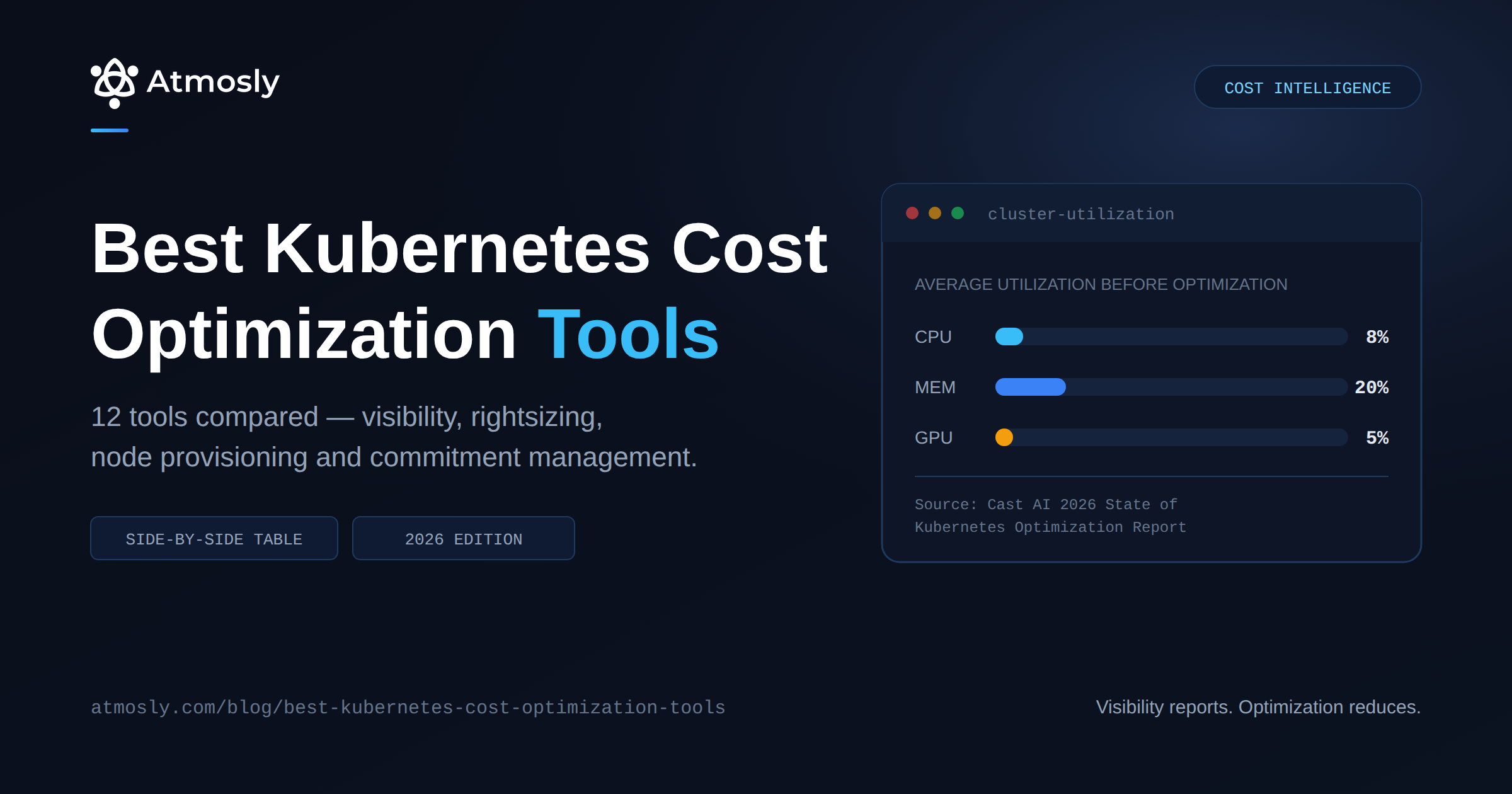
That last point is where most cost programmes stall. Public benchmarking from Cast AI's 2026 State of Kubernetes Optimization Report — their own research, across tens of thousands of production clusters — puts average CPU utilisation at around 8% and memory at about 20%. The recommendations to fix that are usually correct and usually unapplied. Sending someone an invoice for waste they have no time to remove does not change the bill.
How Atmosly supports a chargeback programme
Visibility. Atmosly reads live usage from in-cluster Prometheus and reconciles it against your connected cloud billing, so the figures are actual costs rather than estimates. Spend is broken down by resource type — compute nodes, control plane, storage, network and load balancers — and attributed to namespace, workload, service and team. There is no tagging project to complete first, which matters because tagging cannot be applied retroactively and a chargeback programme usually needs history from day one.
Attribution. Allocation uses max(request, usage), priced against the real node mix for that cluster and that day — spot, on-demand, reserved-instance or Savings-Plan covered, and Fargate — rather than a single blended rate. Shared costs like the control plane, load balancers and persistent volumes are priced and attributed from cluster inventory. Idle cost is calculated as capacity minus allocated and surfaced as its own bucket, never smeared across teams. Where a genuine price is not available it shows a dash rather than inventing a number, which is exactly the behaviour you want on something a team is going to be billed for.
Action. Every workload gets a right-sizing recommendation from p95 usage, with a confidence level, a priority and an estimated monthly saving. Applying it opens a GitOps pull request against your manifests, which a human reviews and merges — the only form of change that survives the next ArgoCD or Flux sync. A direct apply with a time-boxed sync pause and revert window is available where a PR is not practical. A CPU throttle guard and an OOM guard sit in front of the recommendations so a cost cut cannot quietly starve a workload.
Measurement. A savings ledger tracks each recommendation from Potential to In progress to Realized, so the reduction shows up against the same numbers the invoice was built from. Budget thresholds, spending alerts and anomaly detection cover the governance side. Atmosly is read-only by default, every action is reversible with a full audit trail, and the platform is ISO 27001 certified with SOC 2 Type II in progress. Most customers save 20–40% on Kubernetes costs within the first three months.
The mechanics underneath all of that — how a shared node bill becomes a per-namespace number — are covered separately in how Kubernetes cost allocation actually works.
The product itself lives on the Kubernetes cost optimization page, if you want the feature-level detail rather than the operating model.
One boundary worth naming. Atmosly works inside the cluster. If your chargeback conversation also covers managed databases, unattached volumes and idle resources across the whole cloud account, that is a different scope — SpendZero is the account-wide layer, and the two answer different questions.
Key takeaways
- The hard part is not the calculation. It is the policy, the rate, the close and the dispute path.
- One page of written policy prevents most of the arguments you would otherwise have in month three.
- A frozen quarterly rate beats billing raw cloud cost, because teams can budget against it and you keep the upside of your own efficiency work.
- Never restate a sent invoice. Corrections go on the next one, visibly.
- Charge teams only for what they can change, or fix the self-service gap first.
- Shadow-bill for two to three months. Nothing else de-risks the launch as cheaply.
- Pair every bill with a remedy. An invoice without a fix attached is a complaint, not a cost programme.
If you want to see what a chargeback invoice would look like against your own cluster before committing to any of this, connect Atmosly read-only and look at the per-namespace breakdown first. It takes about ten minutes and nothing in the cluster changes. Start a free cluster scan.