Multi-Cluster Kubernetes Cost Management Best Practices
Track, allocate, and compare costs across multiple Kubernetes clusters — fleet visibility that actually helps teams decide.

You don't have a DevOps hire yet, and you shouldn't need one to run Kubernetes safely. Atmosly gives a small team the operations, delivery, and provisioning of a full platform org — AI handles the on-call, pipelines ship your code, and guardrails keep cloud spend honest.
Early on, infrastructure falls to whoever's closest to it — usually an engineer who'd rather be shipping. That works until it doesn't.
Your best engineers moonlight as part-time SREs, context-switching away from the product every time something breaks.
When prod breaks at night, there's no on-call rotation and no playbook — just whoever wakes up and starts guessing.
Dev clusters run all weekend, instances are oversized "to be safe," and the first time anyone looks is when finance asks.
The three things a platform team would do for you — run it, ship to it, and keep it in budget — handled by one product you can set up yourself.
Astra, our AI SRE agent, detects, diagnoses, and proposes a ranked fix for incidents — read-only by default, every action reversible. Nobody has to wake up guessing.
Pipelines build, deploy, and promote your services from day one — no Jenkins to babysit, no GitOps plumbing to wire up yourself.
Cost broken down by namespace and service, with right-sizing from real usage — so you catch waste before the bill does.
Scale dev down every night, tear down throwaway environments on a schedule — the cost discipline of a platform team, running itself.
Import your existing EKS, GKE, or AKS cluster read-only in minutes — public or private — and manage it end to end. No migration.
Deploy ingress, monitoring, and secrets from curated repos — and watch each one go Healthy — instead of stitching charts together by hand.
Run it, ship to it, and keep it in budget — the work a first platform hire would take on, handled by one product you set up yourself in an afternoon.
When something breaks at 2am, the AI SRE Agent has already found the root cause and drafted a ranked fix — read-only by default, every action reversible. Nobody on your team has to wake up and start guessing.
Pipelines build, deploy, and promote your services from day one — no Jenkins to babysit, no GitOps plumbing to stitch together. Push to main and it flows to staging; promote to production with one click.
Cost broken down by namespace and service, with right-sizing from real usage — so you catch waste before the bill does. Guardrails scale dev down every night and tear down throwaway environments on a schedule.
A senior platform engineer is months of recruiting and a six-figure salary. Atmosly is running the same afternoon — read-only, on the cluster you already have. It's the internal developer platform you'd otherwise spend a year building.
You don't have to adopt everything at once — most teams start with these and grow into the rest.
The same small team, two very different weeks.
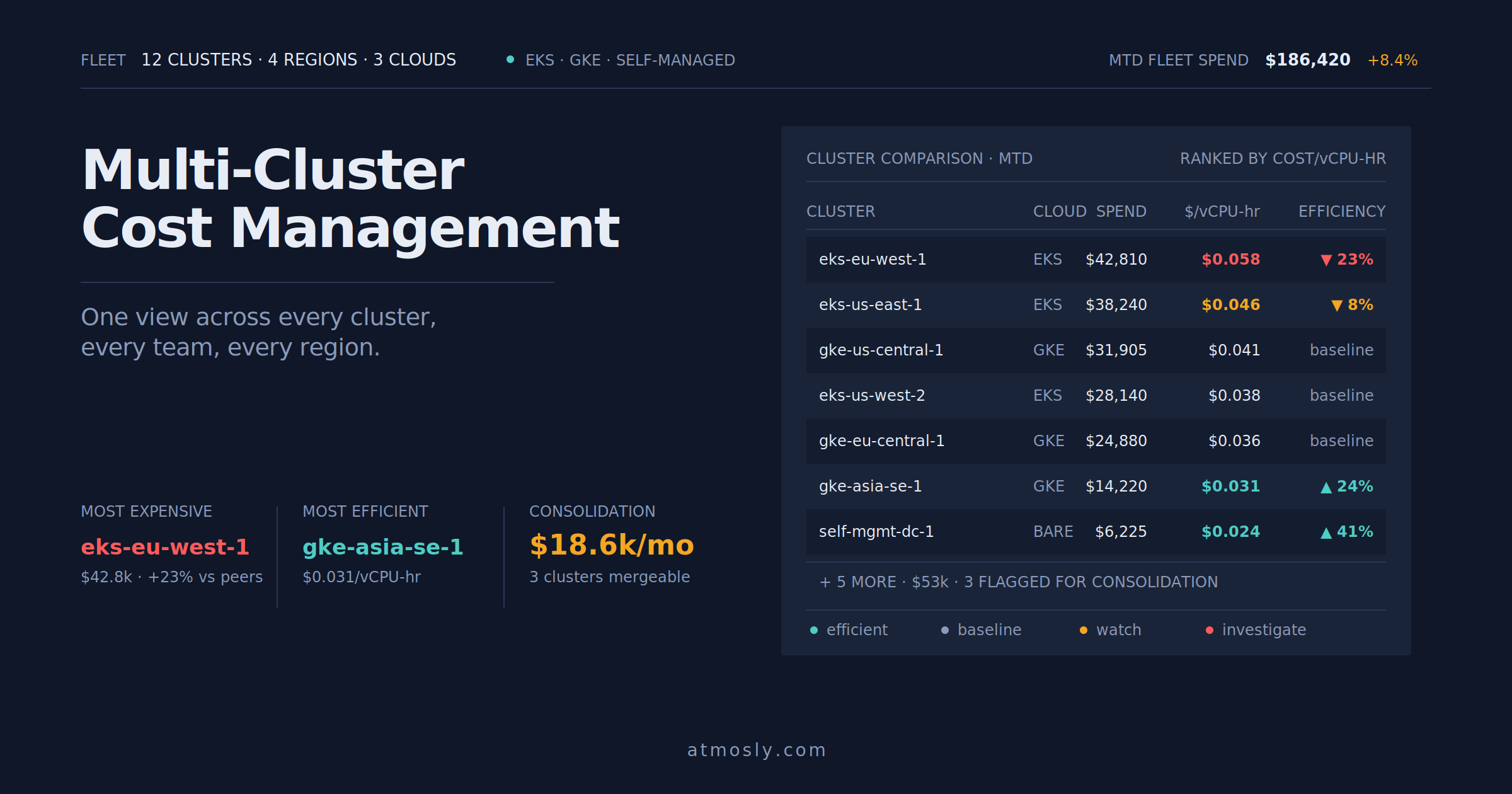 Kubernetes
Track, allocate, and compare costs across multiple Kubernetes clusters — fleet visibility that actually helps teams decide.
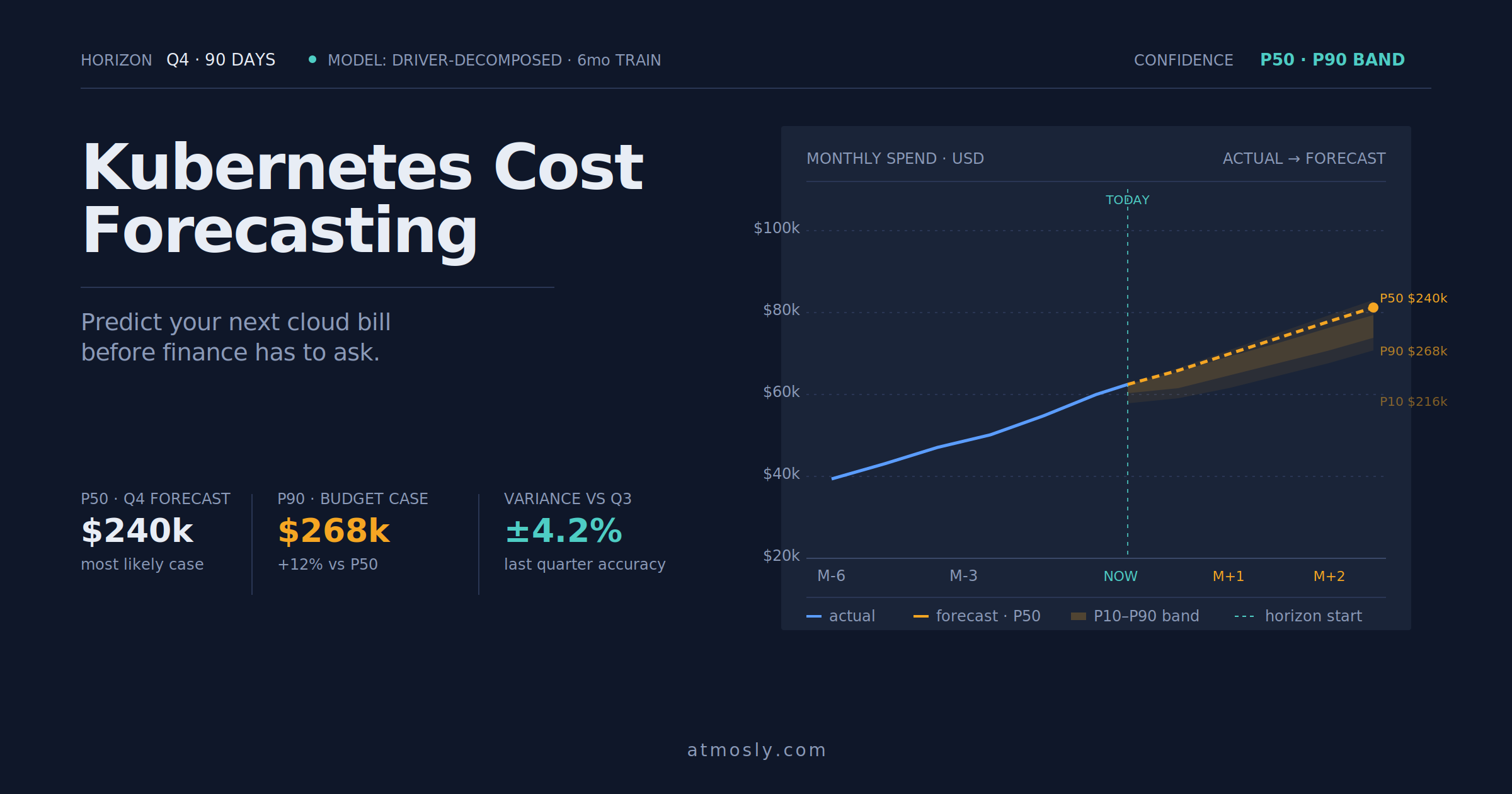 Kubernetes
How to forecast Kubernetes cloud costs, avoid budget surprises, and give finance a number you can actually defend.
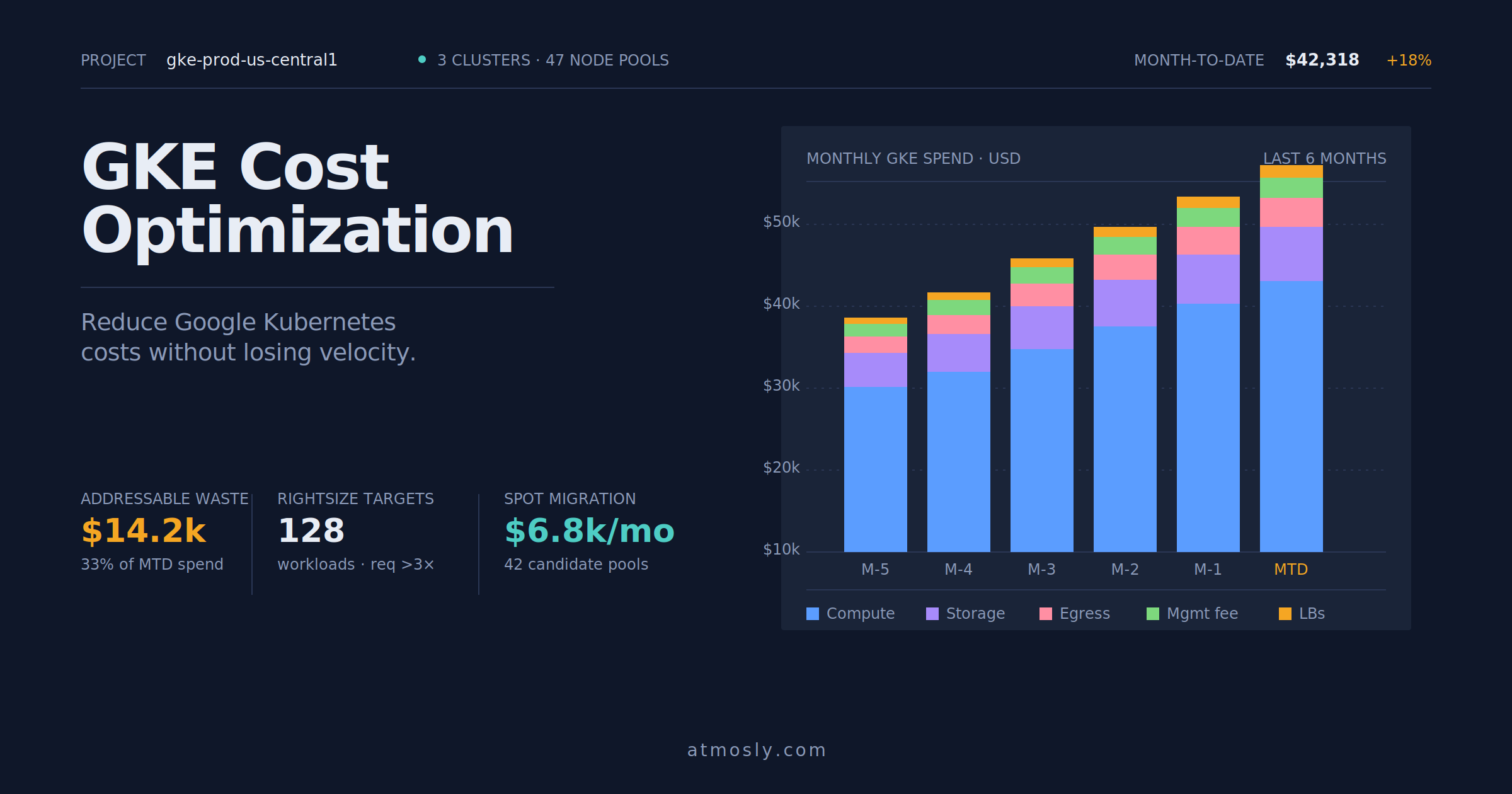 Kubernetes
Practical GKE cost optimization guide — rightsizing, Spot VMs, storage tiering, and network egress control for engineers.
Connect a cluster read-only and watch your incidents, spend, and deploys show up in one place — in minutes. Free, no sales call.