Multi-Cluster Kubernetes Cost Management Best Practices
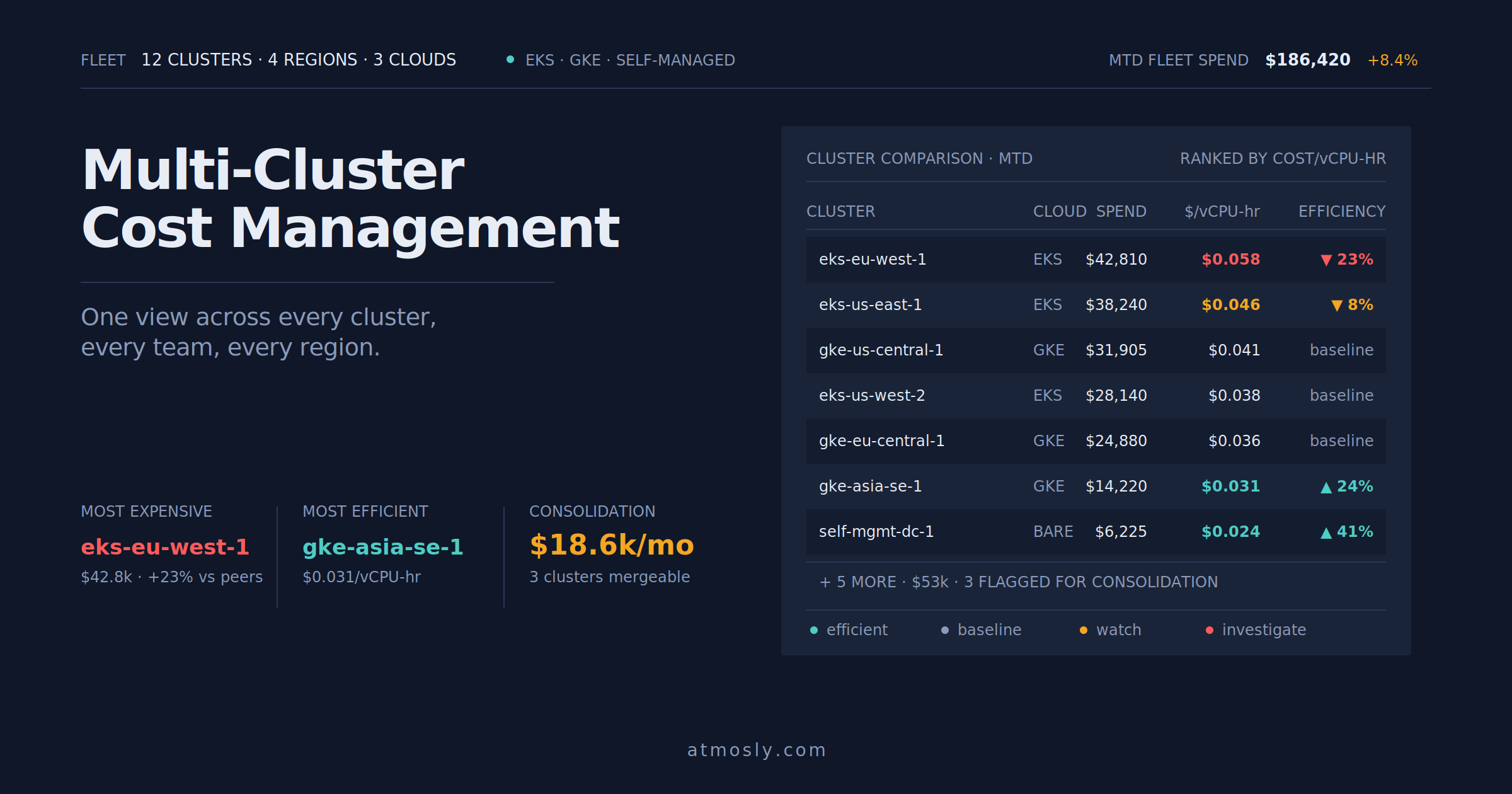
Track, allocate, and compare costs across multiple Kubernetes clusters — fleet visibility that actually helps teams decide.

Capture a workload that already runs — spec, config, dependencies — as a versioned, parametrized blueprint. Then let any team self-serve it to any cluster from a golden-path catalog. No rewrite, no copy-pasted YAML.
Read a running workload's spec, config & dependencies.
Snapshot it into a versioned blueprint — no hand-written YAML.
Expose env, replicas & resources as safe inputs.
Publish to a catalog — any team, any cluster, self-serve.
Point Atmosly at a live workload. It reads the deployment, services, config, and dependencies as they actually exist — no greenfield manifest required.
Atmosly captures the workload as a blueprint with a version. Update the source and cut a new version — every deploy traces back to a known, reviewable definition.
Decide what's configurable: environment, replicas, resources, image tag. Everything else stays locked to the golden path, so self-serve never means free-for-all.
Publish the blueprint and any team can deploy it to any cluster — through the same guardrails and audit trail as everything else. No ticket, no platform-team bottleneck.
The reusable, governed building block that turns one good setup into the standard everyone ships.
Every blueprint carries a version with a readable history. Promote v3, compare it to v2, roll back if you need to — the same discipline as code, for deploys.
Expose exactly the inputs a team should touch — environment, replicas, resources — with types, defaults, and bounds. Everything else stays locked to the golden path.
Any team deploys from the catalog without filing a ticket or waiting on the platform team.
One blueprint targets EKS, GKE, AKS or on-prem — no per-environment fork.
Every self-serve deploy runs through the same policy checks and audit trail as the rest of the platform.
A blueprint is the deployable unit your pipelines promote and your preview environments clone — capture it once, and the rest of the CI/CD core reuses it everywhere.
Capture, ship, and run share one UI, one audit trail, and one permissions model.
 Kubernetes
Track, allocate, and compare costs across multiple Kubernetes clusters — fleet visibility that actually helps teams decide.
 Kubernetes
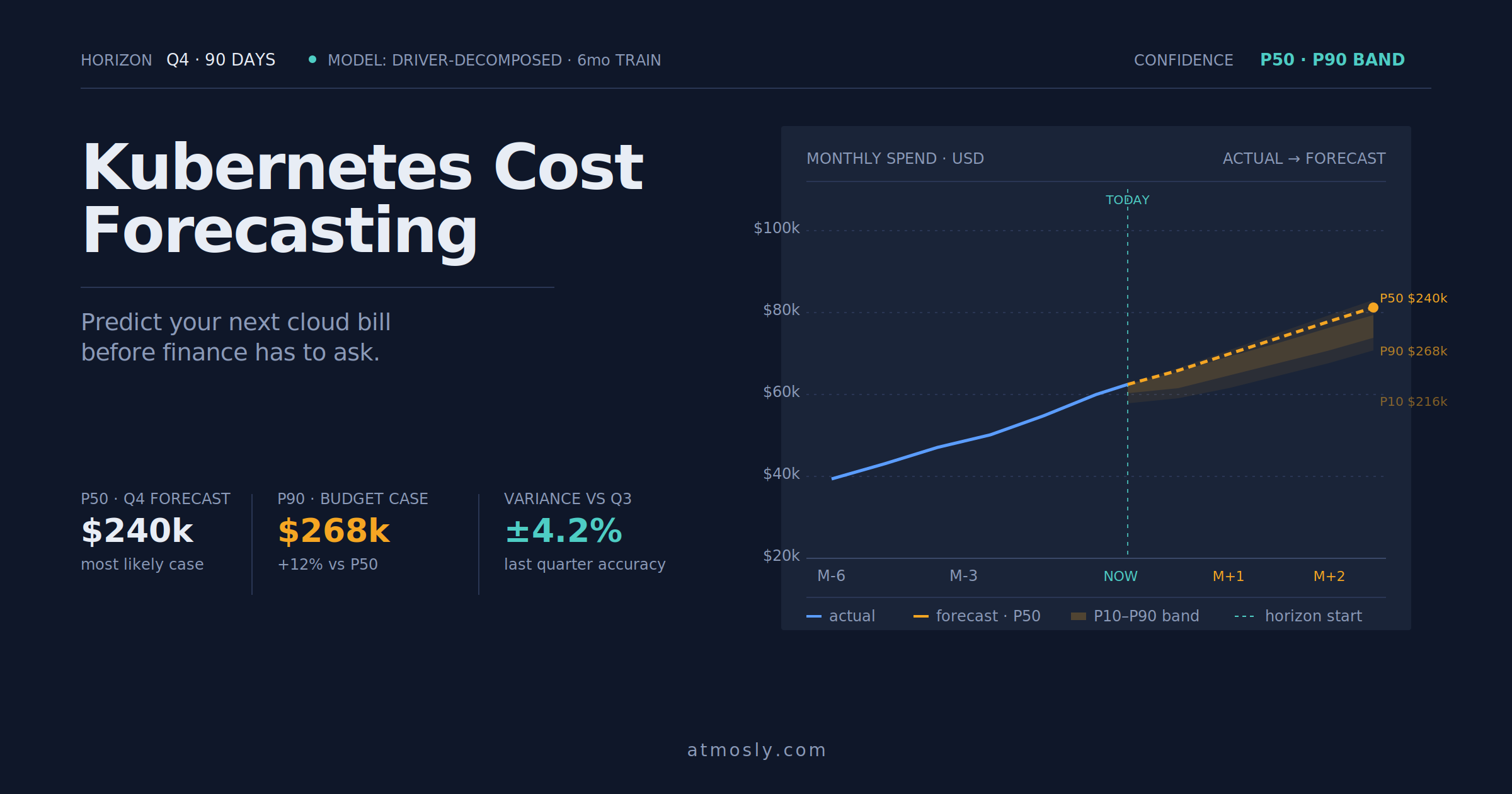
How to forecast Kubernetes cloud costs, avoid budget surprises, and give finance a number you can actually defend.
 Kubernetes
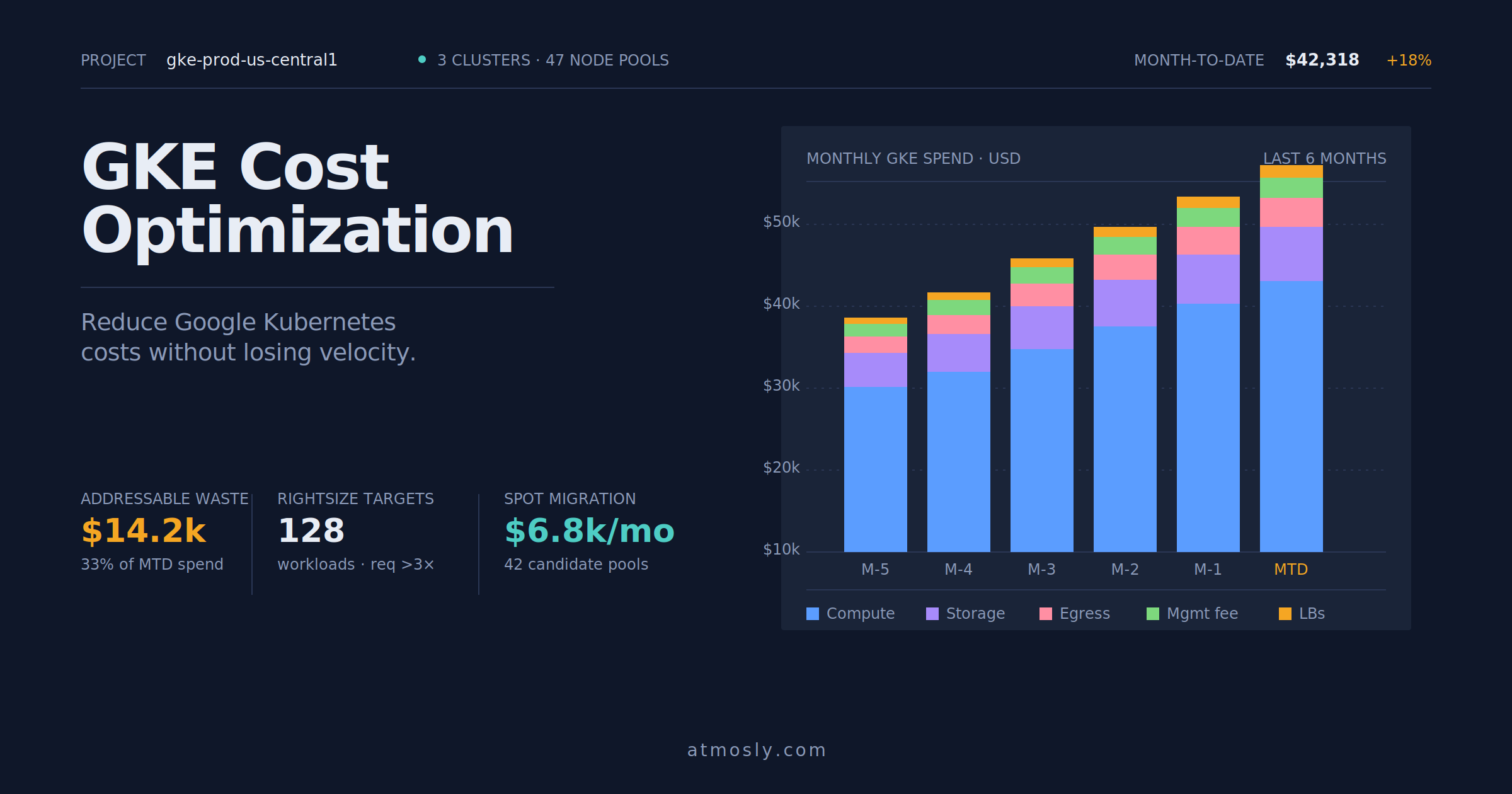
Practical GKE cost optimization guide — rightsizing, Spot VMs, storage tiering, and network egress control for engineers.
Connect a cluster, read-only to start. Capture a running service as a blueprint and see it ready to self-serve in minutes. Free, no sales call.