Kubernetes Cost Forecasting: Predict Your Next Cloud Bill
How to forecast Kubernetes cloud costs, avoid budget surprises, and give finance a number you can actually defend.

More teams, more clusters, more environments, a bigger bill. Atmosly gives you one control plane across the whole fleet: AI operations that scale with you, delivery that stays standard, and guardrails that keep a growing estate consistent and cost-controlled.
The setup that carried you through the early days doesn't survive contact with multiple teams, clusters, and clouds. Everything that was manual becomes a bottleneck.
Every team spins up its own clusters and environments its own way — each a snowflake nobody else can safely touch.
More services and clusters mean more things breaking — but you can't hire SREs fast enough to keep up with the surface area.
Idle non-prod, oversized requests, and abandoned environments multiply across the fleet — and no single view catches it.
Standardize how every cluster is run, shipped to, and governed — without taking autonomy away from the teams that move fast.
One pane of incidents for the whole fleet — root cause and a ranked fix per issue — so coverage scales without scaling the rota.
Workload blueprints and shared pipelines mean every team ships the same governed way — no more per-team snowflakes.
Clone a known-good environment for a new team or region instead of rebuilding it — same services, datastores, and config.
Scheduled scale-downs and teardowns across clusters keep a growing estate tidy and on-budget — automatically.
Bring every cluster — across clouds, public or private — under one control plane, managed end to end through one path.
AWS, GCP, and Azure spend in one view, broken down by team and service — so growth doesn't hide waste.
Make operations, delivery, and cost uniform across the whole fleet — so the tenth cluster costs the same to run as the second, and growth stays boring.
Every cluster's incidents land in one pane, each with a root cause and a ranked fix. Coverage scales with the number of clusters — not the size of your on-call rota — so adding capacity doesn't mean adding SREs.
Workload blueprints and shared pipelines mean every team ships the same governed way — no per-team snowflakes. Need a new region or team? Clone a known-good environment instead of rebuilding it by hand.
AWS, GCP, and Azure spend unified and broken down by team and service — so growth doesn't hide waste. Fleet-wide guardrails scale non-prod down and tear down abandoned environments on a schedule, everywhere at once.
The point of a control plane is that the tenth cluster costs the same to operate as the second. Atmosly makes the fleet uniform so growth stays boring — a single internal developer platform spanning every cluster and cloud.
Standardize operations, delivery, and governance first — the rest follows.
Both add clusters and teams. Only one keeps the chaos from scaling too.
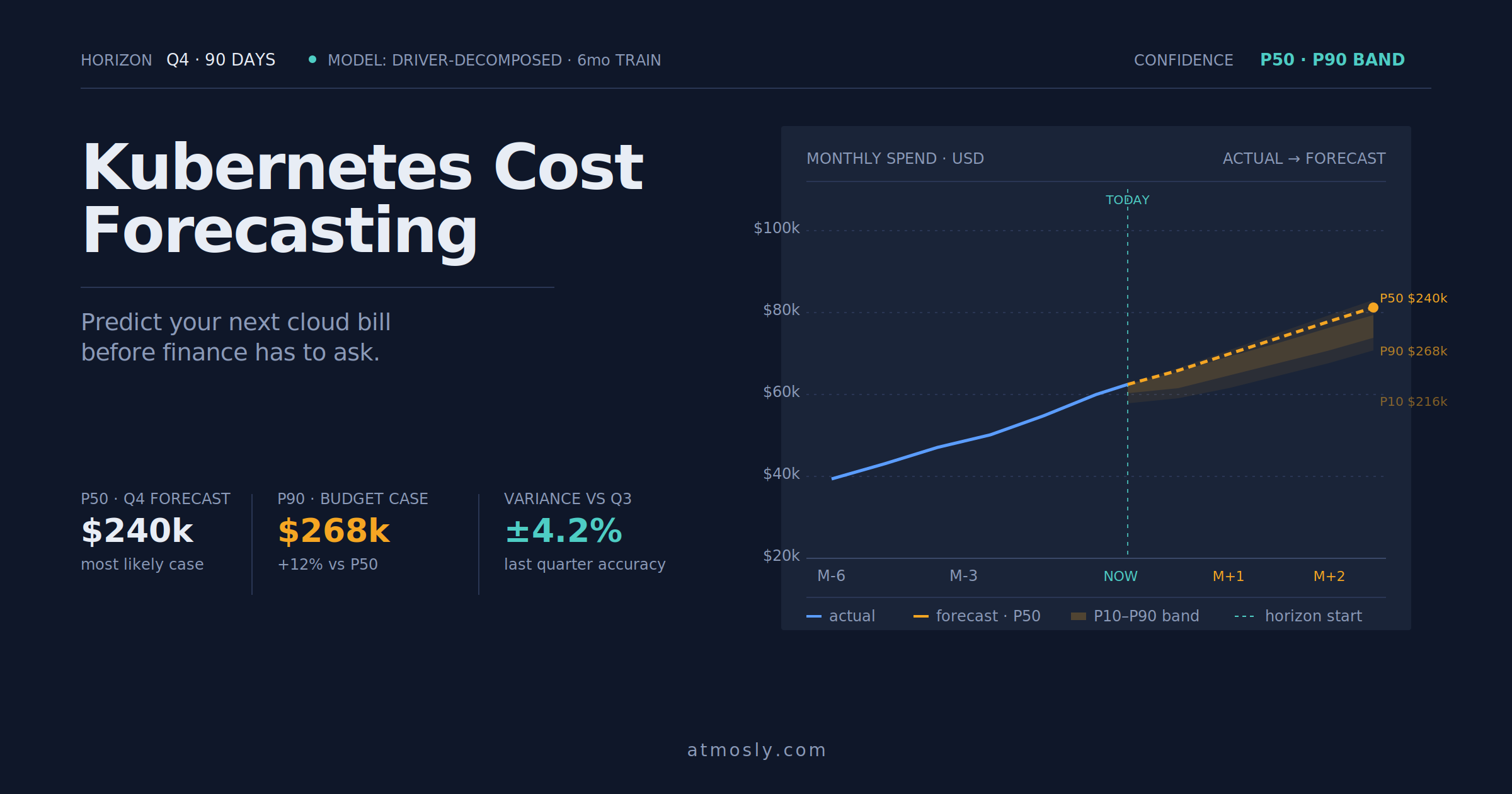 Kubernetes
How to forecast Kubernetes cloud costs, avoid budget surprises, and give finance a number you can actually defend.
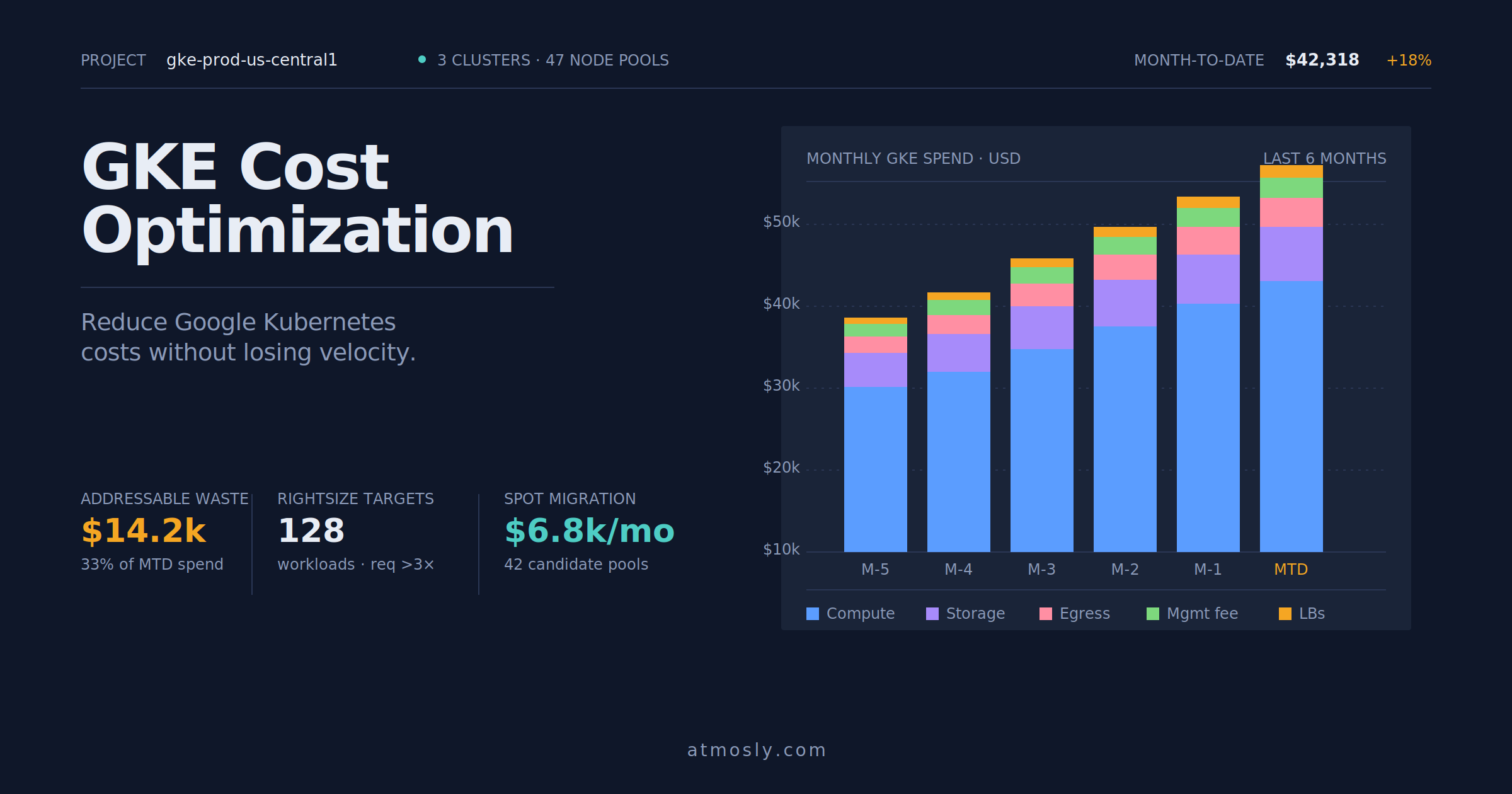 Kubernetes
Practical GKE cost optimization guide — rightsizing, Spot VMs, storage tiering, and network egress control for engineers.
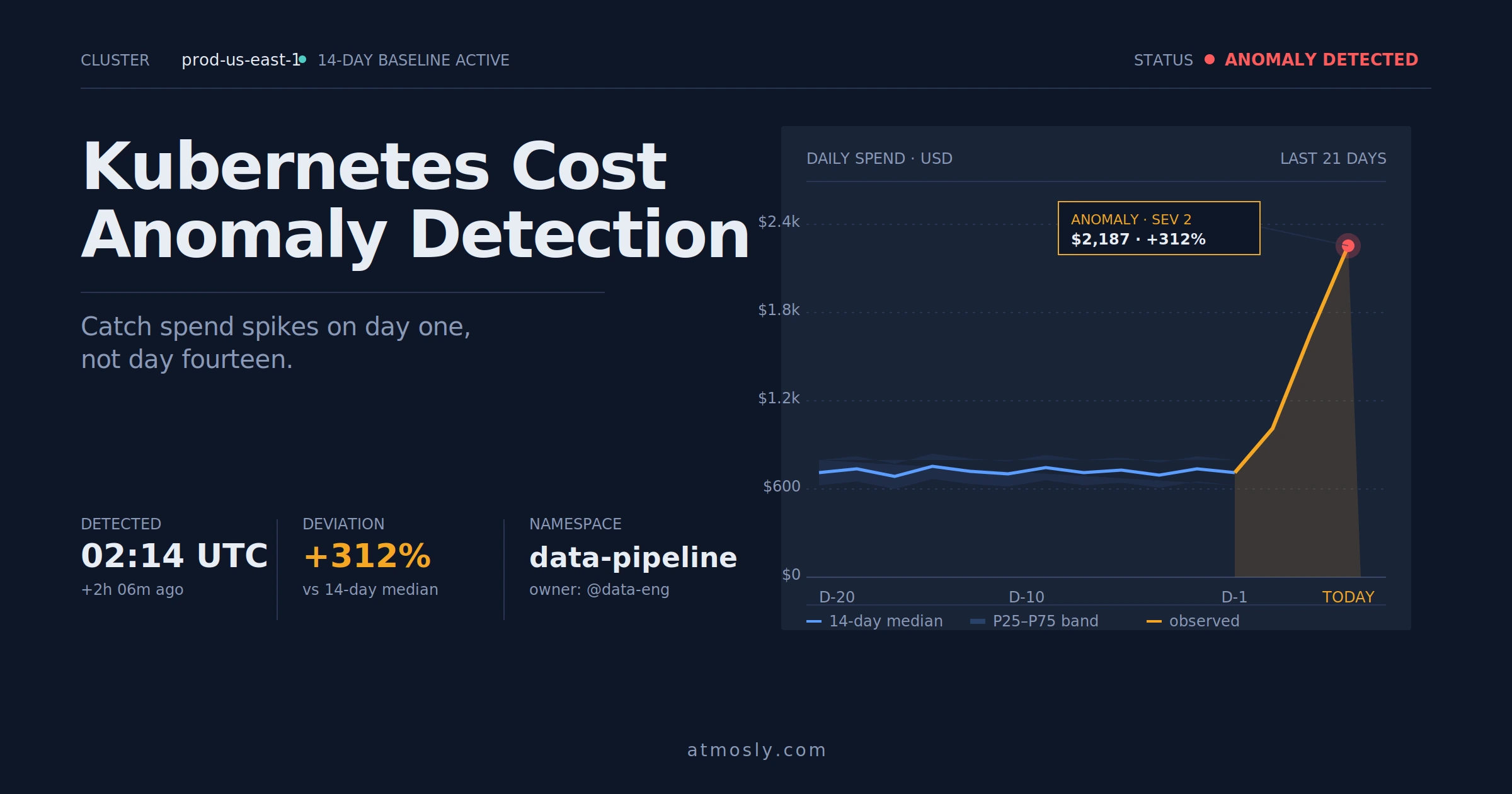 Kubernetes
How to detect Kubernetes cost anomalies early, investigate spend spikes, and stop budget surprises before they hit the bill.
Connect your clusters read-only and see every incident, deploy, and dollar in one place — across clouds — in minutes. Free, no sales call.