Resources Blog
Blog

Platform engineering, in the open.

Field notes on running Kubernetes with less toil — AI SRE and incident response, CI/CD and golden paths, continuous security, cost, and the internal developer platform that ties them together.

Kubernetes Cost Allocation Explained: Track Costs by Namespace, Team, and ApplicationFeatured
Cost Intelligence

Kubernetes Cost Allocation Explained: Track Costs by Namespace, Team, and Application

A practical pillar guide to Kubernetes cost allocation — how to attribute cluster spend down to a namespace, team, or application without a tagging project, why shared nodes make it hard, and the allocation models that keep the numbers honest.

Jul 2026Cost Intelligence
Cloud Cost Management vs Kubernetes Cost Optimization: Understanding the DifferenceCost Intelligence

Cloud Cost Management vs Kubernetes Cost Optimization: Understanding the Difference

Teams use "cloud cost management" and "Kubernetes cost optimization" interchangeably — but they operate at different layers. This guide breaks down the difference, why cloud-level tools go blind inside the cluster, and how the two work together.

Preview Environments Done Right: A Full Environment Per PR, Cloned SafelyEngineering

Preview Environments Done Right: A Full Environment Per PR, Cloned Safely

Give every pull request a full, isolated preview environment. Learn the namespace-per-PR pattern, safe cloning, secret handling, RBAC, and TTL teardown.

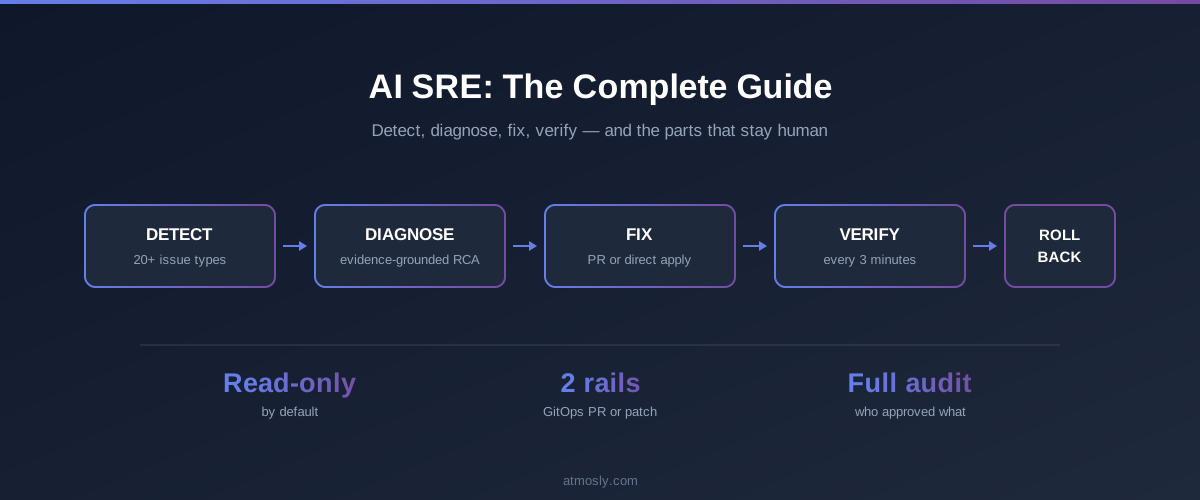
Anatomy of an AI SRE Fix: From Alert to Root-Cause PRAI SRE

Anatomy of an AI SRE Fix: From Alert to Root-Cause PR

Follow a single AI SRE agent fix end to end: from an OOMKill alert through evidence-grounded root-cause analysis to a merged, reviewable GitOps remediation PR. A frame-by-frame anatomy of the alert-to-PR loop, plus verification and auto-rollback.

The 3 Cloud Leaks Every Kubernetes Bill HidesCost Intelligence

The 3 Cloud Leaks Every Kubernetes Bill Hides

Your AWS invoice shows what you spent, never what you wasted. Here are the three Kubernetes cost leaks hiding in every EKS bill — and how to spot them.

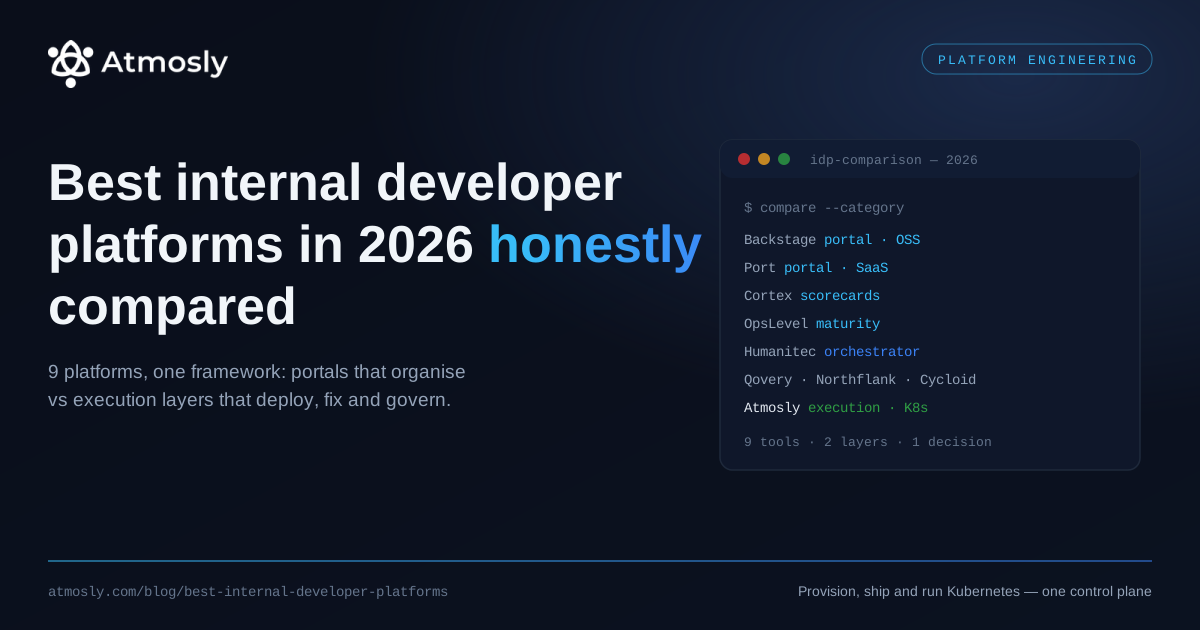
Portal IDP vs Execution IDP: The Difference That Actually MattersPlatform

Portal IDP vs Execution IDP: The Difference That Actually Matters

Portal IDPs show developers a button; execution IDPs run the action. Learn the difference, four tests to classify any IDP, and which one your team needs.

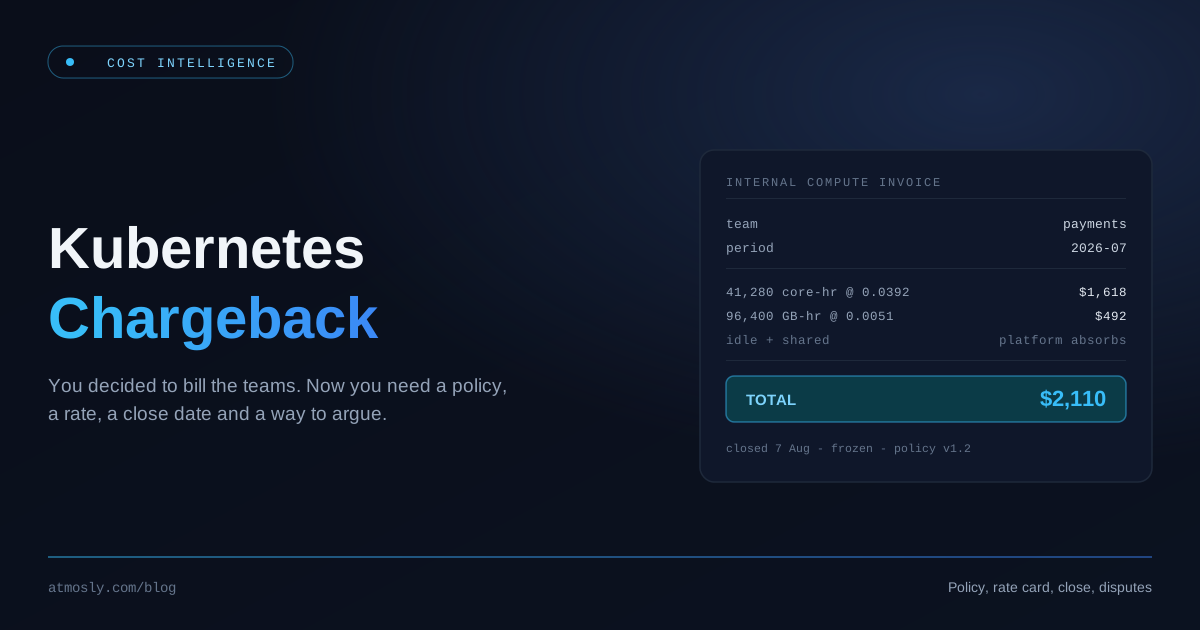
Kubernetes Cost Allocation: Showback vs Chargeback (2026 Guide)Cost Intelligence

Kubernetes Cost Allocation: Showback vs Chargeback (2026 Guide)

Kubernetes cost allocation turns a shared cluster bill into per-team numbers. Learn showback vs chargeback, idle/shared-cost splitting, and the maturity path.

Kubernetes Compliance & SOC 2: Continuous, Not a ScrambleSecurity

Kubernetes Compliance & SOC 2: Continuous, Not a Scramble

SOC 2, PCI DSS, and CIS Kubernetes compliance fail when treated as a yearly snapshot. Learn how to run continuous compliance as a stream — enforce policy at admission with OPA/Kyverno, scan continuously, and keep an immutable audit trail — so audits become an export, not an expedition.

Kubernetes FinOps: Complete Guide for Engineering TeamsCost Optimization

Kubernetes FinOps: Complete Guide for Engineering Teams

Comprehensive Kubernetes FinOps guide for engineering teams: cost visibility, allocation strategies, forecasting, automation, maturity model, and how Atmosly accelerates FinOps by connecting to existing Prometheus infrastructure.

Right-Sizing Kubernetes Workloads: Data-Driven ApproachCost Optimization

Right-Sizing Kubernetes Workloads: Data-Driven Approach

Comprehensive guide to right-sizing Kubernetes workloads using Prometheus telemetry: percentile analysis, safety buffers, validation methodology, and how Atmosly automates 30-day utilization analysis for instant recommendations.

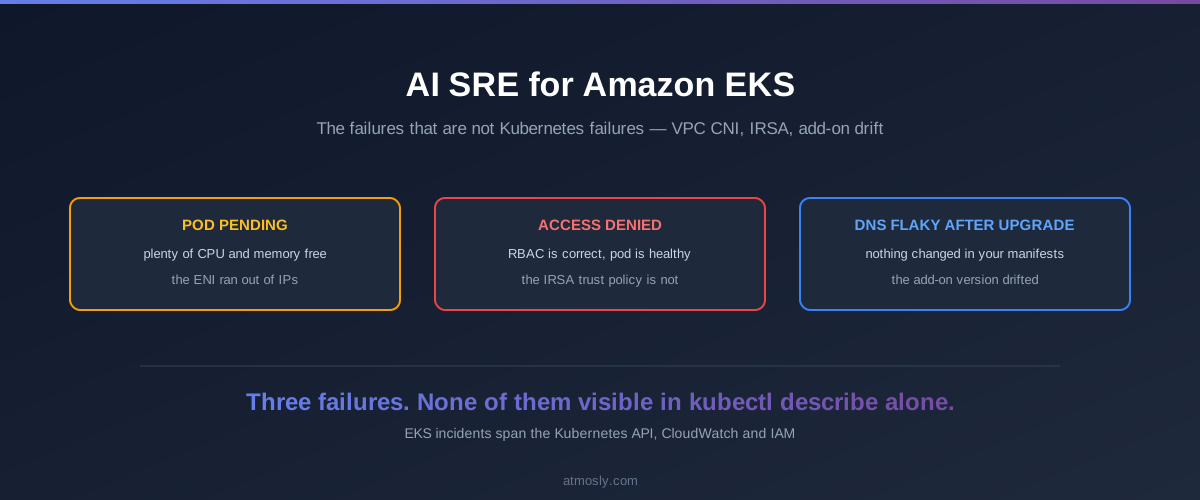
Kubernetes Pod Pending: 10 Reasons & How to FixKubernetes

Kubernetes Pod Pending: 10 Reasons & How to Fix

A Kubernetes pod stuck in Pending means the scheduler can't place it. This guide covers all 10 causes - insufficient resources, node selectors, taints, PVCs, quotas, max-pods, topology spread, and scheduler issues - with kubectl diagnosis and fixes for each.

How We Built a CI/CD Engine That Runs Hundreds of Pipelines a Day on KubernetesPlatform Engineering

How We Built a CI/CD Engine That Runs Hundreds of Pipelines a Day on Kubernetes

A deep technical guide to how Atmosly built a CI/CD engine that processes hundreds of pipeline executions daily across customer environments on EKS, GKE, and AKS. Covers our four-layer architecture, three-layer caching engine, canary/blue-green/rolling deployments, DevSecOps pipeline, approval system, and pipeline observability at Kubernetes scale.

Less reading about toil. Less toil.

Connect a cluster read-only and see your incidents, spend, and deploys in one place — in minutes. Free, no sales call.

Connect your cluster → See the platform