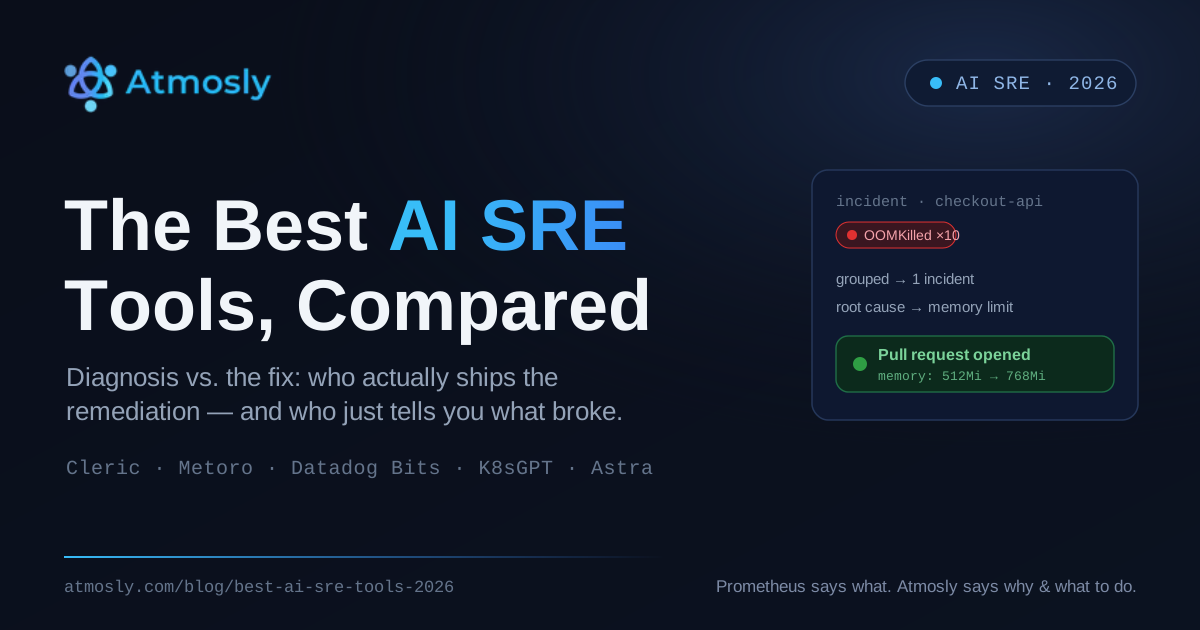
It's 3:04am and your phone is buzzing itself off the nightstand. Ten pages in ninety seconds — checkout-api pods flapping between OOMKilled and CrashLoopBackOff, each pod firing its own alert. By the time you're at your laptop, you're not debugging yet. You're triaging the alerts: which of these ten are the same problem, which dashboard actually shows the cause, and what change three hours ago set it off.
This is the exact moment the new category of "AI SRE" tools is built for. The problem is that "AI SRE" now means at least four different things, and the tools that share the label do genuinely different jobs. Some sit in Slack and hand you a diagnosis. Some ship their own telemetry. A rare few actually open the pull request that fixes the workload. This guide compares the serious options in 2026 — Cleric, Metoro, Datadog Bits AI SRE, K8sGPT/HolmesGPT, Rootly, and Atmosly Astra — on the one axis that decides whether a tool saves you at 3am: does it stop at telling you what's wrong, or does it carry the fix the last mile?
What "AI SRE" actually means in 2026
Strip away the marketing and today's tools fall into four buckets. Most products live mainly in one, even if their landing page implies all four.
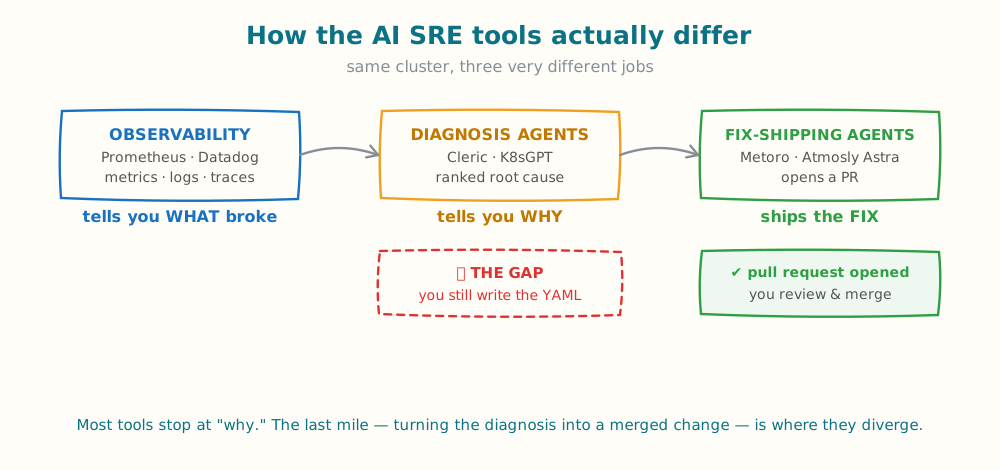
The same cluster, three very different jobs. Observability tells you what broke; diagnosis agents tell you why; only fix-shipping agents carry it to a merged change.
- Observability with AI bolted on. Datadog, New Relic, Dynatrace — deep telemetry you already pay for, now with an agent that reasons over it. Great data, and the AI is only as good as your instrumentation.
- Diagnosis-only agents. Cleric, K8sGPT, HolmesGPT. They investigate an alert, form hypotheses, and hand you a ranked root cause with evidence. The fix is still yours to write.
- Fix-shipping agents. Metoro and Atmosly Astra. They go past the diagnosis and open a pull request that changes the workload — which you review and merge.
- Incident-management platforms. Rootly, incident.io. They orchestrate the human response — roles, timelines, retros — and increasingly add AI on top. Different job from finding a root cause in your cluster.
The one question that separates them: diagnose or fix?
Here's the framing that cuts through the noise, and it's worth memorising before you sit through a single demo:
Prometheus tells you what's broken. Most AI SRE tools tell you why. Very few tell you what to do — and then do it.
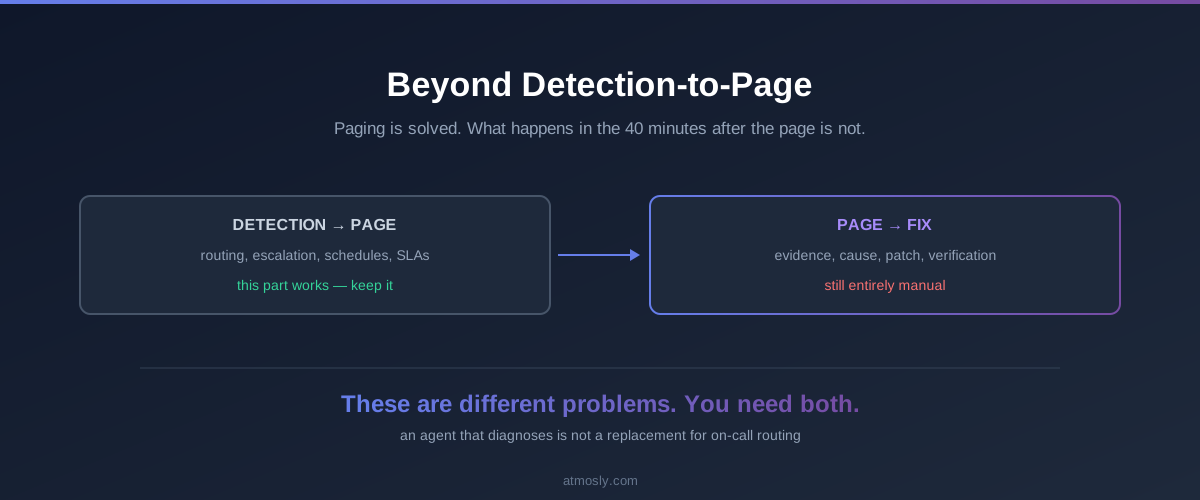
It's worth being concrete about why that last mile is expensive. A ranked root cause still has to be translated into a manifest change, opened as a PR, reviewed, and merged — and each of those steps happens while the incident is live and the on-call engineer is context-switching under pressure. That's where mistakes creep in: a hand-edited YAML that reformats the whole file, a fix applied directly to a GitOps-managed workload that silently reverts at the next sync, or a change that works tonight but nobody remembers next month when the same alert fires. Tools that only diagnose leave every one of those risks with you.
The practical consequence is that two tools can both claim "AI SRE" and produce wildly different outcomes on the same incident. One hands your engineer a paragraph of analysis at 3am; the other hands them a diff to approve. Both are useful, but only one of them shortens the part of the night that actually hurts. Keep that distinction front of mind as you read the individual tools below.
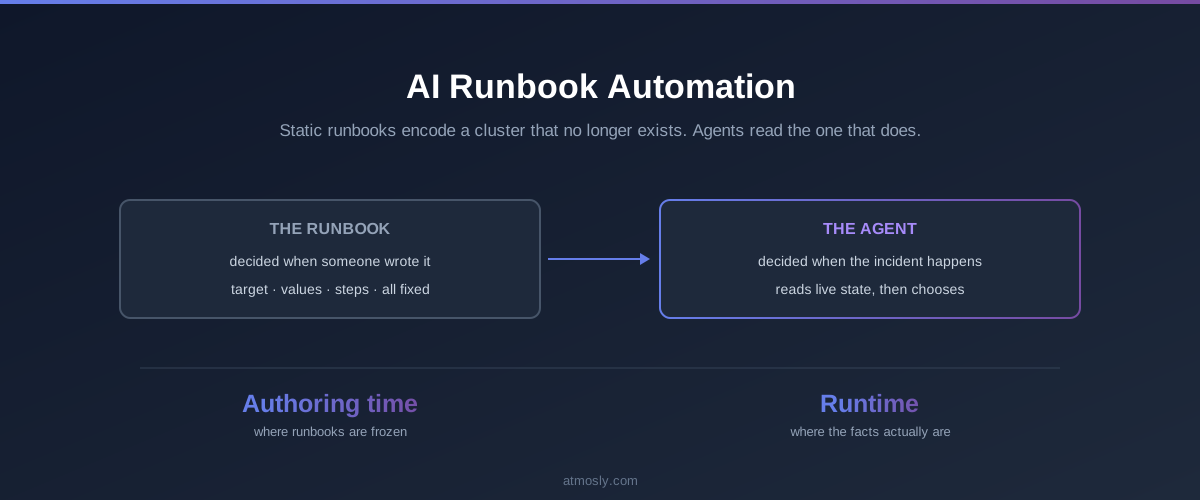
Nearly every tool in this space has gotten good at the "why." A ranked root cause in three minutes instead of forty is real value. But the last mile — turning "the memory limit is too low" into a reviewed change that's actually merged — is where the category thins out fast. That gap between insight and action is where most of your 3am minutes still go, and it's the single most useful thing to test in an evaluation.
The AI SRE tools, compared
Cleric — the Slack-native diagnostician
Cleric frames itself as an "AI SRE teammate" that takes the first pass on every alert. When something fires, it sweeps logs, metrics, traces, and recent changes, tests multiple hypotheses in parallel, and drops a confidence-backed diagnosis into Slack — often in around five minutes. It runs read-only and connects through APIs rather than deploying agents, and it was named a Gartner Cool Vendor in AI for SRE and Observability in 2025.
- Where it shines. Reducing alert fatigue and shortening the path to a credible root cause, especially for teams whose incident response already lives in Slack.
- Honest limits. Its output is only as good as your integration coverage and telemetry quality — thin instrumentation means weaker diagnoses. And by design it stops at recommendations: no automated fix generation. You still write and ship the change.
Metoro — the eBPF, Kubernetes-native fixer
Metoro is purpose-built for Kubernetes and is one of the few tools that genuinely carries a fix. Its collector runs as a DaemonSet and captures logs, metrics, traces, and Kubernetes events at the kernel with eBPF — no code changes, SDKs, or sidecars. Its engine detects an issue, root-causes it, and opens a GitHub pull request with a proposed fix; you get pinged with the PR. It's a strong, credible product (YC S23, ex-Palantir/Jump founders) and runs on any CNCF-conformant distribution.
- Where it shines. Teams that want a K8s-native agent that ships its own telemetry layer, so the AI isn't dependent on whatever observability you already have.
- Honest trade-offs. eBPF means kernel-level instrumentation and the privileges that come with it, and it brings its own telemetry stack to run. If you've already standardised on Prometheus and just want action on top, that's a consideration, not a dealbreaker.
Datadog Bits AI SRE — the observability incumbent
If you already live in Datadog, Bits AI SRE is the path of least resistance. It reasons across Datadog's full data surface — metrics, logs, traces, dashboards, changes, source code, RUM, database monitoring, profiler — completes investigations in roughly three to four minutes, and can now initiate automated remediation within the Datadog platform.
- Where it shines. Existing Datadog shops that want AI investigation and remediation without adding another vendor.
- Honest limits. It's most powerful inside the Datadog ecosystem and is priced through AI credits, so cost scales with usage. Remediation happens within Datadog's world rather than as a reviewed change in your Git repo. New Relic and Dynatrace occupy a similar position: excellent telemetry, AI layered on, the fix still largely yours.
K8sGPT and HolmesGPT — the open-source scanners
K8sGPT (Apache 2.0, CNCF Sandbox) runs deterministic Kubernetes analyzers and uses an LLM only to explain the findings in plain language. HolmesGPT extends that idea toward multi-step investigation. Both are free, and because they can run in your own environment, incident telemetry stays in your VPC rather than going to a third-party backend.
- Where they shine. A lightweight first-line cluster scanner and a data-sovereignty-friendly starting point. Many teams run K8sGPT as triage and layer a fuller agent on top.
- Honest limits. K8sGPT is a scanner, not an end-to-end incident responder — it explains findings; it doesn't group incidents or open remediation PRs. Treat it as one useful tool in the kit, not the whole workflow.
Rootly and incident.io — incident management, not diagnosis
These belong in the conversation because they're often shortlisted alongside AI SRE agents, but they solve a different problem. Rootly and incident.io orchestrate the human side of an incident — declaring it, assigning roles, keeping a timeline, running the retro — and both are adding AI. Because an incident-management platform already holds rich incident context, it needs fewer external integrations to summarise what's happening.
- Where they shine. Standardising and automating the incident lifecycle across a whole org.
- Honest limits. They're not built to root-cause a crash-looping workload in your cluster or to open the fix. Pair them with a diagnosis or fix-shipping agent rather than expecting one to replace the other.
Atmosly Astra — fix-shipping on a unified control plane
Astra is Atmosly's AI SRE Agent, and it's built around the last mile. It watches the live cluster, groups related failures into a single incident, produces an evidence-grounded root cause, and opens a reviewable GitOps pull request that a human merges. What makes it different isn't only that it ships a fix — it's that it sits on the same control plane as Atmosly's cost, security, and CI/CD capabilities, so it has deployment and spend context an observability-only agent doesn't. We'll go deep on how it works below.
- Where it shines. Teams on ArgoCD who want the diagnosis to arrive as a PR, with incident grouping to kill alert fatigue and a memory of past fixes.
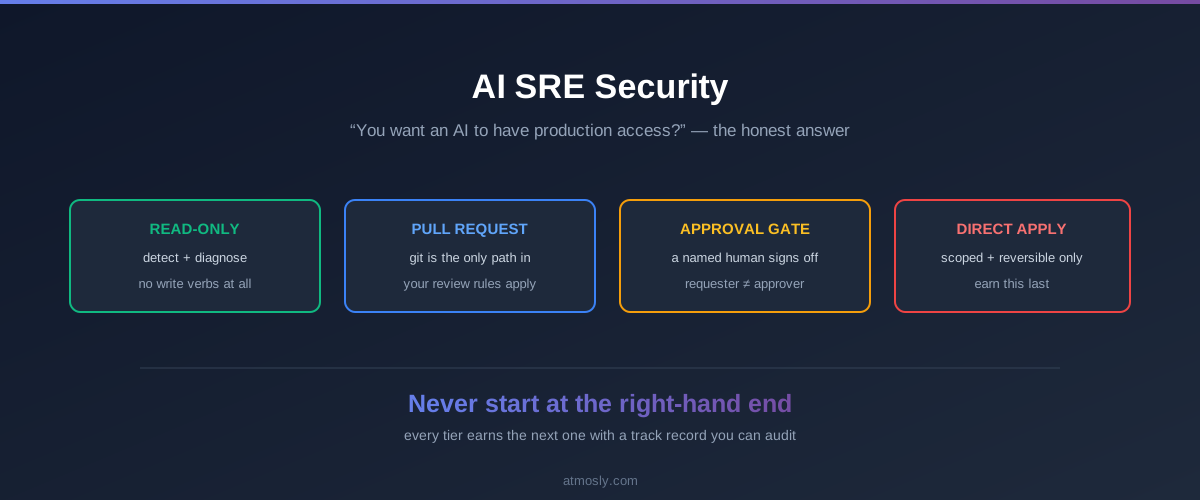
- Honest scope. GitOps remediation is ArgoCD-based today, and a human always merges the PR — Astra never mutates production on its own. That reviewability is the point, not a limitation.
The AI SRE tools at a glance
A quick side-by-side on the dimensions that actually change your on-call life. "Opens a fix PR" is the column most buyers under-weight and later wish they hadn't.
| Tool | Primary job | Opens a fix PR? | Kubernetes focus | Best fit |
|---|---|---|---|---|
| Cleric | Diagnosis in Slack | No — recommendations only | Multi-stack | Slack-centric IR, fast root cause |
| Metoro | Detect + fix (eBPF) | Yes — GitHub PR | Kubernetes-native | K8s teams wanting a bundled telemetry + fix agent |
| Datadog Bits | Investigate + remediate | In-platform remediation | Multi-stack | Existing Datadog shops |
| K8sGPT / HolmesGPT | Open-source scanning | No | Kubernetes | First-line triage, data sovereignty |
| Rootly / incident.io | Incident lifecycle | No (not their job) | Multi-stack | Org-wide IR orchestration |
| Atmosly Astra | Group + diagnose + fix | Yes — reviewable GitOps PR | Kubernetes-native | ArgoCD teams wanting fixes + cost/security context |
How to choose the right AI SRE tool
There's no single winner — the right tool depends on where your pain actually is. A few honest decision rules:
- If your incidents live in Slack and you mostly need a faster root cause — start with a diagnosis-first agent like Cleric.
- If you're all-in on Datadog — evaluate Bits AI SRE before adding a new vendor; the integration depth is hard to beat inside that ecosystem.
- If you want data sovereignty or a free starting point — run K8sGPT or HolmesGPT in your own cluster as first-line triage.
- If your real cost is the last mile — writing and shipping the fix — look hard at the fix-shipping agents (Metoro, Atmosly Astra), and weigh eBPF-plus-bundled-telemetry against GitOps-PR-on-your-existing-stack.
- If you need to standardise the human response across teams — that's an incident-management platform (Rootly, incident.io), used alongside, not instead of, a diagnosis or fix agent.
The most useful test in any trial: take a real recurring incident and count the minutes from alert to merged change. That number, not the demo's root-cause speed, is what you're actually buying.
Where Atmosly Astra fits
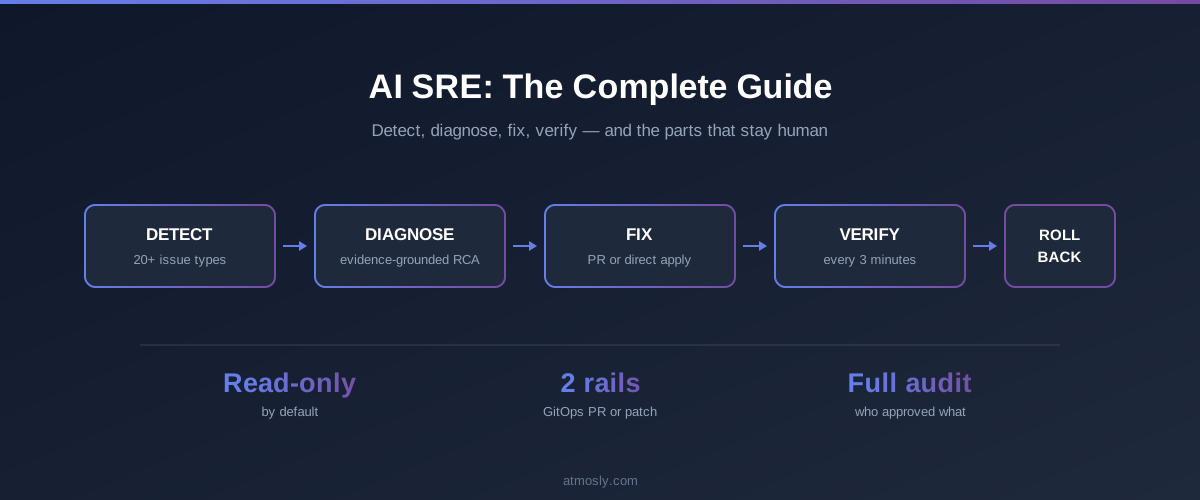
Because Astra is built around the last mile, it's worth walking the full loop — detect, group, diagnose, ship, protect — since that's exactly the sequence most tools stop partway through.
Detect. Astra watches the running cluster and classifies failures — crash-loop, image-pull failure, OOMKilled, pod error, node NotReady — each with a severity and a scope (pod, node, or cluster). No custom rules to author; the failure classes are built in.
Group — the alert-fatigue fix. This is the part every on-call engineer feels immediately. Ten crash-looping pods of one Deployment are collapsed into one incident, grouped by cluster, namespace, workload, and failure type. You see "checkout is crash-looping (×10)" — one incident, one owner — instead of ten near-identical pages.
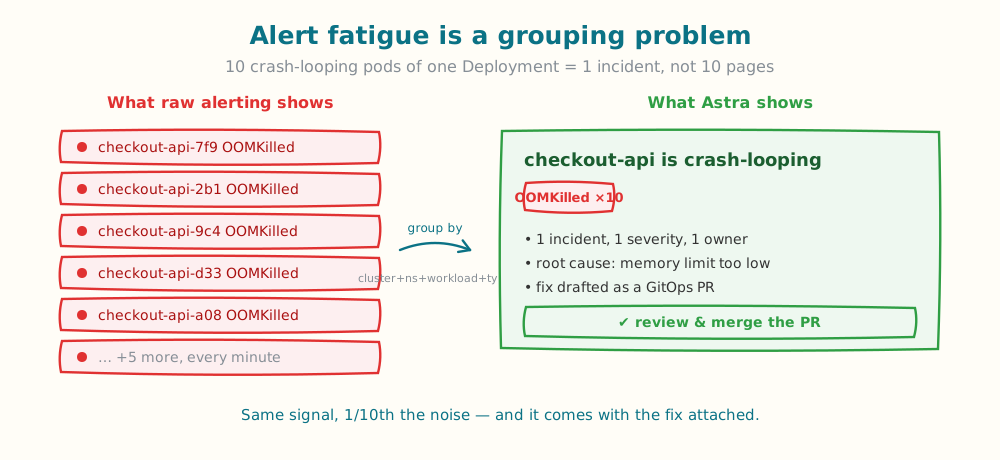
Your alerting tool doesn't have an alert problem — it has a grouping problem. Same signal, a fraction of the noise, and it arrives with the fix attached.
Diagnose. Astra produces an evidence-grounded root cause and proposes ranked fixes — not a wall of equal-priority alerts. Because it shares a control plane with Atmosly's cost and security views, it can factor in context an observability-only agent lacks: that the same workload was OOMKilled twice this week and is over-provisioned, and what deployment preceded the failure.
Ship — the reviewable GitOps PR. Instead of handing you a suggestion, Astra opens the pull request:
- It auto-discovers your ArgoCD Application that manages the failing workload and, after a one-time confirmation of repo, branch, and path, binds to it.
- It patches the manifest so that comments, key order, and quoting are preserved — the PR touches the lines that matter and doesn't reformat your file.
- You get a diff preview before anything is raised, and the PR is idempotent — clicking "open PR" twice returns the same PR, not a duplicate.
- It uses your existing GitHub, GitLab, or Bitbucket connection — no new credentials, no new auth surface. Common patches today include setting resource requests/limits and probes.
Protect. If you apply a fix directly to an ArgoCD-managed workload, ArgoCD would normally revert it at the next sync. Astra can pause auto-sync while you work and automatically resume it after a set window, so a forgotten pause can't strand an app in manual-sync. Astra is read-only by default, every action is reversible with a full audit trail, and — worth repeating — a human always merges the PR. It never changes production on its own.
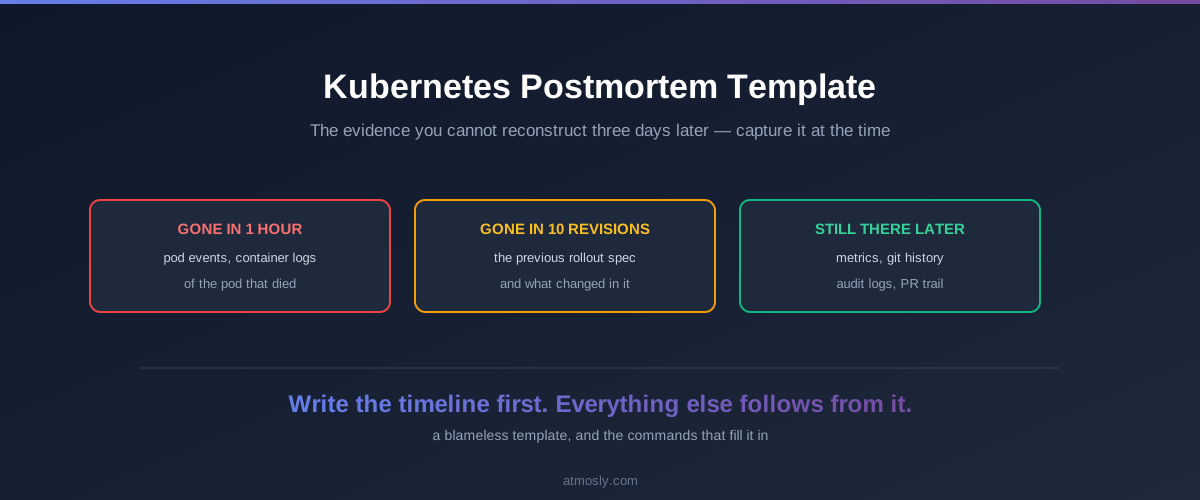
One more differentiator that almost nobody else does: institutional memory. Engineers add notes while triaging, and closing an incident requires a closure note describing what actually fixed it. When the same failure recurs, Astra surfaces a "seen before" view with the previous fix and how many times it's happened — so the 3am knowledge doesn't retire with the engineer who earned it.
Astra is not an incident-management product — it doesn't do on-call scheduling or lifecycle orchestration. It's the agent that closes the gap between "here's the root cause" and "here's the merged fix," on the Kubernetes stack you already run.
What to look for in an AI SRE tool: an evaluation checklist
Demos are optimised to show a fast, clean root cause. Real evaluations should probe the parts that don't demo well. Score every shortlisted tool against these seven dimensions:
- Action depth. Does it stop at a recommendation, remediate inside its own platform, or open a reviewable change in your Git repo? This is the biggest differentiator and the easiest to gloss over.
- Integration model. Agent-based, API-based, or eBPF? Each has a different security and setup footprint. Ask what privileges it needs and whether customer data leaves your environment.
- Noise reduction. Does it group related failures into one incident, or forward every pod's alert? Grouping is what actually cuts pager fatigue at 3am.
- Diagnosis quality under thin telemetry. Agents that lean entirely on your existing observability degrade when instrumentation is sparse. Test on a genuinely messy service, not the happy path.
- Guardrails and reversibility. Is it read-only by default? Is every action auditable and reversible? Who is in the loop before anything touches production? Reviewability should be a feature, not an afterthought.
- Institutional memory. When the same incident recurs next month, does the tool remember how you fixed it last time, or does the next engineer start from zero?
- Operational overhead and cost model. Does it bring its own telemetry stack you now have to run? Is pricing per-node, per-seat, or usage-based credits? Model the fully-loaded cost, not the sticker price.
Common mistakes when adopting an AI SRE agent
The teams that get the most from these tools tend to avoid the same handful of traps:
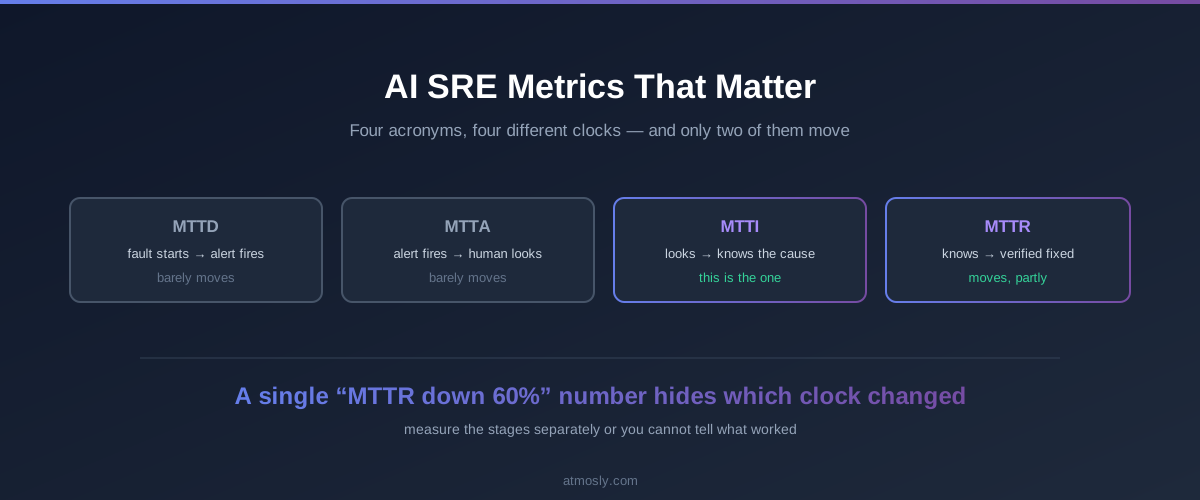
- Buying on root-cause speed alone. A three-minute diagnosis is impressive, but if your engineers still spend forty minutes writing and shipping the fix, you've optimised the cheap part of the incident. Measure alert-to-merged-change, not alert-to-diagnosis.
- Ignoring the instrumentation dependency. An agent that reasons over your telemetry is only as good as that telemetry. If half your services lack useful logs and traces, fix that first or pick a tool that ships its own data layer.
- Expecting one tool to do every job. A diagnosis agent won't run your incident lifecycle, and an incident-management platform won't root-cause a crash loop. The strongest setups combine categories deliberately rather than forcing one tool to cover all four.
- Letting an agent mutate production autonomously. The appeal of "self-healing" fades the first time an automated change makes an outage worse. Insist on a reviewed pull request and a human in the merge loop for anything that alters running workloads.
- Skipping closure discipline. Tools that capture what actually fixed an incident only pay off if your team writes the closure note. Treat each fix as a reusable artifact, not a one-off.
Key takeaways
- "AI SRE" is four categories, not one — observability-plus-AI, diagnosis agents, fix-shipping agents, and incident-management platforms. Match the tool to your actual pain.
- Almost everyone nails the "why." The differentiator in 2026 is whether the tool carries the fix the last mile to a reviewed, merged change.
- Cleric is a strong Slack-native diagnostician; Metoro and Atmosly Astra actually open fix PRs; Datadog Bits is the natural pick inside Datadog; K8sGPT/HolmesGPT are great open-source first-line scanners; Rootly/incident.io run the human response.
- Test the alert-to-merged-change time on a real recurring incident — that's the number that changes your on-call life.
- Atmosly Astra adds incident grouping and closure-note memory, and ships fixes as reviewable ArgoCD PRs on the same control plane as cost and security — with a human always in the merge loop.
Want to see the grouping, root cause, and GitOps PR loop against your own cluster? You can connect Atmosly read-only and run a free audit in about five minutes — no commitment, findings live on your dashboard. Start a free read-only audit with Atmosly Astra.