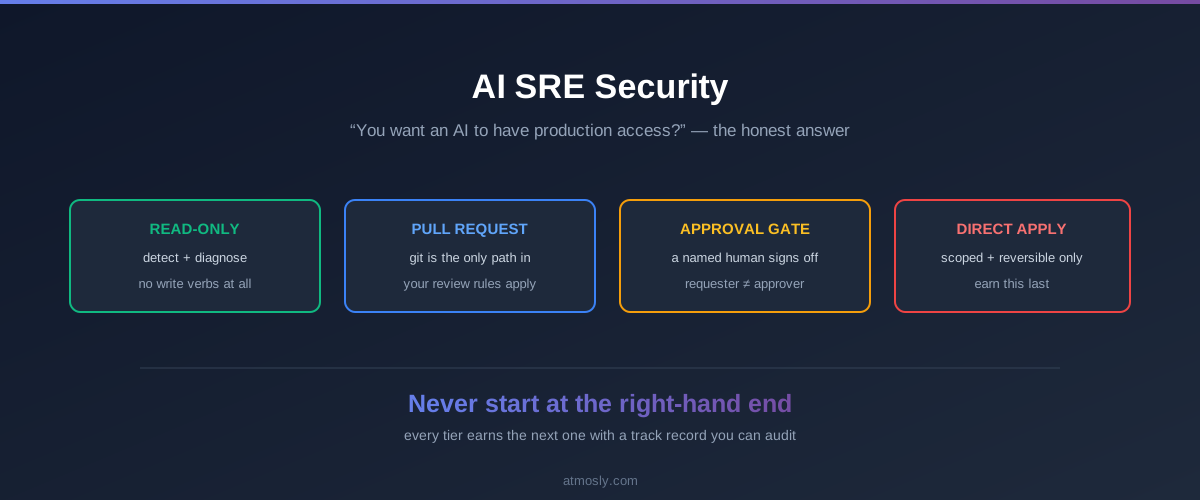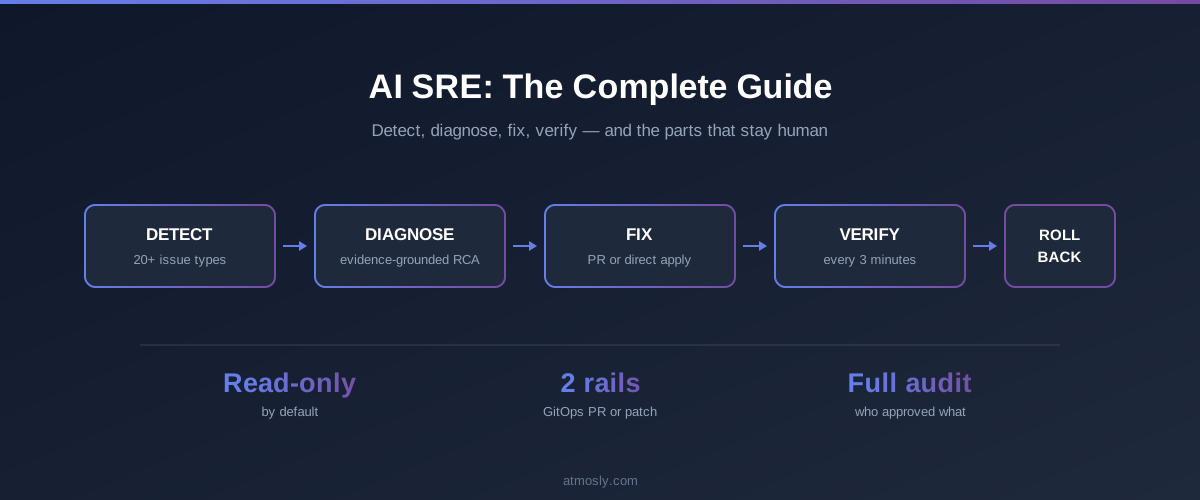
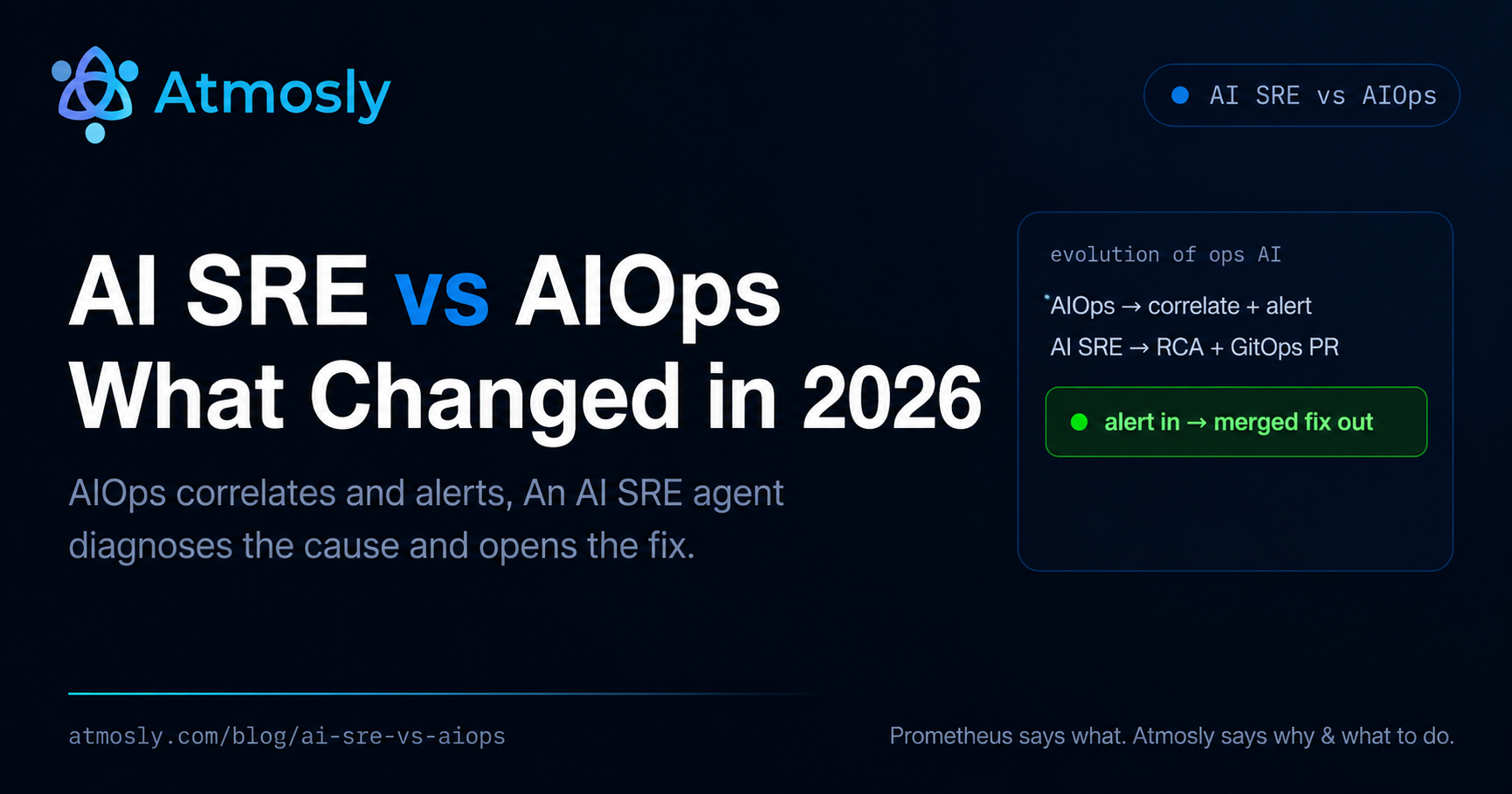
"AIOps" and "AI SRE" show up on the same vendor slides, often for the same product, and the terms get used as if they were synonyms. They are not. They describe two different layers of the operations stack. AIOps is a smarter alerting layer: it ingests telemetry, correlates signals, and cuts noise so a human sees fewer, better alerts. An AI SRE agent is an action layer on top of that: it takes a failure, diagnoses the root cause, and produces the fix — for Kubernetes, as a reviewable pull request.
The distinction is not pedantic. It changes what you are buying, where the human sits in the loop, and which problem actually gets solved. This post defines both precisely, shows where the line falls, and gives a decision rule for which one you need — usually both, stacked.
Definitions that actually distinguish them
What is AIOps?
AIOps — a term Gartner coined in 2016 — applies machine learning to operational telemetry. The core jobs are event correlation, anomaly detection, and noise reduction across metrics, logs, traces, and events. Its output is a cleaner signal: fewer, deduplicated, correlated alerts, ranked by likely importance, delivered to a human or an incident tool. In loop terms, AIOps runs ingest → correlate → alert. It makes the alert stream smarter. It does not change the running system.
What is an AI SRE agent?
An AI SRE agent is agentic: it is built to take actions toward a goal, not just to score signals. On Kubernetes the loop is detect → group → diagnose → ship → verify. It detects a failure (OOMKilled, CrashLoopBackOff, ImagePullBackOff, NotReady), groups the fan-out into one incident, grounds a root cause in live object state, and delivers a remediation — Atmosly's agent opens a GitOps pull request that a human merges — then verifies the result. The output is not a better alert. It is a candidate change to the system.
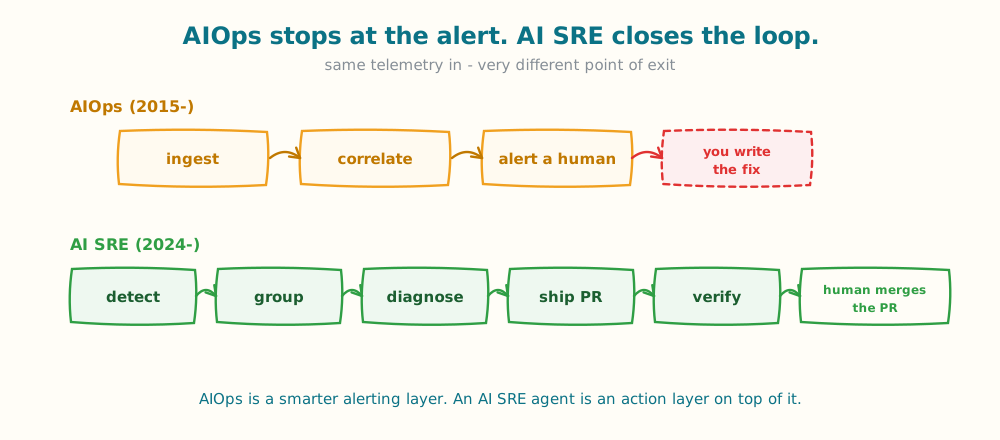
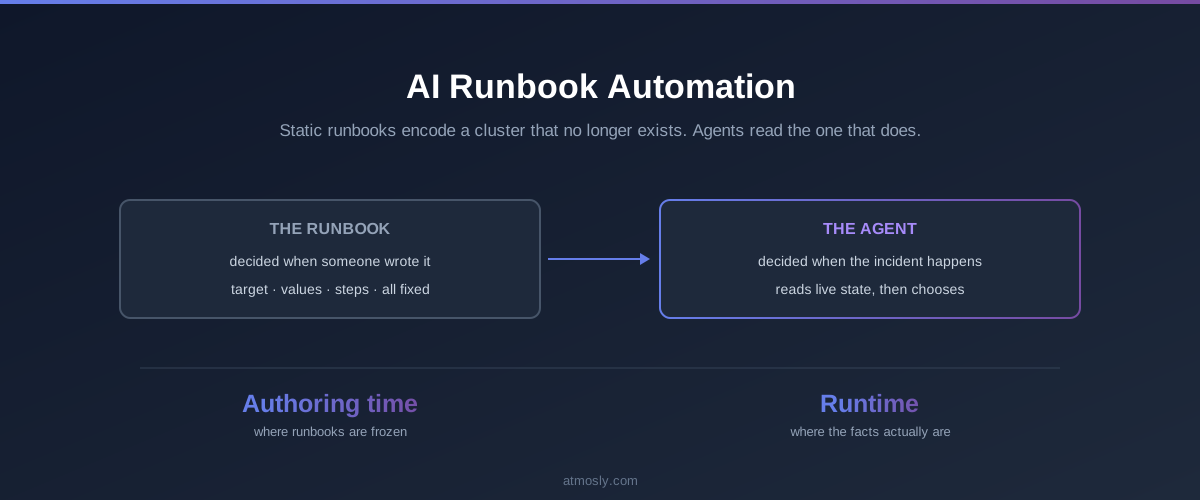
Same telemetry in, very different point of exit. AIOps hands a human a better alert; an AI SRE agent hands a human a reviewable fix.
The core difference: where the loop exits
The cleanest way to tell them apart is to ask where the tool stops and the human starts:
- AIOps exits at the alert. Its deliverable is "these 40 events are one probable incident, likely caused by X." A human still writes and ships the fix. That is the correct design for AIOps — its job is signal, not action.
- An AI SRE agent exits at the change. Its deliverable is a proposed remediation — a manifest patch in a pull request, with the root cause and a rollback — sitting in the review gate your team already uses. The human's job shifts from authoring the fix to approving it.
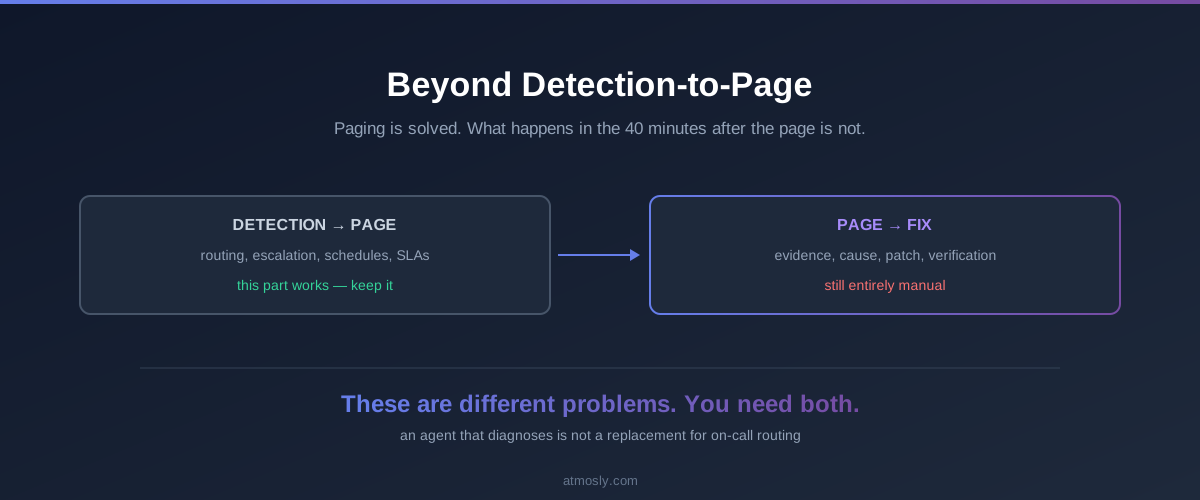
This is the same "last mile" that separates monitoring from action generally: Prometheus tells you what broke, AIOps tells you which alerts belong together and probably why, and an AI SRE agent produces the change that resolves it. Each layer removes a different kind of toil.
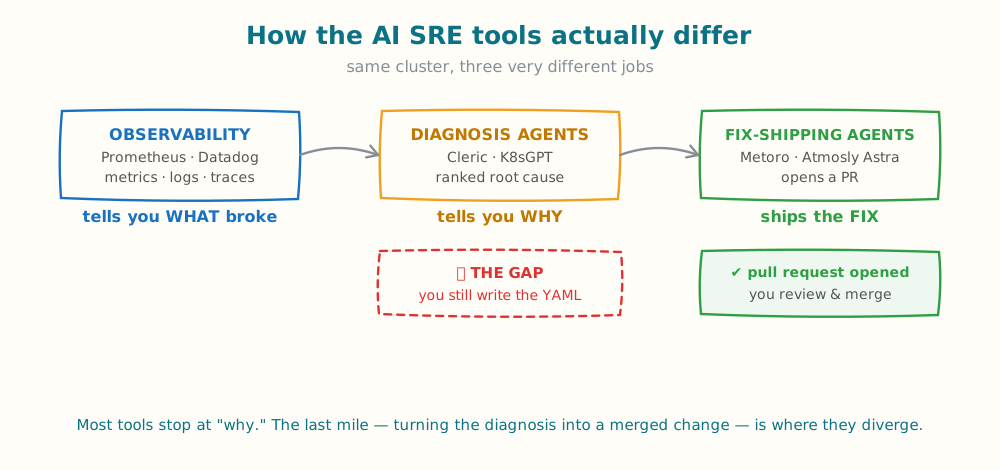
Three layers over the same cluster: observability reports what broke, AIOps and diagnosis agents rank why, and an AI SRE agent carries it to a merged change.
AI SRE vs AIOps, side by side
The dimensions that matter when you are choosing between (or stacking) them:
| Dimension | AIOps | AI SRE agent |
|---|---|---|
| Primary output | Correlated, de-noised alerts + probable cause | A reviewable fix (e.g. GitOps PR) + verification |
| Loop | ingest → correlate → alert | detect → group → diagnose → ship → verify |
| Acts on the system? | No — it improves the signal | Yes — proposes a change a human merges |
| Human role | Investigate and fix from a better alert | Review and merge a proposed fix |
| Data model | Events/metrics/logs across the estate | Live object state + GitOps source of truth |
| Origin | Gartner term, 2016; ITOps heritage | Agentic era, 2024+; SRE/GitOps heritage |
| Examples | Datadog Watchdog, Splunk ITSI, Dynatrace Davis, Moogsoft | Atmosly Astra, Metoro, plus agent modes in newer tools |
Where they overlap — and why the confusion
The line blurs for two real reasons, not just marketing:
- An AI SRE agent contains AIOps-style steps. Grouping the fan-out and ranking probable causes is correlation and anomaly work. The agent does that internally as stages two and three of its loop — then keeps going to the fix. So an AI SRE agent is, in part, AIOps plus an action layer.
- AIOps vendors are adding agentic features. "Agentic AIOps" and remediation-in-platform features are appearing on classic AIOps and observability products. That convergence is genuine, but check where the remediation lands: inside the vendor's platform, or as a change in your Git repo that flows through your review gate. The mechanism, not the label, tells you which layer you are actually getting.
For a grounded example of what "action layer" means on a real incident, our walkthrough of Kubernetes troubleshooting with AI and the step-by-step guide to debugging pods show the same diagnostic work an agent automates.
Three vendors claim to interrogate
Because the labels are used loosely, evaluate the mechanism behind each claim rather than the claim itself. Three phrases hide the AIOps-versus-AI-SRE line most often:
- "AI-powered root cause." Ask what the output is. A ranked probable cause with evidence is AIOps-grade and genuinely useful — but the fix is still yours. Only treat it as an action layer if it produces a concrete, typed change.
- "Automated remediation." Ask where the change lands. Remediation inside the vendor's platform (restart, scale, toggle) is real but ephemeral on a GitOps cluster — the controller reconciles it away. Remediation as a pull request against your source of truth is durable and reviewable. Same word, different half of the stack.
- "Agentic." Ask whether it takes an action toward a goal or just scores signals more cleverly. Correlation and anomaly ranking, however good, is still the signal layer. An agent has to produce and carry a change through to verification.
None of these are red flags on their own — AIOps correlation is valuable and worth paying for. The point is to know which layer you are buying so you do not expect an alerting tool to close your incidents, or an action agent to replace estate-wide correlation.
Which one do you need?
Match the tool to where your time actually goes:
- If your pain is noise — too many alerts, no correlation, on-call drowning — an AIOps layer (or an AI SRE agent's grouping) is the first win.
- If your pain is the last mile — you already know roughly what is wrong but writing, shipping, and verifying the fix eats the incident — you need the action layer of an AI SRE agent.
- If you run Kubernetes with GitOps — the highest-leverage setup is an agent that groups the incident and opens the fix as a PR against your source of truth, because that collapses both problems at once.
- In most orgs, you stack them. AIOps or observability handles broad estate correlation; an AI SRE agent handles diagnosis-to-fix on the workloads it supports. They are layers, not competitors.
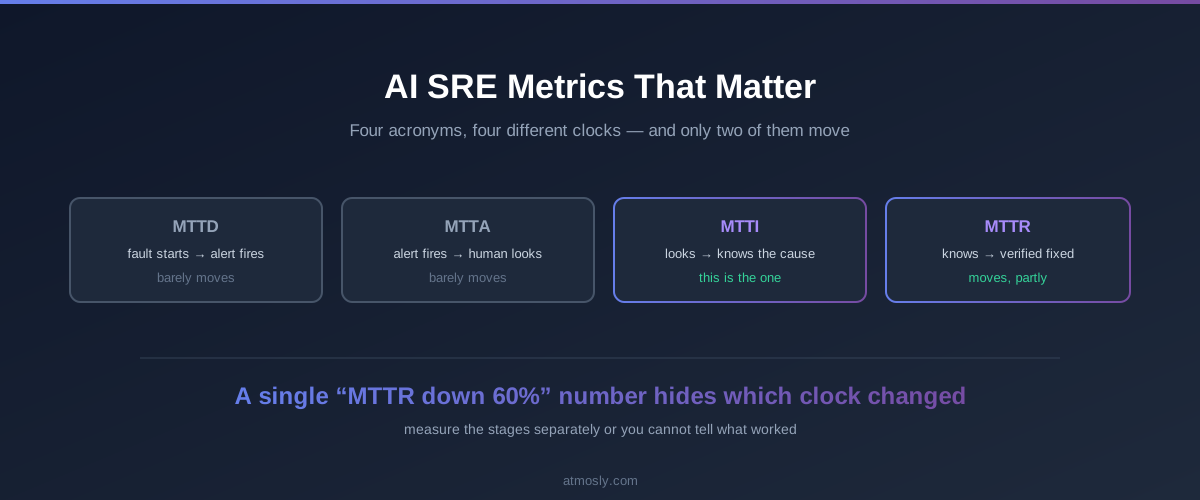
The test that cuts through vendor positioning: on a real recurring incident, measure the time from alert to merged change. AIOps shortens the front of that timeline; an AI SRE agent shortens the back. Knowing which half is your bottleneck tells you which layer to buy first.
Where Atmosly Astra fits
Atmosly's AI SRE agent sits on the action side, but it does the correlation work too. It groups the fan-out of a failing workload into one incident (the AIOps-style step), grounds a root cause in the live Pod spec and terminated state, and opens a remediation as a reviewable pull request. Two guardrails are load-bearing and worth stating plainly: a human merges every PR — the agent never mutates production on its own — and GitOps remediation is Argo CD-based today, patching the manifest in your backing repo rather than issuing a live edit that reconciles away. Because it shares a control plane with Atmosly's cost and security views, it also carries context an estate-wide AIOps tool lacks: that a workload was OOMKilled twice this week and is over-provisioned, and what deployment preceded the failure. For the full landscape, see the best AI SRE tools in 2026, and the platform detail on the Atmosly AI SRE agent.
Key takeaways
- AIOps is a signal layer; an AI SRE agent is an action layer. AIOps correlates and de-noises alerts; an AI SRE agent diagnoses and produces the fix.
- The tell is where the loop exits — at a better alert (AIOps) or at a reviewable change (AI SRE).
- They overlap by design. An AI SRE agent performs correlation internally, and AIOps vendors are adding agentic remediation; judge by where the fix lands, not the label.
- Buy for your bottleneck. Noise → AIOps/grouping first; the last mile of writing and shipping fixes → an AI SRE agent. On GitOps Kubernetes, one agent can do both.
- Atmosly Astra combines the grouping and the action — a reviewable, Argo CD-based, human-merged GitOps PR — with cost and security context on the same control plane.
Want to see the correlation-and-fix loop run against your own cluster? Connect Atmosly read-only and get a free audit in about five minutes. Start with Atmosly.