Three Different Jobs Hiding Under One Label
Every vendor in this space markets "Kubernetes security," which makes the category look far more comparable than it is. In practice, kubernetes security and compliance solutions do three distinct jobs, and no evaluation makes sense until you separate them. Posture and misconfiguration management asks: is the cluster configured safely — RBAC, Pod Security, NetworkPolicies, CIS and framework alignment? Image and vulnerability scanning asks: is known-vulnerable code shipping — CVEs in base images, dependencies, SBOMs? Runtime detection asks: is something bad happening right now — shells in containers, container escapes, anomalous syscalls, usually observed via eBPF.
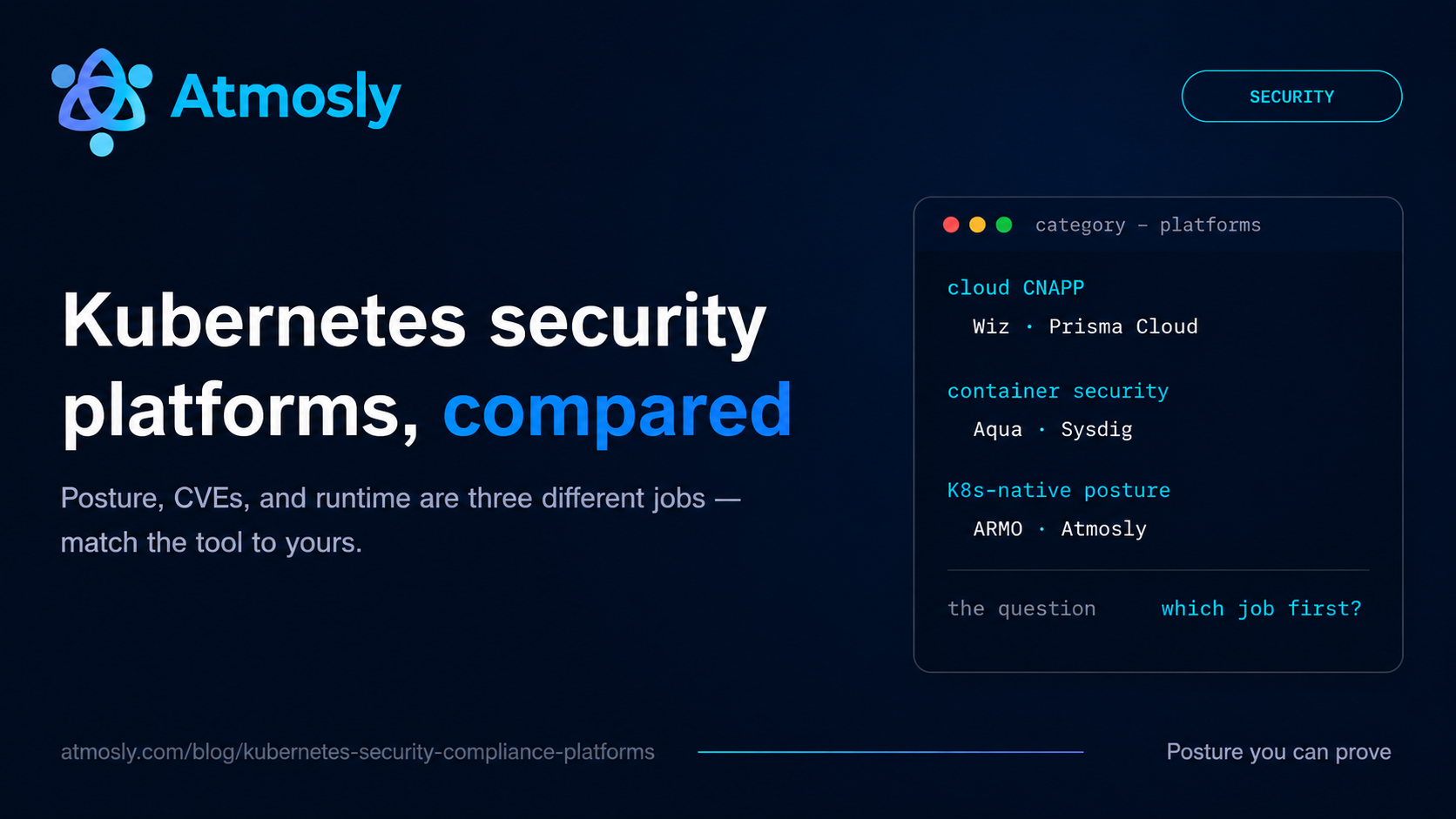
These jobs have different buyers, different urgency profiles, and different failure modes. A compliance audit is a posture problem; a zero-day in a base image is a scanning problem; an active cryptominer is a runtime problem. Vendors bundle the three jobs in different proportions — CNAPPs bundle all of them plus the cloud layer, container-security platforms lead with lifecycle and runtime, Kubernetes-native tools lead with posture. The buying mistake we see most often is comparing a posture tool against a runtime tool on a single feature checklist and concluding one is "missing" half its features. Decide which job hurts most first; then compare within that column.
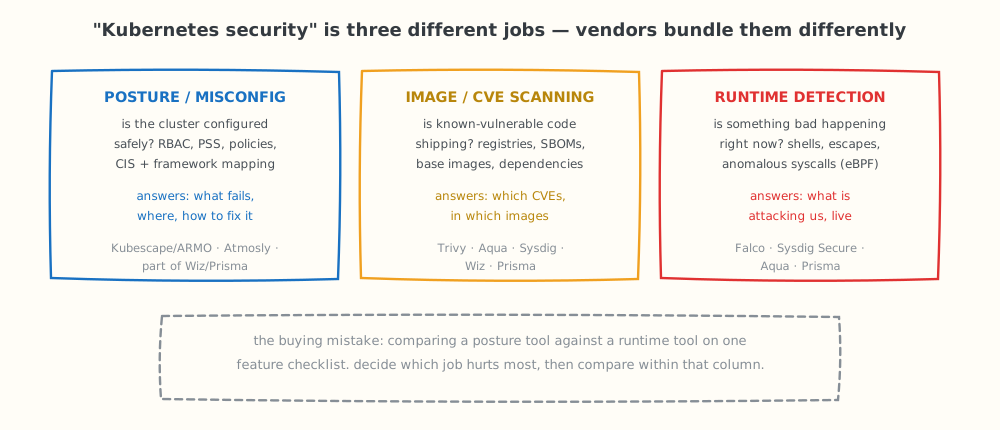
Three jobs, three buyer motions — vendors bundle them in different proportions.
The Platforms, Category by Category
Wiz: The Cloud-First CNAPP
Wiz approaches Kubernetes from the cloud side. Its agentless model scans cloud accounts and cluster APIs, then builds a graph connecting cloud misconfigurations, workload vulnerabilities, identities, and exposure paths — so a finding reads as "this internet-exposed pod runs a vulnerable image with a service account that can reach the production database," rather than as three disconnected alerts.
Strengths:
- Attack-path context. The security graph is Wiz's defining feature — findings arrive pre-correlated across cloud and cluster, which is why multi-cloud security organizations gravitate to it.
- Agentless speed. Broad visibility lands fast, with nothing to deploy into the clusters for posture coverage.
Trade-offs:
- Security-org shaped. Priced and structured for organizational deployment, not a single platform team's tool.
- Breadth over Kubernetes depth. Cluster posture is one surface among many rather than the specialty.
- Runtime needs the sensor. Agentless coverage means runtime detection requires separately deploying Wiz's sensor.
Choose Wiz when the mandate is "one risk view across all clouds," with Kubernetes as one of several estates.
Prisma Cloud: The Suite Play
Prisma Cloud (Palo Alto Networks) is the broadest suite in this comparison: CSPM, container and host security descended from the Twistlock acquisition, IaC scanning, and runtime defense under one umbrella.
Strengths:
- Mature container module. Image scanning, admission control, and runtime policies in one place, with years of production hardening behind them.
- Vendor consolidation. The natural buyer already runs Palo Alto tooling and wants Kubernetes folded into an existing platform relationship and procurement channel.
Trade-offs:
- Operational weight. Multiple consoles and modules with distinct learning curves — a platform that rewards dedicated administration.
- Heavy for lean teams. A small platform team wanting fast Kubernetes-specific answers will feel the suite's overhead; a security org consolidating vendors won't mind, because that is the point.
Aqua Security: Container Lifecycle Depth
Aqua is one of the original container-security specialists, covering the full lifecycle from registry to runtime — with the open-source credibility of having built Trivy, kube-bench, and kube-hunter.
Strengths:
- End-to-end lifecycle. Registry and CI image scanning (Trivy is the de-facto standard), posture, admission assurance policies, and runtime protection in one platform.
- Runtime blocking, not just alerting. Drift prevention stops executables that were not in the original image — a hard requirement in regulated or genuinely hostile environments.
Trade-offs:
- Agents required. Full value means deploying and operating agents across the fleet.
- Breadth you may not use. Teams whose actual pain is compliance posture rather than runtime threat end up using a fraction of what they bought.
Sysdig Secure: Runtime First
Sysdig's identity is runtime. Falco — the CNCF-graduated runtime detection engine — originated at Sysdig, and Sysdig Secure builds a commercial platform around that eBPF foundation.
Strengths:
- Syscall-level detection and forensics. Detection plus container-level investigation and incident response in one place — for teams whose primary question is "what is happening inside our containers right now."
- Runtime-context CVE prioritization. By observing which packages are actually loaded in running containers, it cuts CVE backlogs to the vulnerabilities genuinely in use — a real answer to alert fatigue.
Trade-offs:
- Agent-based by design. The eBPF foundation is the product; there is no agentless shortcut.
- Posture is not the point. Compliance capabilities are competent but not the reason you choose Sysdig.
ARMO Platform and Kubescape: Kubernetes-Native Posture
Kubescape is the CNCF open-source scanner for Kubernetes posture — it evaluates live clusters and manifests against CIS, MITRE ATT&CK, and NSA-CISA frameworks and has become the standard way to answer "which controls does this cluster fail." ARMO Platform is the commercial layer on top, adding multi-cluster management, prioritization, runtime-informed reachability analysis, and compliance reporting.
Strengths:
- Kubernetes-native focus. Findings map to actual Kubernetes objects and fields, not generic cloud abstractions.
- Free on-ramp. Adoption can start with the open-source scanner and grow into the platform.
Trade-offs:
- Cluster scope only. This is Kubernetes posture, not cloud-account security — organizations needing the cloud layer pair it with (or graduate to) a CNAPP.
If you want the open-source route end to end, our open-source Kubernetes security tools guide covers Kubescape, Trivy, Falco, and friends in depth.
Want the posture answer without the platform evaluation?
One-click scan against CIS, SOC 2 and ISO frameworks — free tier, read-only, field-path findings.
Atmosly: Posture Plus Guided Remediation, Inside the Platform You Operate From
Atmosly takes a deliberately narrower slice of this market, so here is the honest positioning. It is a Kubernetes platform (environments, pipelines, cost, AI SRE) whose security module does one job from the list above — posture and compliance — and connects it to remediation.
What that looks like in practice:
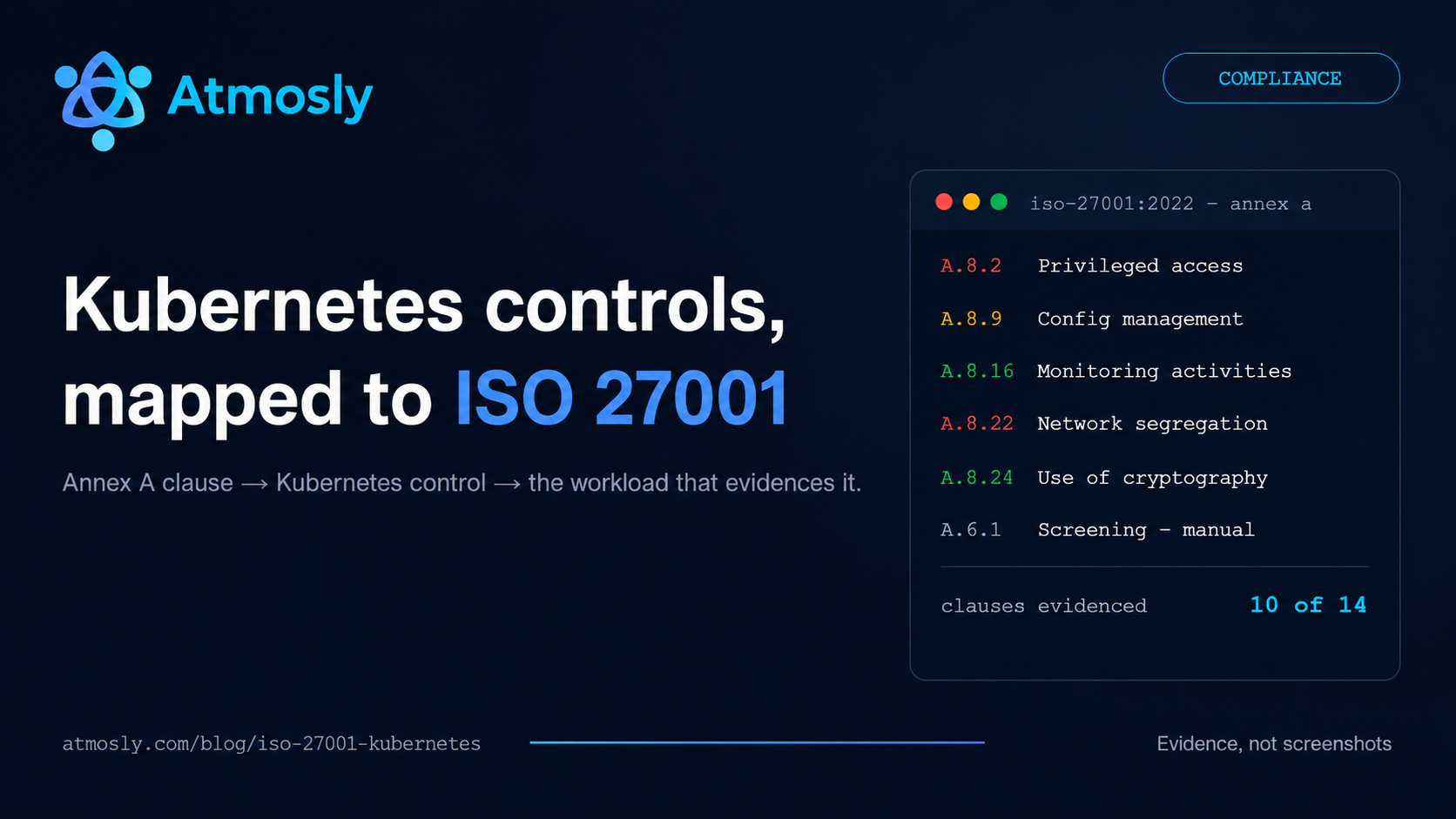
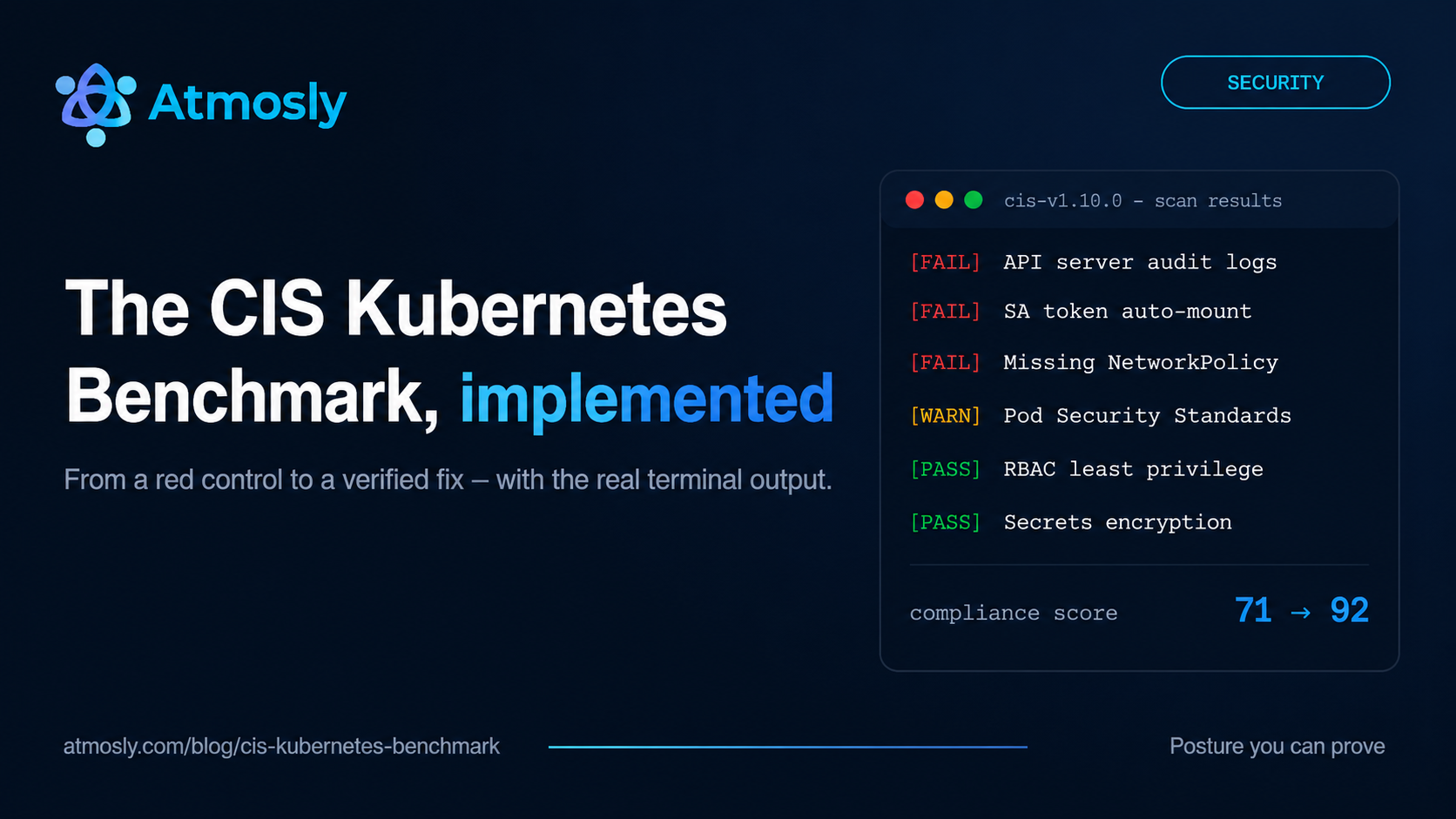
- One-click, on-demand scans. Built on Kubescape, evaluating the live cluster against CIS v1.10.0, MITRE ATT&CK, SOC 2, and ISO 27001:2022.
- Findings with field paths. Every failure resolves to the affected Kind, name, namespace, and the exact manifest field that fails.
- Guided remediation, human in the loop. AI analysis generates the verification and fix commands, pre-loaded into an audited, namespace-scoped in-browser terminal where an engineer reviews and runs them — and a re-scan confirms the control passes.
- RBAC that expires. Roles created through the platform carry automatic expiry (30 days by default), structurally preventing the standing-cluster-admin finding that dominates real audits.
What Atmosly does not do, by design: image CVE scanning and runtime threat detection. If those are your driving needs, the vendors above — or Trivy and Falco from the open-source side — are the right tools, and they pair cleanly with Atmosly's posture layer. Where Atmosly wins is the team whose pain is "an audit is coming and we need to find, fix, and prove our configuration gaps" — because the scan, the fix, and the evidence live in the same workflow, on a free tier that requires no procurement cycle to try.
Side-by-Side: Coverage at a Glance
| Platform | Category | Posture / compliance | Image CVEs | Runtime | Cloud accounts (CSPM) | Best-fit buyer |
|---|---|---|---|---|---|---|
| Wiz | CNAPP | Yes — cross-cloud context | Yes | Via sensor | Yes — core strength | Security org, multi-cloud estate |
| Prisma Cloud | CNAPP suite | Yes | Yes | Yes | Yes | Palo Alto-standardized enterprise |
| Aqua | Container security | Yes | Yes — Trivy lineage | Yes — incl. blocking | Partial | Regulated containers, runtime blocking needed |
| Sysdig Secure | Container security | Yes | Yes — runtime-prioritized | Yes — Falco core | Partial | Detection & forensics first |
| ARMO / Kubescape | K8s-native posture | Yes — core strength | Reachability-informed | Informing posture | No | Platform team, OSS-first posture |
| Atmosly | K8s platform w/ posture | Yes — scan → guided fix → evidence | No (pair with Trivy) | No (pair with Falco) | No | Audit-driven platform team, free start |
Read the table by column, not by row count: a "No" in a column you don't need is not a weakness, and a "Yes" in all six columns guarantees breadth, not depth in the one you care about.
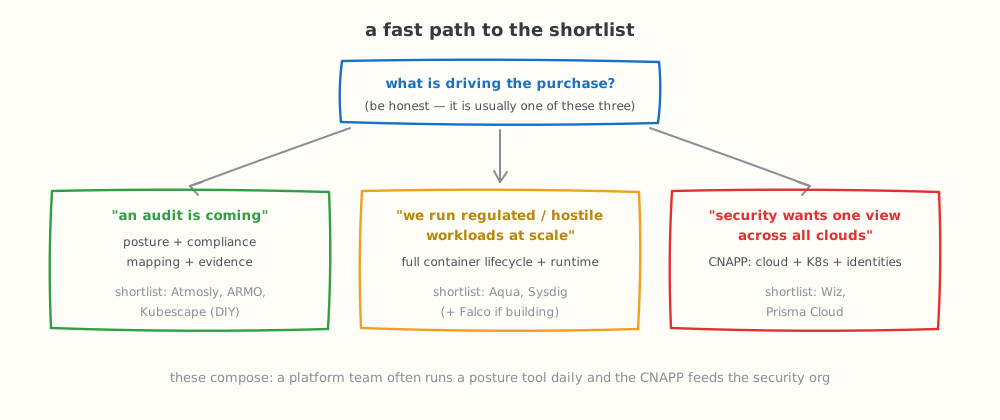
Start from the purchase driver — the shortlist falls out in one step.
How to Choose: Three Questions That Settle It
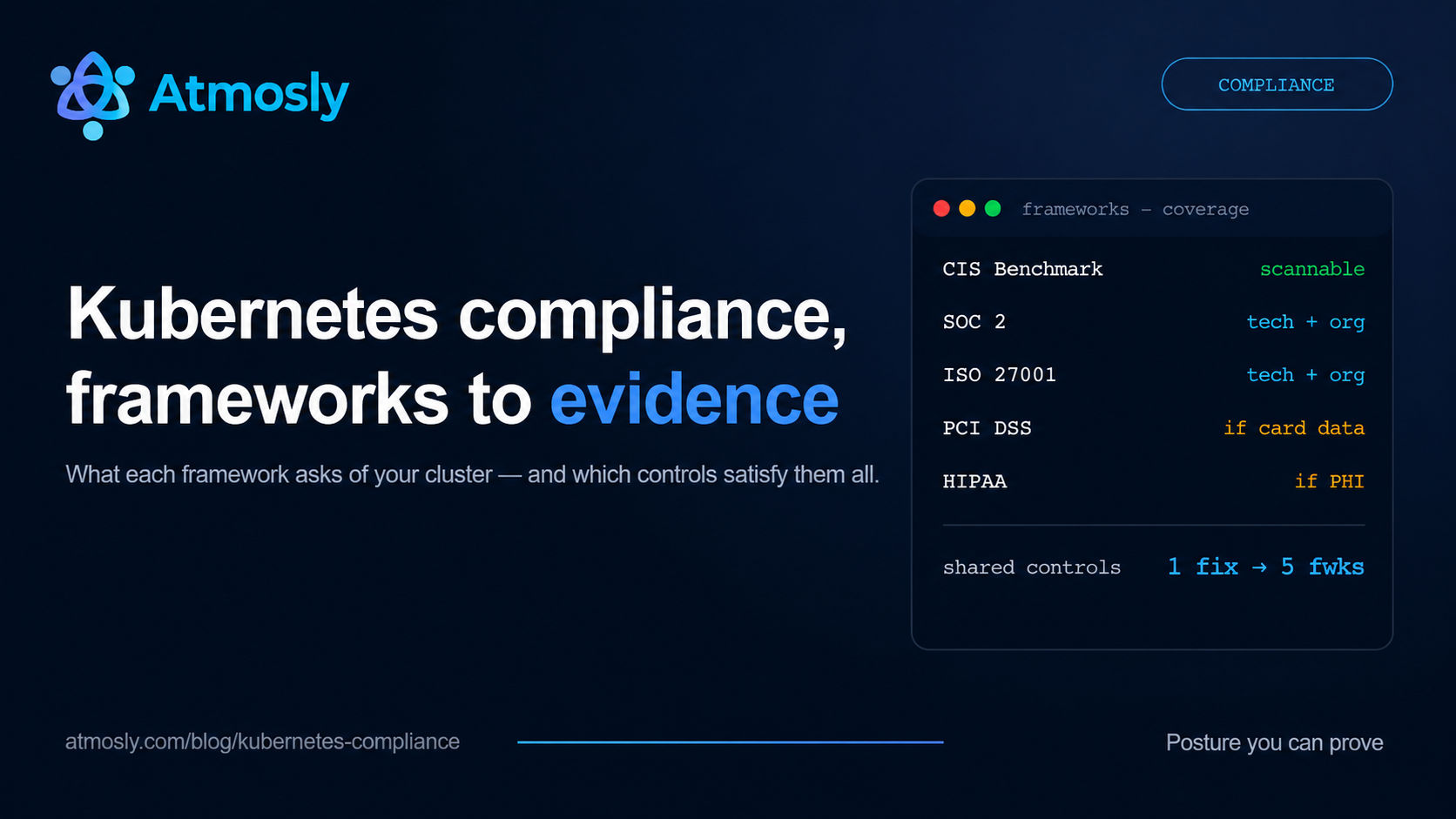
What is actually driving the purchase? If the honest answer is "an audit is coming," you need posture, compliance mapping, and evidence — shortlist Atmosly, ARMO, or a DIY Kubescape build, and read our Kubernetes compliance guide for what the auditors will ask. If it is "we run regulated or hostile workloads at scale," you need lifecycle depth and runtime — shortlist Aqua and Sysdig. If it is "security wants one view across all clouds," you are buying a CNAPP — shortlist Wiz and Prisma Cloud.
Who will operate it daily? Agent-based runtime platforms and multi-module CNAPPs assume dedicated security operations. If the operators are the same three platform engineers who run the clusters, weigh operational surface as heavily as features — a tool that surfaces twenty actionable field-path findings beats one that surfaces four hundred unowned alerts.
What does "fixed" mean in your organization? Detection-oriented platforms end at the alert; remediation is your ticket queue. If your bottleneck is the fix itself — knowing the change, making it safely, proving it landed — favor tools that connect finding to remediation to re-verification, and pilot that loop end to end on one real cluster before signing anything. Every serious vendor here offers a trial or free tier; a one-week bake-off on your own workloads settles more than any comparison table, including this one.
Conclusion: Compose, Don't Crown
There is no single best platform in this market — there are three jobs and a composition question. Mature teams commonly run a Kubernetes-native posture tool in the platform team's daily loop, Trivy or a commercial scanner in CI, runtime detection where threat models justify agents, and sometimes a CNAPP feeding the security organization's cross-cloud view. The layers complement rather than replace each other.
If posture is your starting layer, you can have your first answer today: run a free Atmosly security scan — one click, read-only, and every failed control arrives with the field path and the fix.