Kubernetes GPU Cost Optimization for AI/ML Workloads
Reduce Kubernetes GPU costs for AI/ML workloads — rightsizing, utilization, scheduling, and MIG partitioning.

Multi-tenant SaaS means many near-identical environments — one per tenant or per region — that all have to ship, stay isolated, and not blow the budget. Atmosly clones full environments on demand, ships to all of them from one pipeline, and attributes spend per tenant.
Dedicated per-tenant environments are great for isolation and terrible for toil — unless standing one up, shipping to it, and accounting for it are all automatic.
Each new tenant means standing up another near-identical stack by hand — services, databases, config — and keeping it in sync with the rest.
Tenants can't leak into each other, and one tenant's incident can't take down the rest — but enforcing that across dozens of envs is hard.
When everything shares clusters, you can't tell which tenant is profitable and which is quietly eating margin.
Stand up an isolated tenant from a known-good template, ship to every tenant from one place, and see exactly what each one costs.
Clone a full environment — services, datastores, config — into a fresh isolated namespace with regenerated credentials. A new tenant, not a new project.
One pipeline promotes a release across all tenant environments — so every customer is on a known version, not a per-tenant snowflake.
Spend broken down by namespace maps straight to per-tenant cost — so you know which customers are profitable and which to right-size.
Continuous CIS, PCI, and SOC 2 posture across every tenant cluster — the evidence enterprise customers ask for, always current.
Schedule scale-down or teardown of trial and inactive tenant environments — so unconverted trials stop costing you money.
One console surfaces issues in every tenant environment with root cause and a fix — so a problem in one never goes unnoticed.
Give every customer their own isolated environment for the security story — and onboard, ship, and account for the whole fleet of them from a single control plane.
Clone a known-good template environment — every service, datastore, and config — into a fresh isolated namespace with regenerated names and credentials. The new tenant never collides with an existing one, and there's no hand-built stack per customer.
A single pipeline promotes a release across all tenant environments — canary a subset first, verify, then promote to the rest. Every customer runs a known, consistent version instead of drifting onto its own.
Because each tenant is its own namespace, spend maps straight to per-tenant cost, reconciled to the cloud bill — so you know which customers are profitable. Guardrails scale down or tear down trial and inactive tenants on a schedule.
Give each customer their own isolated environment for the security story — and operate the whole fleet of them from a single control plane: one internal developer platform for every tenant.
Cloning, unified delivery, and per-tenant cost are where it starts.
Same isolation promise to customers — a fraction of the toil behind it.
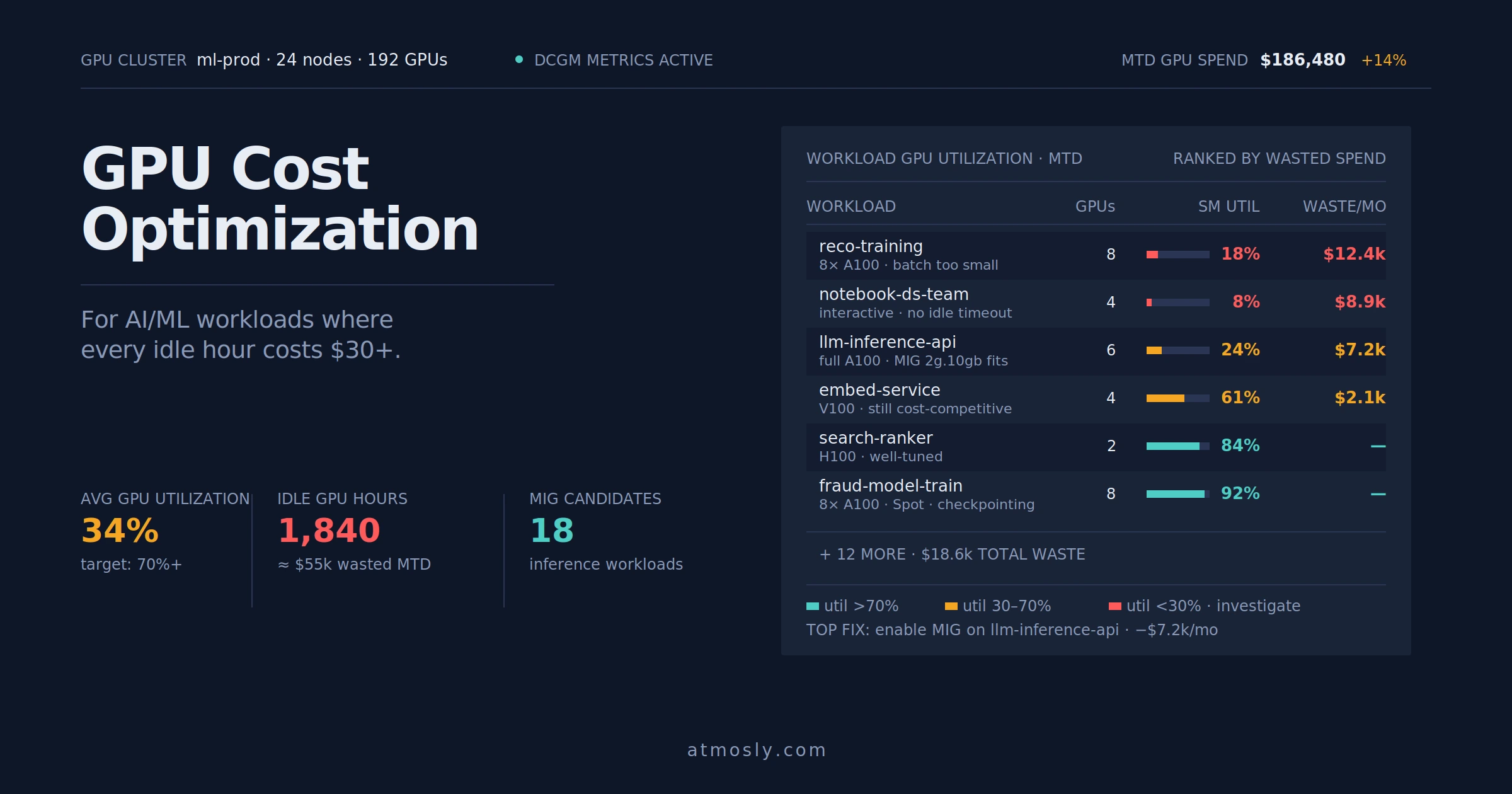 Kubernetes
Reduce Kubernetes GPU costs for AI/ML workloads — rightsizing, utilization, scheduling, and MIG partitioning.
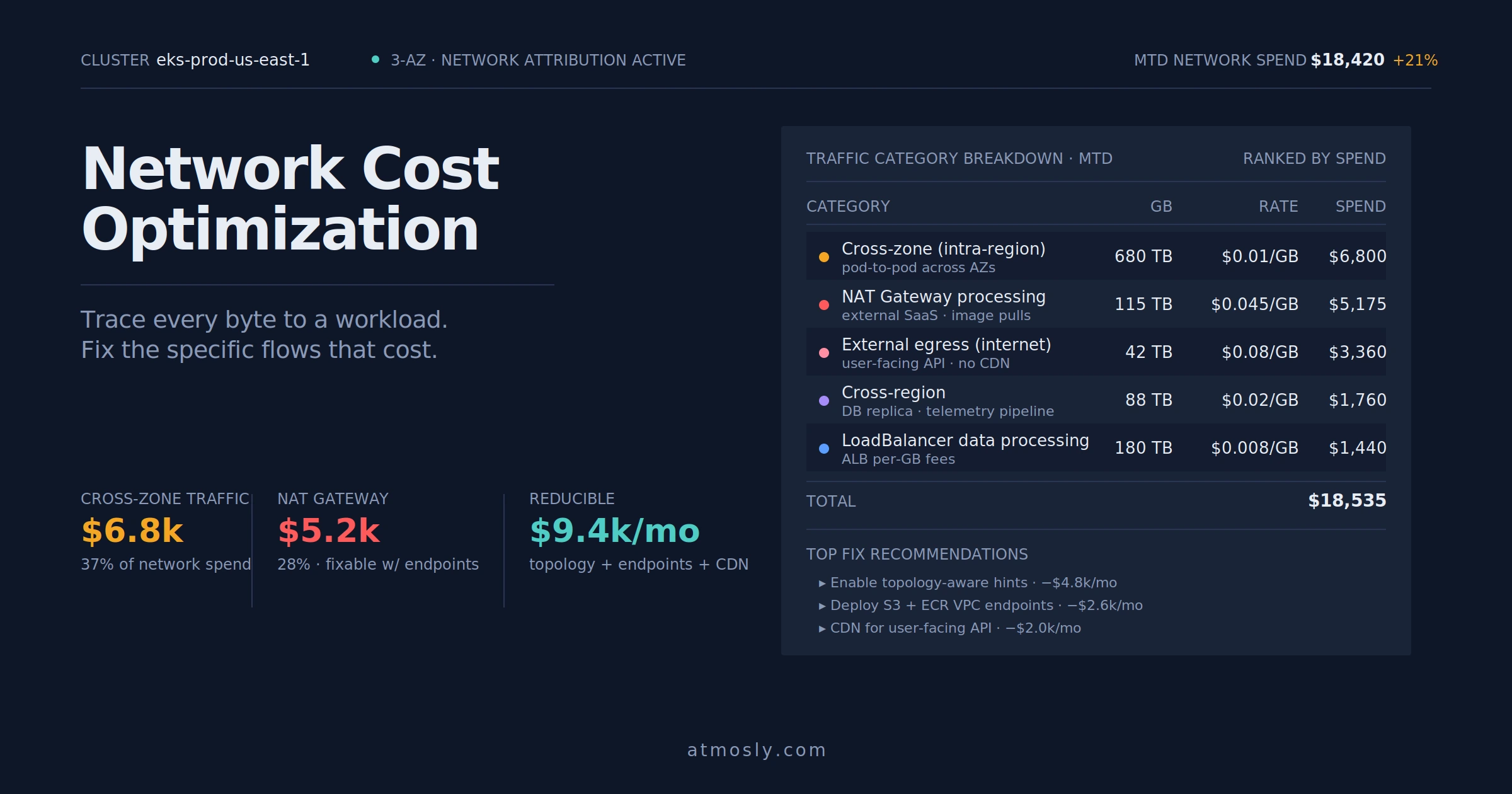 Kubernetes
Cut Kubernetes network costs — cross-zone egress, NAT Gateway charges, and inter-region traffic patterns engineers can fix.
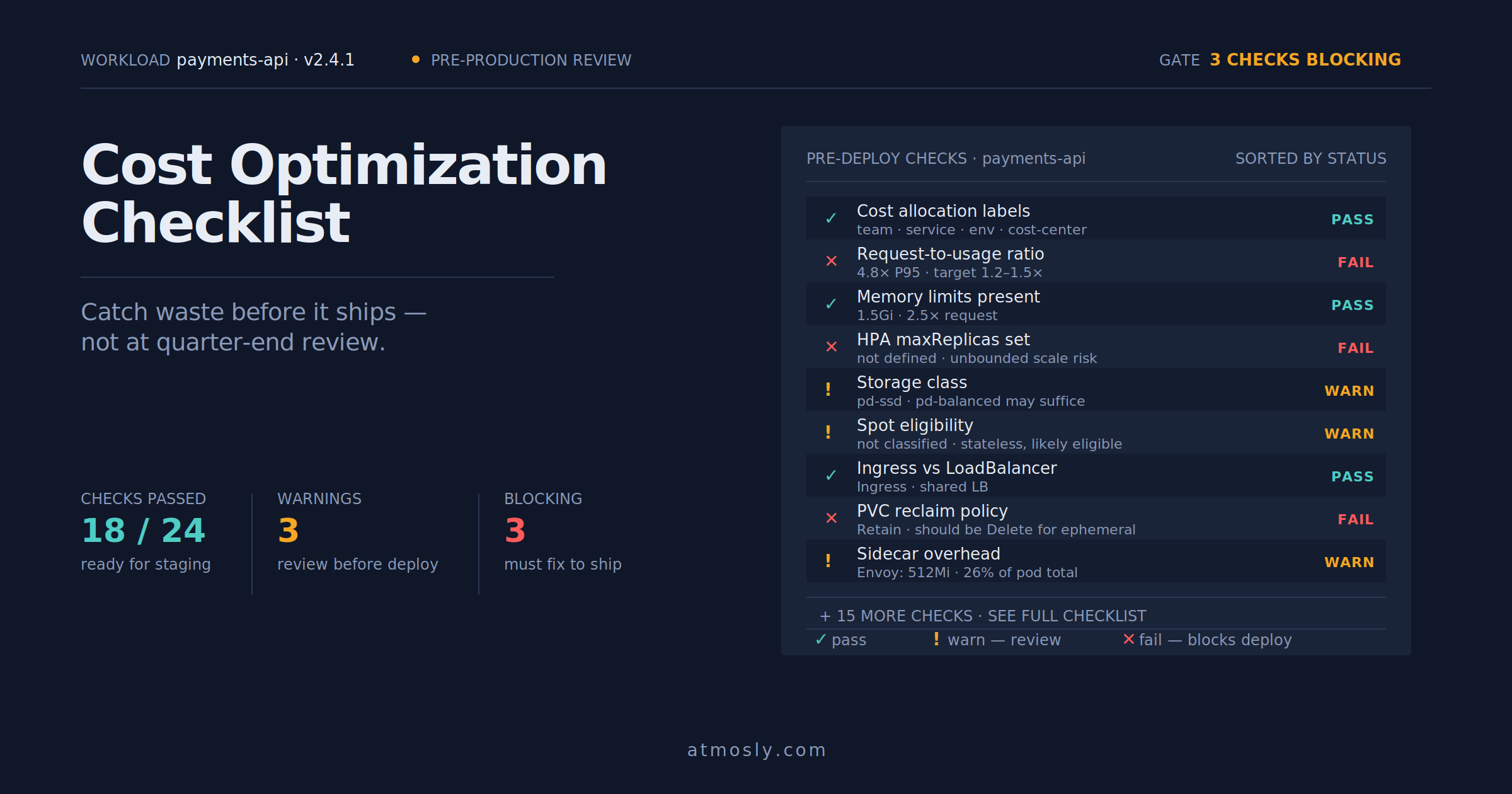 Kubernetes
A pre-production Kubernetes cost checklist that catches waste before it ships instead of after finance asks.
Connect a cluster read-only, clone an environment into an isolated tenant, and see its cost and health from day one. Free, no sales call.