Introduction: To K8s or Not to K8s?
For a startup CTO in 2025, the "Kubernetes Question" is inevitable.
"Should we start with a PaaS like Heroku/Vercel for speed, or go straight to Kubernetes for scalability?"
The traditional advice from 2018 was: "Don't use Kubernetes until you have to." It was seen as too complex, too expensive, and a distraction from finding Product-Market Fit. "Just use Heroku" was the mantra.
This advice is now outdated.
With the rise of Managed Kubernetes (EKS, GKE, DigitalOcean) and platform layers on top of Kubernetes, startups can now get the best of both worlds: the ease of a PaaS with the infinite scalability, vendor neutrality, and low cost of raw infrastructure. This comprehensive guide is the playbook for startups adopting Kubernetes in 2025.
1. Why Startups Should Choose Kubernetes Early
Choosing Kubernetes from Day 1 (or Day 30) prevents the painful "Replatforming Migration" that often kills momentum at Series A.
Reason 1: Cost Control (The "Startup Tax")
PaaS platforms markup compute by 30-50%.
Startup Math: Spending $2,000/mo on Heroku might get you the same compute power as $800/mo on AWS EKS with Spot Instances. For a bootstrapped or Seed-stage startup, saving $1,200/mo is significant. It pays for your SaaS tools.
Reason 2: Vendor Neutrality (The Credit Game)
Startups live on cloud credits.
Year 1: $100k AWS Credits. You build on EKS.
Year 2: Google offers $200k Credits. If you are on EKS, you can migrate to GKE in a week. If you used AWS proprietary services like App Runner or Lambda, you are locked in and must rewrite your infra.
Reason 3: Hiring Advantage
Engineers want to work with modern stacks. "We run on Kubernetes" attracts better talent than "We run on a monolithic VPS." It signals that you are building for scale.
2. The "Lean Kubernetes" Stack for Startups
Don't over-engineer. You are a startup, not Google. You don't need Service Mesh or multiple clusters yet. You need a Minimum Viable Platform (MVP).
The Essentials
- Cluster: Managed (EKS/GKE/DigitalOcean). Never build your own control plane with Kops/Kubeadm.
- Ingress: Nginx Ingress Controller. Simple, battle-tested, supports everything you need.
- Certificates: Cert-Manager + Let's Encrypt. (Free SSL for all your subdomains).
- CI/CD: GitHub Actions. Free tier is generous and integrates perfectly.
- Observability: Prometheus + Grafana (OSS) or Datadog (Expensive, be careful with custom metrics).
The Missing Link: The Developer Experience
You don't want your 3 developers writing Helm charts. You want them writing code.
Solution: Use a Kubernetes management platform.
Modern platforms can act as your "Virtual DevOps Engineer." You connect your cluster, and the platform provides UI-driven deployments, log streaming, and monitoring out of the box. This turns your raw Kubernetes cluster into a PaaS-like experience without the PaaS price tag.
Stop wrestling with kubectl. Focus on shipping features.
Atmosly provides startups with a simplified Kubernetes management experience — deployments, live logs, cost visibility, and policy guardrails — all in one platform. Start free and get your MVP running in hours, not weeks.
3. Step-by-Step Implementation Guide
Step 1: Provision the Infrastructure (Day 1)
Use Terraform (or ClickOps for MVP) to spin up a managed cluster.
Pro Tip: Use Spot Instances for your dev/staging node pools. This saves 70% on compute costs. Kubernetes handles the interruption automatically.
Example: EKS Cluster (Terraform)
module "eks" {
  source  = "terraform-aws-modules/eks/aws"
  version = "~> 19.0"

  cluster_name    = "startup-mvp-cluster"
  cluster_version = "1.28"

  vpc_id     = module.vpc.vpc_id
  subnet_ids = module.vpc.private_subnets

  eks_managed_node_groups = {
    main = {
      desired_size = 2
      min_size     = 1
      max_size     = 4

      instance_types = ["t3.medium"]
      capacity_type  = "SPOT"  # Save 70% on cost
    }
  }
}
Step 2: Connect a Management Platform (Day 1)
Install a management agent (like Atmosly's agent) to connect your cluster to a control plane. This instantly gives you:
- A dashboard to view your pods and workloads (no `kubectl` needed for junior devs).
- Service deployment workflows.
- Cost visibility (see per-namespace spending).
- Live log streaming in the browser.
Step 3: Define Your "Golden Path" (Day 2)
Create a simple service template: "Web Service".
It should take a Docker image and a port. That's it.
Your developers can now deploy without touching YAML files. The platform generates the Deployment, Service, Ingress, and SSL Certificate configuration automatically.
4. Common Startup Mistakes to Avoid
Mistake 1: Over-tooling (Resume Driven Development)
You don't need Service Mesh (Istio) until you have 50+ microservices. It adds massive complexity and latency. Stick to standard Ingress/Nginx.
Rule of Thumb: If your team has fewer than 10 engineers, you probably don't need any "advanced" Kubernetes features yet. Focus on the basics.
Mistake 2: Ignoring Resource Limits
One memory leak in a Java app crashes the whole cluster.
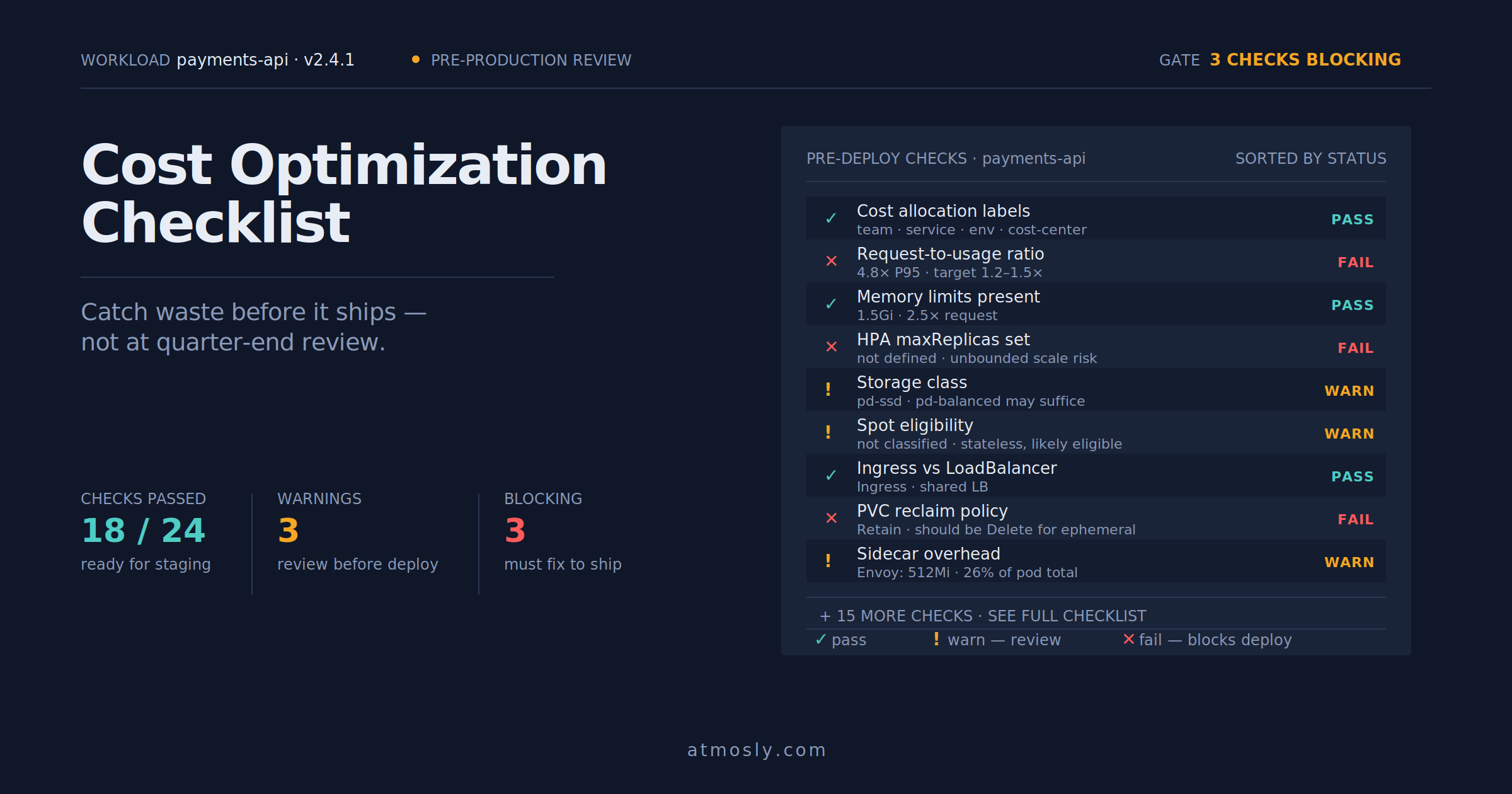
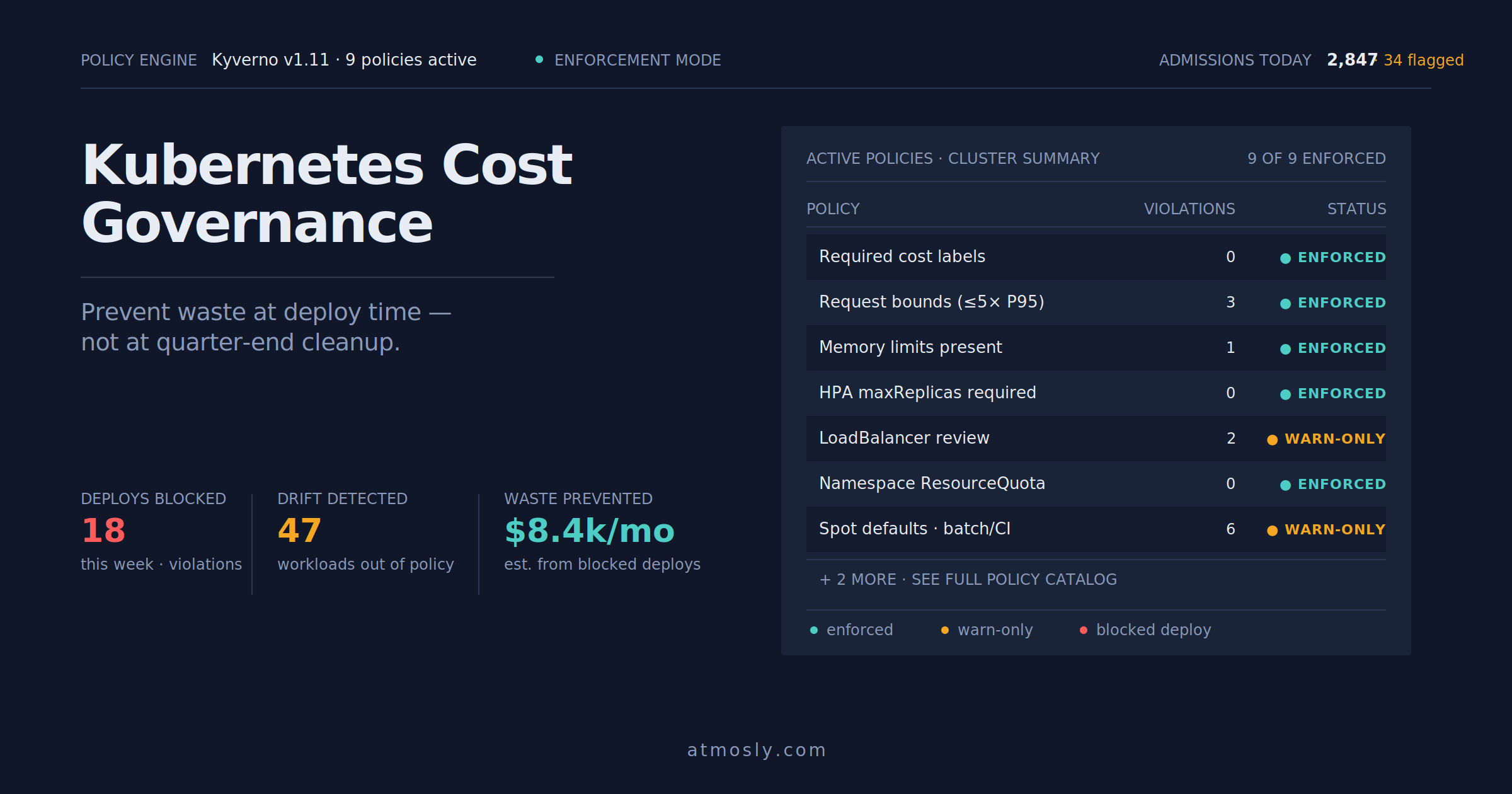
Fix: Use policy enforcement tools (OPA, Kyverno) or platform guardrails to require "Memory Limit" on all deployments. Set default limits in your deployment templates.
Mistake 3: Manual Secret Management
Don't check `.env` files into Git. Don't email passwords.
Fix: Use proper secret management. Atmosly provides secure secret storage with audit logging, allowing you to inject secrets as environment variables at runtime without exposing them in your code or CI/CD configs.
Mistake 4: No Cost Visibility
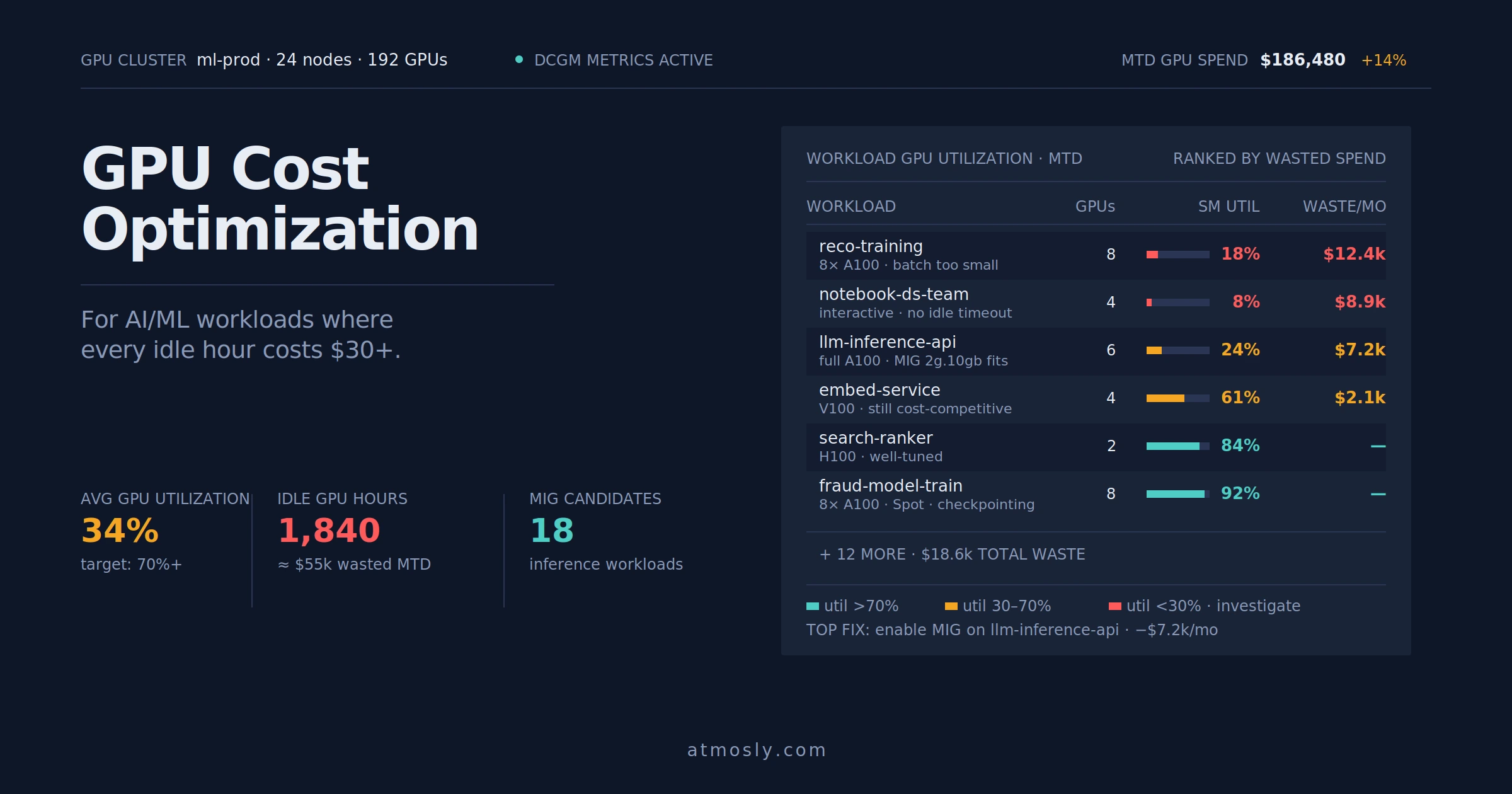
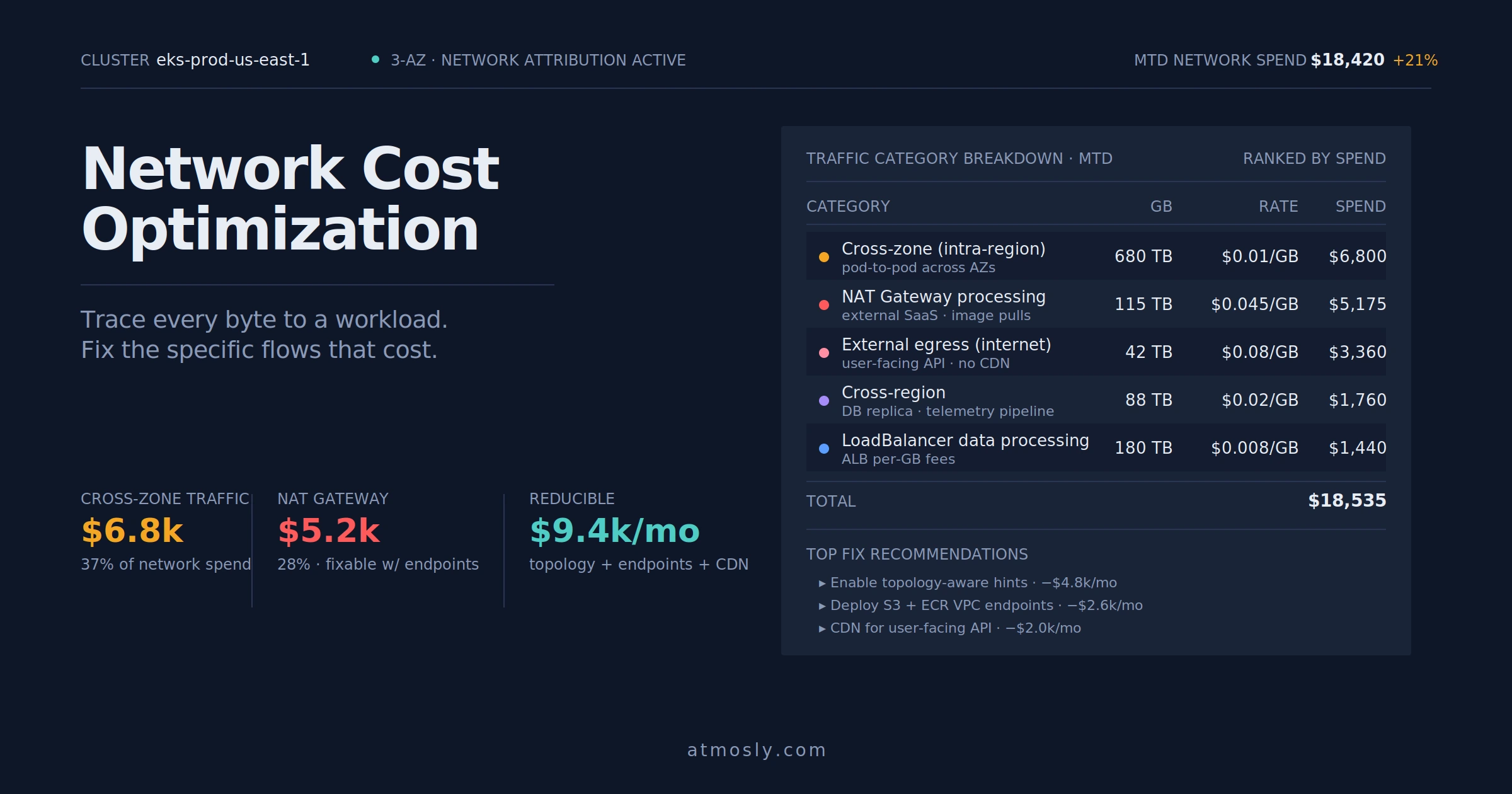
Kubernetes makes it easy to spin up resources, but you don't see the bill until month-end.
Fix: Implement cost tracking from Day 1. Platforms like Atmosly show real-time cluster costs broken down by namespace, helping you identify wasteful spending before it becomes a problem.
5. Scaling: From Seed to Series B
As you grow, your platform grows with you.
Seed Stage (1-10 Devs)
- Single Cluster (Namespaces for `dev` and `prod`).
- Platform manages most operational complexity.
- Focus on speed and low cost.
- Spot instances for all non-production workloads.
Series A (10-50 Devs)
- Split Prod/Non-Prod Clusters for better isolation.
- Implement ephemeral environments for Pull Requests (preview deployments).
- Hire your first dedicated DevOps Engineer to optimize infrastructure and templates.
- Start implementing proper RBAC and team-based access controls.
Series B (50+ Devs)
- Implement cost budgets per team.
- Multi-region deployments for latency and reliability.
- Advanced compliance (SOC2) policies enforced via OPA/Kyverno.
- Dedicated Platform Engineering team to build internal tooling.
6. The Real Cost Comparison
Let's do the math for a typical Seed-stage startup with 3 backend services and 1 frontend.
Heroku Scenario
- 4 Professional Dynos @ $25 each = $100/mo
- Postgres (Standard 0) = $50/mo
- Redis (Premium 0) = $15/mo
- Total: $165/mo
EKS + Atmosly Scenario
- EKS Control Plane = $72/mo
- 2x t3.medium Spot nodes @ $15 each = $30/mo
- RDS Postgres (db.t3.micro) = $13/mo
- ElastiCache Redis (cache.t3.micro) = $12/mo
- Atmosly (Free tier for small teams) = $0
- Total: $127/mo
Savings: $38/mo (23%)
But more importantly, you own your infrastructure and can scale without hitting PaaS price cliffs.
7. When NOT to Use Kubernetes
Kubernetes isn't always the right answer. Skip it if:
- You are pre-product-market-fit and pivoting weekly.
- Your entire product is a single monolithic Rails/Django app with no scaling needs.
- You have zero technical co-founder and are outsourcing all development.
- You are building a weekend project or MVP with a 2-month lifespan.
In these cases, start with Vercel/Netlify for frontend and Render/Railway for backend. Move to Kubernetes when you have traction and predictable growth.
Conclusion
For startups in 2025, Kubernetes is the smart choice if you wrap it in the right tooling. The operational overhead that used to exist has been solved by managed providers and management platforms.
Using modern Kubernetes platforms allows you to bypass the steep learning curve. You own your infrastructure (asset), you keep your costs low (profitability), and you give your developers a world-class experience (velocity). It is the unfair advantage for the lean startup.
Don't let complexity hold you back. Start smart, start lean, and scale when you need to.